

Educational Toys Planet · Since 2004
Educational toys, picked by hand.
A world of educational toys, games, crafts, and puzzles — the ones that spark a child's curiosity, discovery, and creativity.
No blinking plastic, no knock-offs. Just genuinely good learning toys from makers we trust, vetted against the expert lists — organized by age so you can find the perfect gift fast.
Find the perfect gift by age
Real gift guides — a hand-picked, honest shortlist for every age, refreshed for 2026.
Featured guide
Best Toys & Gifts for 4-Year-Olds
Twelve genuinely good picks — from a roughly $40 Magna-Tiles set that lasts for years to a roughly $13 fine-motor toy preschool teachers swear by. Every one from a maker with a track record, with an honest reason behind the choice and award badges where they're real.
Read the guide


Popular gift guides
See all guides →Or browse by what they're into


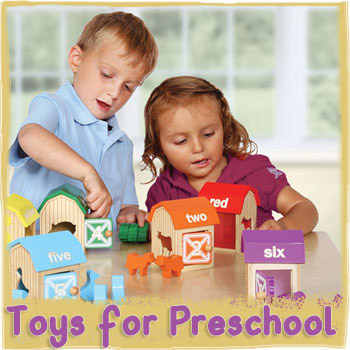
How to choose an educational toy
"Educational" is not a regulated word. No agency checks it, no standard defines it, and any toy on any shelf can print it on the box. That is worth knowing before you spend anything, because it means the label tells you about the marketing budget and nothing about the toy.
The test we actually use, after two decades of this, is simple: how much of the work does the toy leave for the child? A set of blocks leaves nearly all of it — the child decides what gets built, discovers that a tall narrow tower falls over, and tries again. A plastic console that sings the alphabet when a button is pressed leaves almost none. Both get sold as learning toys. Only one of them is teaching, and it is the one doing less.
The second thing that matters is aim. The age printed on a box is mostly a safety rating — it reflects choking-hazard testing far more than developmental fit. What you want is the toy sitting just past what a child can comfortably do today. Too easy and it is ignored inside a week; too hard and it is abandoned in frustration, which is the more expensive mistake because the child concludes the whole category is not for them.
What to look for, by stage
| Stage | What is developing | Toys that fit |
|---|---|---|
| 0–1 year | Cause and effect, grasping, tracking | Rattles, soft blocks, activity cubes, mirrors |
| 1–2 years | Fine motor, first words, object permanence | Shape sorters, stacking rings, bead mazes, board books |
| 3–4 years | Pretend play, language, early sorting | Play kitchens, magnetic tiles, chunky puzzles, first games |
| 5–6 years | Letters and numbers, rules, planning | Math manipulatives, board games, marble runs, craft kits |
| 7–8 years | Logic, persistence, building to a plan | LEGO sets, science kits, brain teasers, microscopes |
| 9+ years | Systems thinking, real skills, independence | Coding robots, engineering kits, strategy games, model builds |
The mistakes worth avoiding
- Buying the flashiest box. Lights and sound sell the toy in the aisle and stop mattering about four days later. What sustains play is what the child can do with it.
- Buying ahead too aggressively. A kit aimed three years out does not grow with a child; it sits in a closet until the moment has passed.
- Buying too many at once. A crowded shelf gets skimmed. A smaller set, rotated every few weeks, gets played with far more deeply — and a toy that reappears after a month reliably beats a new one.
- Mistaking a screen for a tool. An app that drills addition is not the same thing as a set of cubes a child can hold, group, and physically break into parts.
- Trusting the word on the box. Every guide on this site exists because that word is free to print and means nothing on its own.
That is the whole method behind our gift guides: pick the stage first, favour the toy that leaves the work to the child, and check the maker has a track record before the price. If you would rather start from a name you already trust, our guide to the toy brands worth knowing takes the same approach one maker at a time.
Educational toys: common questions
What counts as an educational toy?
How do I pick an educational toy for the right age?
Are expensive educational toys worth it?
Do educational toys need batteries or screens?
How many toys does a child actually need?
Why Educational Toys Planet
Curating since 2004
Two decades of knowing learning toys — not a store that appeared last quarter.
Independently picked
No pay-for-placement. Only toys from established makers, cross-checked against expert & award lists.
An honest shortlist
A real reason behind every pick — so you spend less time scrolling and more time gifting.