

Best GeoSafari Interactive Learning Toys for Kids (2026)

If you remember the GeoSafari "laptop," you already get the idea. The classic electronic-quiz consoles are gone, but Educational Insights' GeoSafari line carried the best part forward: toys that show a child a real image and talk back, narrating facts and running quizzes a preschooler can play solo. The line has just quietly gotten much better.

Every toy below is a genuine GeoSafari product from Educational Insights — the talking microscopes and telescopes that replaced the laptop, plus the hands-on scopes and outdoor tools that round out the line — picked for real kids, with an honest reason behind each one.

🧸 Curating learning toys since 2004 Independent picks · no pay-for-placement

What "GeoSafari" actually means now

GeoSafari is Educational Insights' decades-old discovery brand, and today it splits cleanly in two. The GeoSafari Jr. line is the preschool side — chunky, kid-tough, often voiced by the Irwin family — and it's where the "interactive learning" magic lives: drop in a slide, look through big dual eyepieces, and the toy narrates what you're seeing. The plain GeoSafari line (no "Jr.") is a separate, more serious set of microscopes and telescopes for ages 7 and 8 and up.

This guide is about the interactive, preschool-through-early-elementary side — the true descendants of the talking laptop. The honest trade-off to understand: the "talking" toys show built-in images and are wonderful for a 3-to-5-year-old who can't yet prep a slide or aim a telescope, while the hands-on scopes let an older kid magnify real bugs and leaves themselves. Most homes want one of each.

The talking, interactive toys

These are the true heirs to the original GeoSafari "laptop" — toys that show real images and narrate facts back to a child, with quiz modes that turn learning into a game. They're the ones a preschooler can run solo, and the ones that command repeat play.

GeoSafari Jr. Talking Microscope
Editor’s pick · Educational Insights

GeoSafari Jr. Talking Microscope

If the old GeoSafari "laptop" was about a screen that talked back, this is the line's best modern heir — and it earns the top spot because it does the one thing preschool science toys usually botch: it shows a real magnified image AND narrates it. A child drops in a built-in slide, looks through the chunky binocular eyepieces at an actual close-up photo, and Bindi Irwin's voice tells them what they're seeing across a quiz mode and a fact mode. No microscope-slide prep, no frustration, no parts to lose. It's genuinely interactive in the way the laptops promised to be, and at three a kid can run it solo.

Builds: observation · science vocabulary · curiosity

~$35· See it on Amazon
GeoSafari Jr. Talking Telescope
Best for space · Educational Insights

GeoSafari Jr. Talking Telescope

A "telescope" that's really a clever interactive viewer — and that's the honest pitch. You look through it at crisp slide images of planets, galaxies, and rockets while a built-in voice narrates over 100 facts, with a quiz mode that turns it into a game. It sidesteps the real problem with giving a four-year-old an actual telescope (they can't aim it and get bored fast). For the kid obsessed with space, it delivers the wow without the setup, and the audio keeps pulling them back for "one more fact."

Builds: astronomy basics · listening · fact recall

~$41· See it on Amazon
GeoSafari Jr. Talking Wildlife Camera
Best for animal lovers · Educational Insights

GeoSafari Jr. Talking Wildlife Camera

Shaped like a real camera with a viewfinder, this lets a little kid "photograph" wildlife while Robert Irwin narrates facts about each animal they frame up. It scratches the same itch as a play phone or camera but routes it toward genuine learning, and the pretend-photographer angle gets kids who don't think they like "science toys" completely hooked. Sturdy, simple buttons, and the audio is the draw — expect to hear animal facts repeated back to you for weeks.

Builds: animal knowledge · pretend play · vocabulary

~$43· See it on Amazon
GeoSafari Jr. Talking Space Explorer
Best splurge · Educational Insights

GeoSafari Jr. Talking Space Explorer

The big interactive set in the Jr. line — a chunky console with two voice modes (learn and quiz) that walks a preschooler through the planets and solar system with hundreds of facts. It's the closest thing here to the all-in-one "talking learning station" the original GeoSafari laptops were going for, and it commands real independent play. It's a splurge, so save it for a space-mad kid or a milestone birthday — but for the right child it's the gift that gets played with daily, not shelved.

Builds: solar system · memory · independent play

~$76· See it on Amazon

Hands-on microscopes & discovery

The flip side of the talking toys: tools where the child does the looking and focusing themselves. Dual-eyepiece scopes built kid-tough, with no fragile glass slides to break — they build the real skill of observing.

GeoSafari Jr. Kidnoculars Extreme
Best for outdoors · Educational Insights

GeoSafari Jr. Kidnoculars Extreme

Real working binoculars sized and weighted for small hands — but the "extreme" twist is a built-in audio scope that amplifies the sounds of whatever a child is watching, so they hear the bird as they spot it. That combination of seeing and hearing is exactly what makes nature stick at this age. It pulls kids off the couch and into the backyard, and unlike most toy binoculars the optics are good enough to actually use. A great bridge from interactive-indoor learning to real outdoor discovery.

Builds: observation · cause & effect · nature awareness

~$28· See it on Amazon
GeoSafari Jr. My First Microscope
Best first science toy · Educational Insights

GeoSafari Jr. My First Microscope

The non-talking starter scope, and a brilliant first real-science tool for a three- or four-year-old. Two big eyepieces mean a child uses both eyes (no squinting through one tiny hole), and a chunky focusing knob lets them bring leaves, coins, and bugs into view themselves. There are no fragile glass slides to break — kids just set objects on the stage and look. It builds the genuine skill of focusing and observing, which is the foundation the talking toys skip past.

Builds: focusing · fine motor · observation

~$20· See it on Amazon
GeoSafari Jr. Kidscope
Best for ages 5+ · Educational Insights

GeoSafari Jr. Kidscope

A step up from My First Microscope for the kid who's ready for a bit more — still kid-tough and dual-eyepiece, but with stronger magnification for examining the small stuff they collect. It rewards the five- or six-year-old who's graduated from "look at the big picture" to "I want to see the detail," and it pairs perfectly with a bug viewer or a nature walk. Simple enough to use alone, sturdy enough to survive being dropped.

Builds: observation · patience · science skills

~$21· See it on Amazon
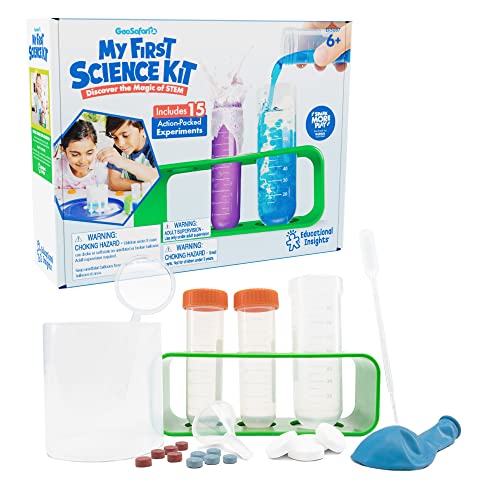
GeoSafari Jr. Interactive Science Set
Best value bundle · Educational Insights

GeoSafari Jr. Interactive Science Set

A grab-bag of GeoSafari Jr. discovery tools at a budget-friendly price — a genuinely good way to find out which kind of science a kid gravitates to before committing to a pricier set. It's hands-on rather than electronic, which is a nice counterweight to the talking toys: here the child does the looking, sorting, and experimenting themselves. Good for a classroom, a science-themed party favor, or a first "real explorer" gift under $15.

Builds: hands-on science · sorting · experimenting

~$14· See it on Amazon

Outdoor explorer kit

Cheap, near-indestructible tools that pull a kid off the couch and into the backyard. These are the Easter-basket and backpack staples — the fastest way to turn a walk in the park into an expedition.

GeoSafari Jr. Kidnoculars
Best under $15 · Educational Insights

GeoSafari Jr. Kidnoculars

The toddler-and-up classic, and the best few dollars in this whole guide. These are simple focus-free binoculars built so even a three-year-old can hold them up and instantly see things bigger — no fiddly adjustment, no glass to scratch. They're an Easter-basket and stocking staple for a reason: light, near-indestructible, and the fastest way to turn a walk in the park into an expedition. Buy two so siblings stop fighting over them.

Builds: observation · focusing · outdoor play

~$8· See it on Amazon
GeoSafari Jr. Bugnoculars
Best for bug hunters · Educational Insights

GeoSafari Jr. Bugnoculars

Part magnifier, part humane bug jar: a child gently catches a beetle or ladybug, pops it in the clear container, and studies it up close through the built-in magnifying lid before letting it go. It teaches the gentle-handling, observe-then-release habit that's the heart of real nature study, and it gives the toddler who's afraid of bugs a safe way to get curious instead. Cheap, tough, and the kind of toy that lives in a backpack all summer.

Builds: nature study · gentle handling · curiosity

~$14· See it on Amazon
GeoSafari Jr. Underwater Explorer Boat
Best for water play · Educational Insights

GeoSafari Jr. Underwater Explorer Boat

A little boat with a magnifying viewing window in the hull, so a child can float it on a pond, lake, or even the bathtub and peer down at what's underneath without getting soaked. It turns water play into looking-and-noticing, which is a rare combination, and it's the kind of clever, single-purpose tool the GeoSafari Jr. line does so well. Great for a lake house, a camping trip, or just bath time that doubles as science.

Builds: observation · water play · nature awareness

~$13· See it on Amazon

Talking toy or hands-on scope — which to buy

Quick rule: for a 3-to-5-year-old, lead with a talking toy — the Talking Microscope or Talking Telescope — because the audio and built-in images mean instant success with zero setup. For a 5-to-7-year-old who likes to do it themselves, pick a hands-on scope like My First Microscope or the Kidscope, so they magnify real specimens. The two pair beautifully — the talking toy hooks them, the real scope deepens it.

How much to spend

You can spend almost nothing or quite a lot here. The best value in the line is genuinely under $15 — the basic Kidnoculars (around $8), the Bugnoculars, the Underwater Explorer Boat, and the Interactive Science Set all make great small gifts and stocking stuffers. The $20–43 range is where the interactive toys and hands-on scopes live (Talking Microscope, Talking Telescope, My First Microscope) — the sweet spot for a real birthday gift. The one splurge is the Talking Space Explorer; save it for a space-mad kid. Prices drift, so tap through for Amazon's current figure.

Frequently asked questions

What happened to the original GeoSafari Laptop?
The classic GeoSafari electronic learning "laptops" — interactive quiz consoles that taught geography, science, and trivia — have largely been discontinued and replaced by Educational Insights' current GeoSafari Jr. "Talking" line. Toys like the GeoSafari Jr. Talking Microscope, Talking Telescope, and Talking Space Explorer carry the same idea forward: a child interacts with the toy, it shows real images, and a built-in voice narrates facts and runs quizzes. They're the modern equivalent, and in most ways an upgrade.
What age is GeoSafari Jr. for?
Most of the GeoSafari Jr. line is built for ages 3 to 6 — the preschool and early-elementary years. The simplest tools like the Kidnoculars and Bugnoculars work from age 3, the Talking Microscope is rated 3+, and the Kidscope and Kidnoculars Extreme are aimed at 5 and up. The regular (non-Jr.) GeoSafari microscopes and telescopes are a separate, more advanced line meant for ages 7 and 8 and up.
Are the GeoSafari "talking" toys real microscopes and telescopes, or just toys?
They're interactive viewers, not optical instruments — and that's the point. The Talking Microscope shows a child built-in magnified photographs and narrates them rather than magnifying a live specimen, and the Talking Telescope shows slide images of space rather than the real sky. For a 3-to-5-year-old that's actually the better experience: no slide prep, no aiming a scope they can't control, just look-and-learn. If you want a child to magnify real bugs and leaves themselves, pick a hands-on scope like My First Microscope or the Kidscope instead.
Which GeoSafari toy is the best gift to start with?
For a preschooler, the GeoSafari Jr. Talking Microscope is the best single pick — it's interactive, runs solo, and has the broadest appeal. On a tighter budget, the plain Kidnoculars (around $8) is the best value in the line and a perfect first explorer gift. For a space-obsessed kid, the Talking Telescope or, as a splurge, the Talking Space Explorer are the standouts.
Do the talking GeoSafari toys need batteries?
Yes — the interactive "talking" toys (microscope, telescope, wildlife camera, space explorer) are battery-powered, since the audio and quiz modes are the whole appeal. The simple hands-on tools — the basic Kidnoculars, Bugnoculars, microscopes, and the Underwater Explorer Boat — use no batteries at all and never run out. It's worth keeping spare AAs on hand for the interactive ones; a dead toy at a birthday party is a quick way to disappoint.

How we choose — and a word on the links

Educational Toys Planet has specialized in learning toys since 2004. We pick independently, only from established makers, then cross-check every candidate against current availability and the major independent award and expert lists. We don't accept payment for placement.

Affiliate disclosure: the product links here are Amazon Associate links. If you buy through them we may earn a small commission at no extra cost to you — that's what keeps these guides free and updated. Prices change; tap through for Amazon's current figure. Last updated June 2026.

Related guides