Our Top Picks

Perfect for younger learners who are just beginning their geography journey. These flash cards make memorizing states and capitals feel like a game rather than a chore, building confidence alongside k

A tactile, interactive globe that invites children to touch, explore, and write on it. Grandparents love giving this because kids actually want to pick it up and play with it—geography becomes irresis
Ideal for older elementary students ready to dive deeper into geography. These cards transform social studies into an engaging challenge that keeps curious minds coming back for more learning.
How does your child imagine the world beyond their neighborhood? Maybe they're curious about what life looks like in different states, or they wonder about the countries they see on a map. Social studies play isn't about memorizing facts—it's about opening windows to new places, different cultures, and the stories that shape our world.
The toys in this collection turn geography, history, and culture into adventures. A globe becomes a launchpad for discovery. Flash cards transform into games that stick in memory because they're actually fun. When your child engages with these tools, they're building something deeper than knowledge: they're developing empathy, critical thinking, and genuine curiosity about the diverse people and places around them.
Whether you're a parent looking to spark that spark at home, or a grandparent searching for a gift that keeps giving all year long, these social studies toys create those quiet moments of wonder—when a child suddenly understands something new about the world, and you see it light up in their eyes.
Age Recommendations
Ages 5-6: Your child is beginning to understand maps and locations. Start with colorful, tactile toys like inflatable globes they can touch and explore. Simple flash cards with bright illustrations work wonderfully at this stage—keep sessions short and playful.
Ages 7-8: Children are developing stronger memory skills and can handle more detailed information. Flash cards become more effective, and your child might enjoy challenging themselves to remember capitals. This is a perfect time to introduce geography as a fun puzzle to solve.
Ages 9+: Older children are ready for deeper learning and enjoy more complex social studies materials. They can understand connections between geography, culture, and history—and many become genuinely passionate about learning about different places and peoples around the world.
Our Recommended Products

Engaging US States & Capitals Flash Cards
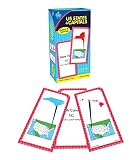
The Carson Dellosa US States and Capitals Flash Cards are a fantastic way to transform your child’s social studies lessons into interactive games that make learning enjoyable and engaging. With 109 vibrant cards, your kids will dive into geography, memorizing states and capitals while discovering fascinating American history and fun facts about each state. These cards not only promote knowledge retention but also enhance critical thinking and social studies skills, all while having fun! Plus, the bonus resource cards provide a wealth of additional activities, ensuring countless hours of educational playtime for kids aged 5 to 7.
Engaging US States & Capitals Flash Cards include 109 vibrant cards that turn learning geography into a game, making it fun to discover new places and facts together.

Inflatable Labeling Globe for Geography Fun
The Learning Resources Inflatable Labeling Globe is a fantastic addition to any classroom or home, promoting interactive learning in geography, history, and social studies. This giant write-and-wipe globe invites kids to explore the world hands-on, allowing them to trace routes, label countries, and understand global connections with ease. As parents and educators, we know that engaging tools like this globe can spark curiosity and enhance spatial awareness skills in young learners. Plus, with an included activity guide and repair kit, this globe is ready for all kinds of exciting adventures!
Inflatable Labeling Globe for Geography Fun features a giant write-and-wipe surface, making geography an exciting hands-on experience that sparks adventure and curiosity in young explorers.

Engaging States and Capitals Flash Cards!
Carson Dellosa States and Capitals Flash Cards are the perfect tool for transforming your child's social studies lesson into an engaging adventure! These cards not only reinforce knowledge of US states and capitals but also come packed with fascinating American history facts and fun trivia that will pique your child's curiosity. With 109 beautifully designed cards, including maps for visual learning, you'll see their understanding and appreciation of geography flourish. Plus, the bonus resource cards offer additional games and activities to make exploring our country even more enjoyable!
Engaging States and Capitals Flash Cards feature 109 beautifully designed cards that make learning geography feel like an exciting treasure hunt through America’s history.
Educational Value
Social studies toys do something powerful: they make abstract concepts tangible. When your child holds an inflatable globe and traces their finger across state borders, geography stops being a flat picture in a workbook and becomes real. Flash cards about states and capitals might seem simple, but they're actually teaching memory retention, spatial awareness, and the organizational patterns that support all future learning.
Beyond facts, these toys develop critical thinking. Kids learn to ask questions: Why do people settle in certain places? How are different regions connected? These toys naturally encourage role-playing, comparison, and discussion—the exact conversations that build cultural awareness and civic understanding. Your child isn't just learning where things are; they're learning to think like a geographer and a global citizen.