Our Top Picks

Perfect for grandparents seeking a meaningful gift that grows with your grandchild. The Rekenrek builds number sense through hands-on exploration, turning abstract math into something they can see, to

A wonderful investment in your child's math confidence during the elementary years. Fraction Circles make a notoriously tricky concept click into place through visual, tactile learning. Kids actually

If your child loves creating and building, Pattern Blocks offer endless possibilities for exploration. They naturally teach geometry and spatial thinking while keeping kids happily engaged for hours.

A delightfully simple gift that combines fun and learning beautifully. Wooden dominoes spark mathematical thinking while encouraging social play—perfect for family game nights or classroom collaborati
There's a quietness that happens when a child really listens—when they're not just hearing, but truly *listening*. That's what Montessori bells do. They invite children into a world of pure sound, where each note is a discovery waiting to happen.
Montessori bells have been part of thoughtful classrooms for over a century because they work on multiple levels at once. Your child is developing their ear, yes, but they're also building concentration, refining their fine motor control, and learning to notice the subtle differences between things. It's sensory learning at its finest—the kind that feels like play but is actually sculpting how their brain develops.
Whether you're a parent seeking tools that grow *with* your child or a grandparent wanting to give something that creates real "aha" moments, bells offer something special. They're not just instruments—they're an invitation to slow down, to listen carefully, and to discover that learning can be as simple and beautiful as ringing a bell and really *hearing* it.
Age Recommendations
Ages 18 months – 2 years: Your youngest learners are ready for simple sound exploration. Choose bell activities focused on listening and sensory delight. Soft, colorful bells that produce gentle tones are ideal—no complex tasks yet, just joyful discovery of cause and effect.
Ages 3 – 4 years: This is the sweet spot for introducing more structured bell activities. Children can now match similar sounds, begin sequencing notes, and handle instruments with greater control. Their growing focus makes this the perfect time for foundational music and listening skills.
Ages 5 and up: Older children are ready for bell bars that teach pitch relationships, scales, and even early music theory. They can understand the logic behind intervals and enjoy the challenge of more complex sound-matching games. Bells become tools for mathematical thinking and musical understanding.
The beautiful truth: Bells aren't limited by age—they're tools that grow with your child, offering deeper learning at each stage. Start where your child is, and let their natural curiosity guide the way forward.
Our Recommended Products

Rustic Western Climber for Active Play
The FDP Rustic Western Toddler Playtime Corner Climber transforms any space into an engaging adventure zone for our little ones. Designed with safety in mind, this four-piece set encourages toddlers to climb, crawl, and slide, promoting essential motor skills and coordination. With its stylish distressed faux leather look, it fits seamlessly into both home and classroom environments, inspiring imaginative play that blends learning with fun. Whether in a cozy corner of our living room or a vibrant Montessori classroom, this climber is a fantastic way to foster physical activity and creativity among our children.
Rustic Western Climber for Active Play encourages toddlers to climb, crawl, and slide safely, making every moment fun-filled while building essential physical skills.

Colorful Counting Adventures Await!
The hand2mind 20-Bead Wooden Rekenrek Abacus Classroom Set is a fantastic tool for nurturing young mathematicians in the making! This engaging set of counting manipulatives not only helps children grasp foundational concepts like numbers, addition, and subtraction but also promotes independent learning in a fun and interactive way. Ideal for parents and educators alike, this Montessori-inspired resource transforms math lessons into colorful counting adventures that spark curiosity and confidence.
Colorful Counting Adventures Await! features 20 vibrant beads that turn math lessons into a fun counting adventure, helping kids build confidence one bead at a time.
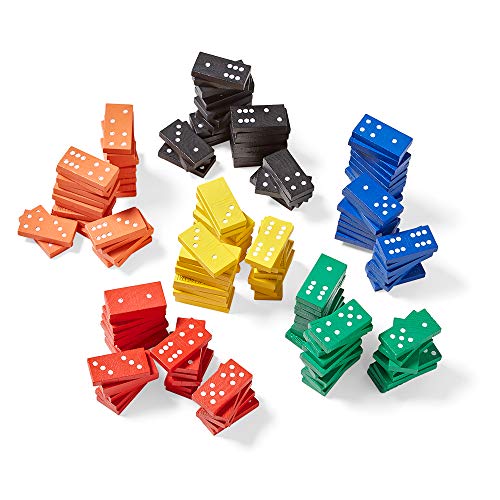
Engaging Learning with Wooden Dominoes
hand2mind Wooden Dominoes Set for Kids sparks creativity and mathematical thinking in young minds! With vibrant colors and a charming design, these dominoes not only make for delightful play but also serve as effective Montessori math manipulatives. As we see our kids practicing counting, patterning, and even basics of probability, we can’t help but smile at their enthusiasm and engagement. Plus, they’re perfect for classroom settings or family game nights, making math both fun and social!
Engaging Learning with Wooden Dominoes features vibrant colors that turn math into a colorful adventure, making learning a joyous and interactive experience for everyone involved.

Creative Plastic Pattern Blocks for Kids
The hand2mind Plastic Pattern Blocks for Kids ignite a passion for geometry and creativity in young learners! Perfect for kindergarten and Montessori classrooms, these vibrant multicolored blocks encourage children to explore shapes, symmetry, and patterns through hands-on play. By sorting, constructing, and designing with these blocks, kids not only enhance their shape recognition skills but also foster critical thinking and spatial awareness. It's a fun, interactive way to make math come to life while nurturing a love for learning that lasts a lifetime!
Creative Plastic Pattern Blocks for Kids spark geometric exploration with vibrant colors, turning math into a vibrant playground where learning happens through hands-on building and creativity.

Rainbow Fraction Circles for Fun Learning
hand2mind Plastic Rainbow Fraction Circles are a fantastic tool for teaching our kids the essentials of fractions and decimals in an engaging way! These colorful manipulatives not only make learning fun but also help students visualize and understand the relationships between different fractional components of a whole. With 51 vibrant pieces representing everything from halves to twelfths, we can easily organize fraction games, ordering exercises, and even explore mixed numbers together. It's the perfect addition to our homeschool supplies or Montessori classroom, fostering critical thinking and problem-solving skills while exploring the world of math!
Rainbow Fraction Circles for Fun Learning includes 51 vibrant pieces that transform tricky fractions into colorful fun, making math exploration feel like a lively game of color matching.
Educational Value
When children work with Montessori bells, they're exercising skills that show up everywhere in their academic lives. Fine motor control improves as they learn to strike bells with precision and handle them with care. Their auditory discrimination sharpens—the ability to hear differences between sounds is foundational to reading, language, and even math concepts.
Beyond the sensory magic, bells teach children about cause and effect, help them develop focus, and give them a tactile way to explore music and rhythm. Combined with complementary tools like wooden dominoes for patterning or fraction circles for mathematical thinking, bells become part of a rich learning ecosystem where children understand that exploration—whether sonic or mathematical—follows beautiful, discoverable rules.