Best nanoblock & Architecture Building Sets for Kids (2026)

Shrink a world monument down to your desk. Architecture building sets — the tiny-brick nanoblock kits, the 3D landmark models, the working wooden machines — are some of the most rewarding gifts for a kid who likes to build with intent. They demand patience and reward it with something genuinely display-worthy: a glowing Empire State Building, a cherry-blossom bonsai, a catapult that actually flings.

If you landed here hunting the Kinkaku-Ji golden-temple nanoblock and found it out of stock, this guide is the fix: the best in-stock kits in the same family, every one from an established maker, with an honest reason behind each choice.

🧸 Curating learning toys since 2004 Independent picks · no pay-for-placement

How to pick the right kit

The single biggest mistake is buying too hard a set. A 480-piece micro-brick skyscraper is a magical gift for a patient twelve-year-old and a heartbreaker for an eager eight-year-old who stalls out halfway and never goes back. So start with two questions: how small can the pieces be before your child gets frustrated, and how many sittings will they realistically give it? Match the kit to those honest answers and the hobby sticks.

From there it's about flavor. Some kids want a faithful landmark — a recognizable Arc de Triomphe or London skyline to point at and say "I built that." Others want the meditative, almost zen rhythm of placing hundreds of tiny nanoblock bricks. And a big group wants the build to do something — to launch, glow, or peek around a corner when it's done. We've sorted the list along exactly those lines below.

Famous buildings & landmarks

The heart of this hobby: shrink a world monument down to your desk. These range from an 11-dollar micro-brick monument to a two-foot lit-up skyscraper, so there's an entry point for every age and patience level.

World Famous Buildings: Arc de Triomphe
Editor’s pick · nanoblock

World Famous Buildings: Arc de Triomphe

If you came here for the Kinkaku-Ji temple kit and found it sold out, this is the nanoblock to start with instead — same micro-brick system, same architecture, a friendlier price. The blocks are roughly a quarter the size of a LEGO stud, which is exactly the point: building a famous monument out of pieces this small forces a kid to slow down, read the diagram carefully, and place each row deliberately. It's the most affordable way to find out whether your child actually enjoys this fiddly, meditative style of building before you spend more on a deluxe set. Best for patient eight-and-ups; younger kids lose the tiny pieces.

Builds: spatial reasoning · patience · fine motor

~$11· See it on Amazon
Architect Series Empire State Building (LED)
Most impressive build · 4D Build

Architect Series Empire State Building (LED)

The showpiece of the list. 479 numbered pieces snap into a nearly two-foot tower with real Art Deco setbacks, and the included LED lights mean it actually glows on a shelf when it's done — the payoff that keeps a kid coming back to a multi-session build. It's labeled 12 and up for good reason: this is a genuine sit-down project, not an afternoon, and a younger builder will need a hand. For a tween who likes skylines, model-making, or just finishing something big, it's the gift that earns a spot on the desk.

Builds: engineering sense · following plans · persistence

~$30· See it on Amazon
Statue of Liberty 3D Puzzle
Best first 3D build · Daron

Statue of Liberty 3D Puzzle

Only 39 foam pieces, which is precisely why it's the right on-ramp. A child who isn't ready for a 400-piece tower can build a recognizable Lady Liberty in a single sitting and feel like an architect by dinner. The foam pieces are chunky and forgiving — they slot together without glue and survive a re-build — so the frustration ceiling is low. We reach for this one first with younger or less patient kids, then move them up to the harder kits once they've tasted the win.

Builds: spatial reasoning · 3D thinking · confidence

~$15· See it on Amazon
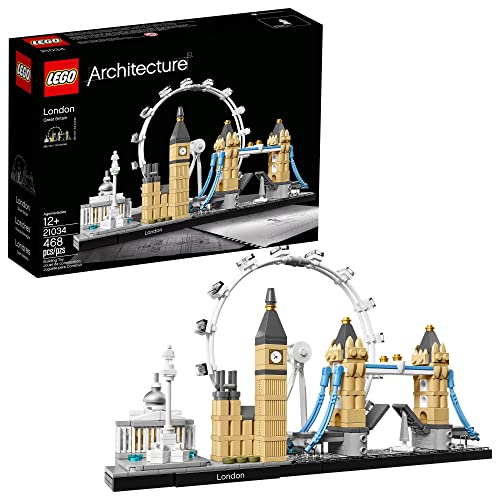
Architecture London Skyline Collection 21034
Best for LEGO fans · LEGO

Architecture London Skyline Collection 21034

The bridge between regular LEGO and the micro-architecture world. At 468 pieces it builds Big Ben, the London Eye, Tower Bridge and the Shard on a single base, with a printed nameplate that makes it look like something from a museum gift shop. A kid who already loves LEGO but has aged out of the playsets gets a build with a grown-up payoff here. It's marked 12+, and the scale is small and detailed — but for the right tween it's the set that turns "building toys" into a display hobby.

Builds: spatial reasoning · following plans · landmarks

~$32· See it on Amazon

Micro-block kits to start with

nanoblock's tiny bricks are the gateway to architecture building — meditative, detailed, and addictive. These cheaper culture-and-food kits are the smart way to test the waters before a big set.

Culture: Bonsai Sakura
Most beautiful · nanoblock

Culture: Bonsai Sakura

A miniature cherry-blossom bonsai built from hundreds of pink and brown micro-blocks — and a lovely change of pace from buildings and vehicles. Placing each tiny blossom is slow, quiet, repetitive work, which is exactly what makes it calming; kids who find this style of building soothing tend to really love it. The finished tree is genuinely display-worthy on a windowsill. Same caution as every nanoblock: the pieces are tiny, so it's an eight-and-up gift and not for a house with toddlers underfoot.

Builds: fine motor · patience · color & pattern

~$17· See it on Amazon
Foods: Sushi
Best small gift · nanoblock

Foods: Sushi

Proof that nanoblock isn't only temples and towers — this one builds a little plate of nigiri and a tuna roll, and it's pure delight for a kid who loves tiny food. It's a perfect stocking-stuffer or first taste of the micro-block system: cheap enough to take a chance on, quick enough to finish in a sitting, and charming enough to leave on a shelf. A good gateway before a child commits to a bigger architecture kit, and a fun add-on if you're already buying one.

Builds: fine motor · color matching · patience

~$12· See it on Amazon
Chinese Pagoda 3D Wood Puzzle
Best brain-teaser · Project Genius

Chinese Pagoda 3D Wood Puzzle

Part model, part puzzle. This laser-cut wooden pagoda doubles as a mechanical brain-teaser — the pieces interlock in a specific order, so a kid has to figure out the sequence, not just follow a picture. It scratches the same itch as a famous-building kit but adds a genuine logic challenge, and the natural wood looks far nicer on a shelf than plastic. Good for the eight-and-up child who likes to be a little bit stumped, and a refreshing screen-free alternative when the iPad has been doing too much heavy lifting.

Builds: logic · problem solving · spatial reasoning

~$17· See it on Amazon

Builds that actually do something

Not every model just sits there. These working machines — a siege engine, a catapult, a periscope, a glowing eagle — reward the build with a payoff a kid can play with.

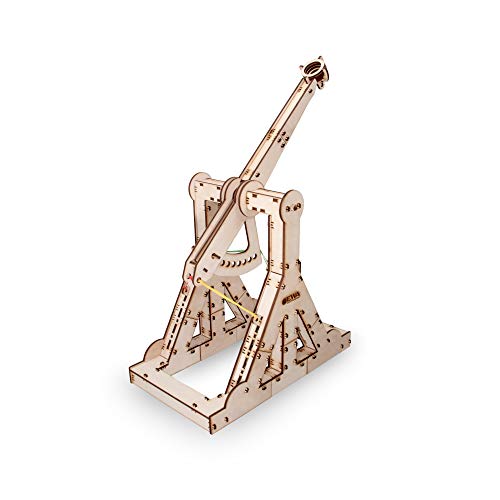
Trebuchet 3D Wooden Model Kit
Best mechanical build · Eco Wood Art

Trebuchet 3D Wooden Model Kit

Build a medieval siege engine — and then actually launch things with it. Unlike a static model, this laser-cut wooden trebuchet has a working counterweight arm, so once a kid assembles it they get to test how it flings a small projectile, which makes the engineering lesson land in a way no picture can. It's a meatier, more involved project than the foam puzzles, so plan for a few sessions and a little grown-up help with the trickier joints. Worth it for the child who wants their build to do something.

Builds: engineering sense · cause & effect · persistence

~$40· See it on Amazon
Da Vinci Catapult Wood Model Kit
Best STEM · National Geographic

Da Vinci Catapult Wood Model Kit

A working catapult based on Leonardo da Vinci's own designs, which sneaks a real history-and-physics lesson into the fun of building something that flings. The wooden pieces assemble into a genuine machine with moving parts, and the booklet ties it back to Renaissance engineering — so a kid leaves knowing a little about who da Vinci was, not just how to follow a diagram. It's our pick for the eight-and-up child who likes building things that work, and a strong classroom or homeschool project.

Builds: engineering sense · history · problem solving

~$30· See it on Amazon
Periscope 3D Wooden Engineering Kit
Best under $15 · Smartivity

Periscope 3D Wooden Engineering Kit

The most affordable real build here, and a clever one: kids assemble a working wooden periscope with actual mirrors, then use it to peek around corners and over walls. It's the rare kit where the finished object is a toy in its own right, not just a model to display, which buys a lot of play after the building's done. Rated six and up, the steps are simple enough for a younger builder to mostly manage solo — a great first "I made a real machine" project before the harder kits.

Builds: optics & STEM · following steps · fine motor

~$10· See it on Amazon
Creatto American Bald Eagle Light-Up Kit
Best light-up · Thames & Kosmos

Creatto American Bald Eagle Light-Up Kit

A flexible 3D building kit that clicks together into an eagle (and a few other creatures from the same pieces) and then lights up from within. The interlocking panels are bigger and far more forgiving than micro-blocks, so it suits a kid who wants the satisfaction of a glowing finished build without the tweezers-and-patience demands of nanoblock. Because the pieces rebuild into different shapes, it has more replay than a one-and-done model. A friendly, lower-stakes entry into the build-and-display world.

Builds: spatial reasoning · 3D thinking · creativity

~$16· See it on Amazon

A note on the tiny pieces

nanoblock and micro-brick kits are wonderful — and they are not for a home with toddlers. The bricks are about a quarter the size of a LEGO stud, small enough to be a real choking hazard and easy to vacuum up by accident. Build on a tray or a rimmed baking sheet to corral strays, keep the kits up high between sessions, and treat the 8+ label as a floor, not a suggestion. For a younger sibling in the mix, steer toward the chunky foam and larger-panel kits on this list instead.

How much to spend

You can start this hobby for almost nothing. Several real builds here are under $17 — the Smartivity Periscope, the Arc de Triomphe nanoblock, the Sushi kit, and the Statue of Liberty puzzle all make smart first gifts or stocking stuffers. The $25–40 range (Empire State Building, the LEGO London Skyline, the da Vinci catapult, the trebuchet) is where the impressive, multi-session builds live — the ones that earn a permanent spot on a shelf.

Frequently asked questions

What age is nanoblock and architecture building sets for?
Most nanoblock and micro-brick architecture kits are labeled 8 and up, mainly because the pieces are tiny enough to be a choking hazard for little ones and fiddly enough to frustrate them. The bigger, multi-session sets like the 4D Build Empire State Building and LEGO Architecture London Skyline are marked 12 and up. For a younger or less patient builder, start with a chunky foam kit like the Daron Statue of Liberty (8+, 39 pieces) or the Smartivity Periscope (6+) and work up from there.
I wanted the Kinkaku-Ji golden temple nanoblock — what should I get instead?
The specific Kinkaku-Ji (Golden Pavilion) kit goes in and out of stock, so this guide gathers the best available alternatives in the same family. For the closest experience, the nanoblock World Famous Buildings: Arc de Triomphe uses the identical micro-brick system at a lower price, and the Bonsai Sakura kit captures the same Japanese-culture feel. If you specifically want a temple shape, the Project Genius Chinese Pagoda 3D wood puzzle is the most architecturally similar pick here.
Are these building sets actually educational, or just models?
The good ones genuinely build skills. Following a multi-step diagram trains spatial reasoning and the ability to hold a plan in your head; the micro-block kits build real fine-motor precision and patience; and the working models — the trebuchet, the da Vinci catapult, the periscope — teach cause-and-effect and basic engineering you can actually test. They are not flashcards, but they exercise focus and persistence far better than most toys that light up and do the playing for the child.
How long do these take to build, and will my kid finish?
It varies a lot by piece count. The 39-piece Daron Statue of Liberty and the small nanoblock food kits are one-sitting builds — perfect for a quick win and a hesitant builder. The 468-piece LEGO London Skyline and 479-piece 4D Build Empire State Building are real multi-session projects that a younger child will want help with. Our advice: match the piece count to your child's attention span, and for a first kit, err smaller — finishing builds confidence; abandoning a too-hard set sours the whole hobby.
nanoblock vs. LEGO Architecture — what's the difference?
nanoblock bricks are about a quarter the size of LEGO studs, so nanoblock kits are smaller, cheaper, more detailed, and considerably more fiddly — great for patient builders and tight budgets. LEGO Architecture uses standard-size bricks, so the builds are sturdier, easier to handle, and pricier, and they appeal to kids who already love LEGO. For a first architecture build, nanoblock is the low-cost way to test interest; LEGO Architecture is the better pick for an established LEGO fan ready to graduate to display models.

How we choose — and a word on the links

Educational Toys Planet has specialized in learning toys since 2004. We pick independently, only from established makers, then cross-check every candidate against current availability and the major independent award and expert lists. We don't accept payment for placement.

Affiliate disclosure: the product links here are Amazon Associate links. If you buy through them we may earn a small commission at no extra cost to you — that's what keeps these guides free and updated. Prices change; tap through for Amazon's current figure. Last updated June 2026.

Related guides