Screen-free vs. a tablet: why one thing beats everything
Parents often ask whether a "learning tablet" is just a locked-down iPad. For a young child, the more
useful question is the reverse: why a toy that does exactly one thing so often beats the device that
does everything. A tablet is a portal — a swipe from the next video, the next app, a notification. A
coding robot or a circuit kit can't take your child anywhere else, and it has an end: you
finish the maze, the circuit lights, the 100 projects run out. A good app is engineered never to end.
That difference is most of the reason the button toy wins — not the software, the surroundings.
There's a physical reason too. Snapping parts together, pressing a mouse's direction keys, watching a
marker robot draw the sequence your kid wrote — the body is in it, which is how young children actually
encode what they learn. Swiping glass isn't. So to claw back screen time, lean on the genuinely
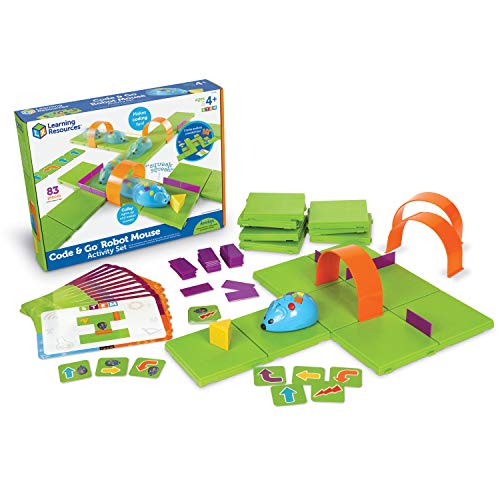
screen-free picks: the robot mouse,
Botley, the
Snap Circuits kit, and the
talking microscope all run on batteries
alone. Only Artie 3000 needs a device to
program it — and that's the same connection that lets it grow into real JavaScript later.
Batteries, volume & the durability nobody mentions
Three practical realities parents consistently underestimate — none of them dealbreakers, all worth
knowing before the gift is unwrapped.
Batteries are rarely in the box, and these toys eat them. Most run on AA or AAA cells
that aren't included, and a coding robot that won't move on the big morning is a small, avoidable
tragedy. Toss a multipack in with the gift; because these get heavy repeat use, a set of rechargeable
NiMH cells tends to pay for itself. A few of the talking toys and pens use button cells that are
fiddlier to swap — worth checking which before you're hunting one down at 8 a.m.
Volume is the one people forget. Plenty of electronic toys ship loud, with either no
volume control or just two settings — loud and off. Toddler laptops and talking toys are the usual
offenders. Look for a volume switch in the specs, and know the old parent trick: a square of tape over
the speaker takes a few decibels off without muffling it completely. An off switch that genuinely stays
off, rather than dozing and chirping awake, is worth more than it sounds.
The real durability risk isn't drops — it's lost pieces. Most of these survive a
tumble; the weak points are screens and marker mechanisms. What actually kills a set is small parts
migrating under the couch — the circuit-kit components and the robot-mouse maze walls especially. A zip
bag or a labelled bin from day one is the difference between a toy that lasts years and one that's
incomplete by spring.
How much to spend
You really don't need to spend much. Several of the best picks are under $35 —
BrainBolt, the Hot Dots phonics set,
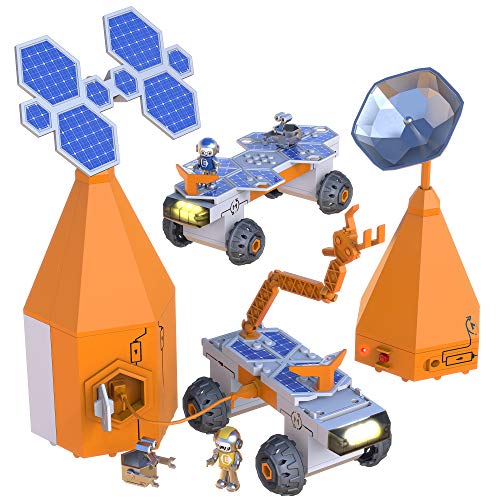
the Circuit Explorer Rover, MathShark,
the LeapTop Touch, and Snap Circuits Jr.
all punch above their price. The splurges that earn it are the coding robots —
Botley around $80 and the robot mouse
around $45 — because they keep working across several years as a child moves from simple sequences to
loops and logic.
When to skip the electronics and buy analog
We sell learning toys, and we'll still say it plainly: for plenty of jobs a battery-free toy is the
better buy. A few honest rules of thumb.
Under about three, keep it simple. Blocks, stacking cups, board books, and a
caregiver's voice do more for language and motor skills than almost any electronic toy. A talking gadget
at this age is convenient, not superior.
If the analog version demands more of the child, buy analog. Wooden pattern blocks make
a child build the pattern; a light-up pattern toy often just checks it. A deck of cards or a pair of
dice forces them to produce the math fact; a handheld can end up producing it for them. The toy that
makes your kid generate the answer beats the one that only grades it.
For open-ended play, nothing electronic keeps up. LEGO, magnetic tiles, art supplies, a
marble run — no batteries, endless recombination, no ceiling to hit. Many electronic toys have a finite
stack of projects or levels; once they're solved, the toy is done.
So where do electronics genuinely earn their place? Coding logic you can watch and debug, self-checking
drill that just needs reps — phonics and
math facts — and self-paced solo practice a book can't
give interactively. Buy the electronic toy for the thing it's uniquely good at, not as the default gift.