Our Top Picks

Perfect for your 3-year-old's curious hands! This 7-in-1 Montessori busy box grows with your child, offering the right balance of challenge and success that keeps toddlers engaged without frustration.

A wonderful gateway to science for preschoolers who love exploring their own bodies. The hands-on activities make abstract concepts like anatomy real and tangible for little learners.

While designed for slightly older kids, this flower model can spark amazing conversations with curious 3-year-olds about how plants grow—perfect for grandparents looking to stretch their grandchild's
Your three-year-old is going to ask "why?" constantly. Why does water swirl down the drain? How do flowers actually grow? What makes magnets stick? You can answer the same question five times a day, or you can hand them a science toy that lets them figure it out themselves. That's what these toys do—they turn those endless questions into hands-on experiments.
At this age, kids learn by touching, moving, and watching what happens next. A busy box with latches and dials teaches fine motor skills without feeling like a lesson. A flower model or human body puzzle makes their random observations concrete. The best part? When they're quietly concentrated on discovering how a gear turns or how water moves through tubes, you get a few minutes of peace. And they get genuine learning happening naturally, the way their brains actually work at three. Skip the cheap plastic knockoffs. Invest in toys built to handle constant use and real curiosity.
Age Recommendations
For 3-year-olds: Your child is ready for hands-on exploration! Busy boxes and sensory activities with large, safe pieces are perfect. They love cause-and-effect toys where their actions create immediate, visible results. Supervision is key, but your little one's natural curiosity is blossoming.
For 4-5-year-olds: Attention spans grow, and so does their ability to follow simple directions. They're ready for slightly more complex activities and love learning about their bodies, nature, and how things work. This is when pretend play deepens into storytelling and creative problem-solving.
Tips for any age: Choose toys that match your child's current skills without being too easy or too frustrating. The best toys are those you'll enjoy exploring together—your enthusiasm is contagious!
Our Recommended Products

Explore Life Science with Flower Models
Learning Resources Cross-Section Flower Model is a fantastic tool for sparking curiosity in our young scientists! This engaging foam model beautifully illustrates the parts of a tulip, making it easy for kids to connect with life science concepts. With one half labeled for identification and the other half designed for assessment activities, it caters perfectly to the inquisitive minds in our classrooms or homes. Watching our children blend play with learning never gets old, and this model is a wonderful way to foster that love of nature and science!
Explore Life Science with Flower Models features a beautifully detailed foam model that seamlessly merges playtime with learning, fostering a lifelong appreciation for nature in kids.
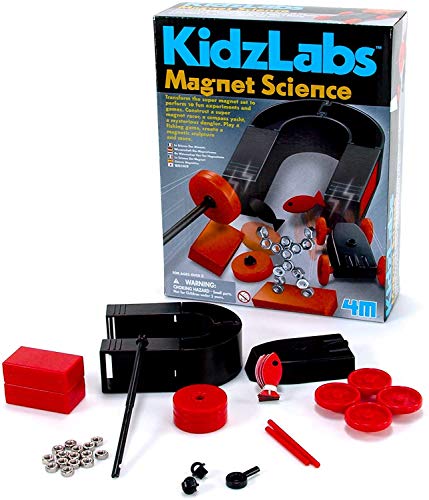
Magnetic Marvels: Explore Magnetism Fun
4M Magnet Science Kit invites young explorers to discover the captivating world of magnetism through hands-on experiments and engaging games. As parents and educators, we appreciate how this kit sparks curiosity and promotes critical thinking skills as kids build fascinating projects like the Super Magnet Racer and Magnetic Yacht. Each experiment serves not just as a playful activity but as a stepping stone into understanding science concepts, making learning both enjoyable and impactful. Perfect for igniting the imaginations of 8-year-olds and up, it encourages teamwork and problem-solving while they play!
Magnetic Marvels features hands-on experiments that turn science concepts into an exciting adventure, ensuring kids are engaged while they learn the magic of magnetism.

Montessori Busy Box Adventure
The Montessori Based Busy Box for 3-5 Year Olds is a treasure trove of fun and learning! This 7-in-1 activity kit not only captivates young minds but also fosters essential skills such as vocabulary development, fine motor proficiency, and scissor skills. We love how it encourages our little ones to explore science and creativity in a delightful, screen-free environment. With lifetime parts included, it’s the perfect choice for parents seeking enriching educational experiences for their children.
Montessori Busy Box Adventure is a captivating 7-in-1 activity kit that transforms learning into an exciting treasure hunt, making education feel like a delightful adventure without screens.

Boba Fett Funko Pop: Science Fiction Play
Funko Pop Boba Fett - Star Wars is not just a collectible; it’s a portal into the vast universe of imagination and storytelling! As we explore the adventures of Boba Fett, we spark creativity and encourage our little ones to develop critical thinking skills by imagining their own sci-fi scenarios. Perfect for storytelling sessions or display on a desk, this figure also helps foster interests in art and design, as kids admire the detailed craftsmanship of the vinyl material. Whether it's for a birthday or just because, this collectible makes learning about storytelling and character development an exciting adventure for fans young and old!
Boba Fett Funko Pop features a detailed design that sparks creativity and storytelling, turning every play session into a thrilling adventure through the Star Wars universe!

Big-Time Biology Adventures for Kids
Skill Builders Science - Human Body Big-Time Biology Adventures is a fantastic way for preschoolers to learn about their own bodies! This engaging set invites children as young as 4 years old to explore the names and functions of vital organs, while honing their fine motor skills through hands-on activities, like building a 3-D model and puzzling mazes. Parents and educators will appreciate how it encourages curiosity and foundational knowledge of biology in a fun, interactive way.
Big-Time Biology Adventures for Kids includes hands-on activities like building a 3-D model, making biology as engaging as it is educational—perfect for little explorers!
Educational Value
Science exploration at three years old isn't about memorizing facts—it's about building the thinking skills your child will need forever. When your toddler manipulates a busy box with multiple activities, they're developing problem-solving strategies and fine motor control simultaneously. Exploring body or nature models helps children understand the world they live in, sparking vocabulary and spatial reasoning naturally through play.
Hands-on science toys teach persistence too. Your child encounters a challenge (fitting a piece, understanding how something works), tries different approaches, and eventually succeeds. That "I figured it out!" moment builds confidence and curiosity that extends far beyond the toy. These early experiences create children who aren't afraid to ask questions, test ideas, and learn from what they discover—exactly the mindset that supports learning in every subject ahead.