Our Top Picks

Perfect for kids ready to tackle more complex patterns, the 120 Number Board grows with your child from ages 6+. It's the ideal stepping stone from simple pattern play into deeper number recognition a
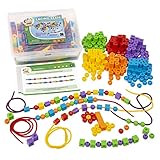
A wonderful gift for curious toddlers who love bright colors and hands-on exploration. The 300 lacing beads make pattern-making tactile and rewarding, building fine motor skills alongside mathematical

Those adorable counting bears are irresistible to little ones ages 3-5, and they're secretly teaching serious sorting and patterning skills. Parents and grandparents love how naturally children gravit

Wooden pattern blocks spark creativity while strengthening spatial reasoning and problem-solving. For ages 3+, these timeless tools let children experiment freely, building confidence alongside mathem
Research shows that children who work with patterns and sequences develop stronger problem-solving skills across all subjects—not just math. When a kid recognizes that a pattern repeats, or figures out what comes next in a sequence, their brain is literally building the neural pathways for logical thinking. It's concrete. It's measurable. And it happens best when they're doing it themselves, not watching someone explain it.
Pattern activities work because they're not abstract the way a worksheet is. Your child physically arranges beads, moves pieces, builds towers in order. Their hands are involved. Their brain has something real to work with. They start to see patterns everywhere—in music, in the tiles on a floor, in how their snack gets organized. This category of toys? They're worth the investment because kids return to them over and over, and each time they're actually thinking, not just playing.
Age Recommendations
Ages 2-3: Start with large, chunky manipulatives like counting bears and oversized lacing beads. At this stage, your child is learning through sensory exploration—colors, textures, and simple sorting. They're not yet thinking about patterns formally, but they're building the brain connections that will support it. Keep activities short and playful.
Ages 3-5: Your child is ready for hands-on pattern play! Introduce pattern blocks, transparent counters, and bead-stringing activities. They can now follow simple repeating patterns and begin creating their own. This is peak discovery time—let them lead with minimal instruction.
Ages 5-7: Children are ready for number boards, more complex sequences, and challenges that require planning. They understand place value concepts and can work through multi-step patterns. This age loves feeling 'grown up,' so these more sophisticated tools feel special to them.
Our Recommended Products

Bunny Brunch Math Adventure
Hand2mind Bunny Brunch is a delightful cooperative board game that introduces toddlers to essential math skills while having a hopping good time! As little ones work together to complete plate patterns and outsmart the sneaky mouse, they develop critical skills such as pattern recognition, sequencing, and counting—all while fostering teamwork and social interaction. This game is a wonderful choice for educators and parents looking to make math engaging and fun during preschool and early learning activities.
Bunny Brunch Math Adventure includes cooperative gameplay that transforms math skills into a delightful, shared experience—perfect for improving little ones' math confidence while bonding with friends and family.

Kids First Math: Lacing Beads Kit
The Kids First Math: Lacing Beads Math Kit is a delightful way for children aged 3 and up to dive into the world of numbers and patterns! With 300 vibrant beads and engaging activity cards, this kit nurtures essential skills like counting, sorting, sequencing, and pattern recognition—all while having fun. As parents and educators, we know the importance of hands-on learning, and this kit promotes fine motor skills and spatial intelligence, making math an exciting adventure. Perfect for both at-home and classroom use, it supports open-ended creative play that keeps kids engaged and motivated!
Kids First Math: Lacing Beads Kit comes with 300 vibrant beads and activity cards, making math feel like a colorful adventure rather than a chore.

Engaging Early Math with FunPlay Blocks
The edxeducation FunPlay Pattern Blocks Homeschool Kit is a fantastic resource for nurturing young minds aged 3 and up. With 60 wooden pattern blocks and 50 double-sided activity cards, this set encourages children to sort, sequence, and create while honing their focus and problem-solving skills. It's a delightful blend of play and learning that sets the foundation for school readiness, making it a must-have for any home learning environment.
Engaging Early Math with FunPlay Blocks includes 60 wooden pattern blocks, making math an exciting hands-on adventure that sparks creativity while setting the stage for school readiness.

Boost Math Skills with 120 Number Board
Learning Resources 120 Number Board is an engaging way for kids to discover and master essential math concepts in a hands-on manner. With 181 pieces that promote pattern recognition, sequencing, and understanding of place value, this versatile board transforms abstract math into interactive play. As parents and educators, we know the importance of solid foundational skills, and this board is perfect for identifying numbers, practicing addition and subtraction, and exploring odds and evens—all while having fun! Gift it for holidays or any occasion, and watch young learners thrive in their math journey!
Boost Math Skills with 120 Number Board includes 181 pieces to make abstract math concepts interactive, turning learning into a delightful game of numbers that feels like playtime.

Engaging Learning with Counting Bears!
edxeducation Counting Bears with Matching Bowls is the perfect hands-on learning tool for our little ones! With 60 adorable bear counters and colorful sorting bowls, this set encourages preschoolers to explore early math concepts through play. Not only do the spinners add an extra layer of fun, but they also help children practice sequencing and patterning while developing fine motor skills. As parents and educators, we love the washable, durable design that promises years of exploration and learning in both classroom and home settings.
Engaging Learning with Counting Bears! includes 60 adorable bear counters that turn early math into a hands-on adventure, making learning feel like playtime instead of homework.

Engaging Learning with Transparent Counters!
edxeducation Transparent Counters are a delightful way to bring math learning to life! With 500 pieces in vibrant colors, these manipulatives are perfect for developing crucial skills in counting, sorting, and sequencing. We love how they encourage our little ones to explore addition, subtraction, and even create patterns in a fun, hands-on way. Plus, when paired with light tables or projectors, they turn learning into a colorful exploration of colors and light physics — it’s simply magical!
Engaging Learning with Transparent Counters! comes with 500 vibrant pieces that transform math learning into a lively, colorful adventure—making foundational skills feel like playtime.
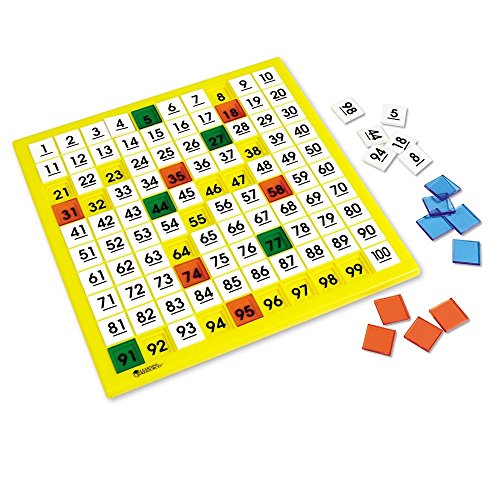
Hundreds Number Board: Fun Numerical Adventures
Learning Resources Hundreds Number Board is the perfect gateway to engaging math adventures! Designed for young learners, this colorful board introduces number patterns, sequencing, and place value in a playful, interactive manner. With 100 numbered tiles and 50 transparent tiles for mixing and matching, kids can explore mathematical concepts while enhancing their problem-solving and critical thinking skills. The durable design ensures that this educational tool can withstand the hustle and bustle of curious minds, making it a must-have for any home or classroom.
Hundreds Number Board features 100 colorful numbered tiles that turn math into a fun exploration, making learning about numbers feel like an exciting adventure rather than a chore.

Learn ABCs with Animal Adventures!
LoveDabble Learn ABC with Animals: Match & Bingo Delight! is the perfect way to engage your little ones with letters and numbers while having fun. With over 50 puzzle pieces, this toy encourages a love for learning through matching adorable animals with their corresponding letters, while also introducing basic math concepts like counting and sequencing. As parents and educators, we appreciate how it develops vital skills such as pattern recognition and problem-solving, all while keeping our kids happily entertained. Whether through hands-on puzzles or worksheets, this kit ensures endless play and learning opportunities.
Learn ABCs with Animal Adventures! includes over 50 puzzle pieces that transform learning letters and numbers into a delightful animal match game, ensuring education feels like playtime.
Educational Value
Patterns and sequences are where math thinking begins. When children recognize that beads repeat in a specific order, or that numbers follow predictable paths, they're developing the logical reasoning that underpins everything from basic arithmetic to complex problem-solving. Your child starts to see the world through a mathematician's eyes—noticing order, predicting what comes next, understanding cause and effect.
These hands-on activities also strengthen critical thinking and spatial reasoning in ways worksheets simply can't match. Using counters, pattern blocks, and lacing beads engages fine motor skills while building number sense and sequencing abilities. Kids who play with these materials develop confidence in their ability to figure things out, which translates directly into a healthy attitude toward math. They learn that math isn't intimidating—it's a fascinating puzzle they can actually solve.