Best Memory & Matching Games for Kids (2026)

Memory is a muscle you can play into shape. The simple act of flipping two cards and remembering where the match was gives kids real practice at focus, attention, and recall — the skills that quietly underpin reading, math, and following a three-step instruction. And unlike a worksheet, a good memory game is something a child actually asks to play.

So we kept only games we'd happily play ourselves — every one from a maker with a real track record, across the whole range from a toddler's first chunky match to the electronic sequence games that hook older kids and grown-ups alike, with a genuine reason behind each choice.

🧸 Curating learning toys since 2004 Independent picks · no pay-for-placement

What memory games actually build

It helps to know what's really being exercised, because "memory" covers a few different skills. The classic flip-the-cards game trains visual recall — holding a picture and its location in mind and retrieving it a few turns later. Electronic games like Simon train sequence memory, the keep-the-order-in-your-head skill. And a game like the Orchard Toys Shopping List works working memory: juggling a list of things you still need while you play. They reinforce each other, which is why a varied shelf beats ten copies of the same match game.

The other quiet wins are attention and turn-taking. A memory game rewards a child for watching closely and waiting through someone else's turn — and sitting with the small frustration of a wrong guess without quitting. That patience-under-mild-stress is worth as much as the recall itself. The trick at every age is to match the deck to the child: start with just a handful of pairs, and add more only as it stops being a challenge.

Classic match-the-cards games

The original memory game: lay the cards face-down, flip two, and remember where everything is. It's the purest workout for visual recall — and these are the well-made versions that won't warp after a month.

Animal Babies Memory Game
Editor’s pick · Ravensburger

Animal Babies Memory Game

If you buy one classic memory game, make it a Ravensburger one — they more or less invented the genre, and the build quality shows. The tiles are thick, glossy, and perfectly square, so they shuffle face-down without warping or curling the way thin cardboard sets do. The baby-animal photos are bright and genuinely distinct from one another, which matters: a memory game only works if a three-year-old can actually tell the cards apart. Start with a dozen pairs for a young child and add the rest as they get sharper. It's the kind of game where a four-year-old will quietly start beating you, and that's the whole point.

Builds: visual recall · concentration · turn-taking

~$15· See it on Amazon
Dinosaur Memory Game
Best themed set · Ravensburger

Dinosaur Memory Game

Same sturdy Ravensburger tiles, but every pair is a different dinosaur — and for the dino-obsessed three-or-four-year-old, the theme is what gets them to the table in the first place. There's a sneaky vocabulary win, too: kids start naming the species as they hunt for matches, so "stegosaurus" and "triceratops" come along for free. A short, fast round suits a preschooler's attention span, and you can stack the deck shallow at first and deepen it as their recall grows. Theme aside, it's a proper memory game, not a licensed cash-in.

Builds: visual recall · concentration · vocabulary

~$13· See it on Amazon
National Parks Wooden Picture Matching Game
Best wooden set · Melissa & Doug

National Parks Wooden Picture Matching Game

Magnetic wooden tiles instead of cardboard — heavier, chunkier, and far more satisfying to flip, and they won't bend or go dog-eared after a month. The pictures are national-park animals and landmarks, so there's a gentle nature-and-geography thread running through the matching. We like wooden memory sets for younger kids specifically because the weight makes the pieces easy to handle and they survive being mouthed, dropped, and stepped on. FSC-certified materials, classic Melissa & Doug build — it's the heirloom version of a memory game.

Builds: visual recall · matching · nature vocabulary

~$15· See it on Amazon

First memory games for little ones

Toddlers and young preschoolers need bigger pieces, shorter rounds, and a hook to stay at the table. These ease a two-, three-, or four-year-old into the idea of matching and remembering.

My First Game: Bears in Pairs
Best for toddlers · Educational Insights

My First Game: Bears in Pairs

Memory games usually start at three or four, but this is the rare one built for a two-year-old. Instead of fiddly cards, kids match chunky bear pieces by color and pop them into a basket — toddler hands can actually manage it, and the tactile pieces hold attention far longer than flat cardboard. It's really a gateway to the concept of matching, the foundation everything else here builds on. A genuine first game for the under-three crowd, where most "memory" sets are too small and too frustrating.

Builds: first matching · fine motor · color recognition

~$25· See it on Amazon
Hoot or Toot Owl Memory Game
Best preschool game · Blue Orange Games

Hoot or Toot Owl Memory Game

A memory game with a charming social twist: you're trying to remember which owls are friends and which ones "toot," and that little narrative hook makes it land for preschoolers who find plain matching dull. Blue Orange makes consistently well-designed, well-made family games, and this one plays in about ten minutes — short enough to finish before a four-year-old loses interest, repeatable enough to ask for again. It's a true 2-to-4-player game, so it earns its place on family game night rather than just being a solo drill.

Builds: memory · social skills · turn-taking

~$22· See it on Amazon
Shopping List Memory Game
Best working-memory · Orchard Toys

Shopping List Memory Game

A different flavor of memory than the flip-the-cards classic: each player gets a shopping list and has to collect the matching grocery cards, holding "what's still on my list" in their head while they play. That's working memory — the keep-it-in-mind kind you actually use all day — rather than pure visual recall, so it's a nice complement to a standard match game. Orchard Toys are a beloved British brand for a reason: thick cards, cheerful art, and rules a three-year-old can follow. The 3-to-7 range means it grows with a child for years.

Builds: working memory · matching · planning

~$12· See it on Amazon

Travel & take-anywhere picks

Self-contained sets with nothing to lose down the back of a car seat — the games that rescue a long drive or a restaurant wait.

I SPY Memory Game Travel Tin
Best for travel · Briarpatch

I SPY Memory Game Travel Tin

The I SPY twist on memory: instead of plain pictures, every card is a busy, cluttered photo collage, so matching a pair means really looking — not just remembering "the red one." That extra layer of visual hunting makes it stickier than a standard match game for kids who've gotten too good at the basic version. It lives in a flat metal tin that survives a backpack, which is the real selling point: this is the game that saves a long car ride or a restaurant wait. Compact, cheap, and harder than it looks.

Builds: visual recall · attention to detail · matching

~$12· See it on Amazon
Flip to Win Travel Memory Game
Best solo play · Melissa & Doug

Flip to Win Travel Memory Game

A clever bit of engineering that solves memory's biggest road-trip problem: loose cards sliding off a car seat. The pictures are printed on a wooden board behind little flip-down doors, so nothing gets lost and a child can play entirely on their own. Flip two doors, and if they don't match, they snap shut again — same rules as card memory, zero pieces to herd. The double-sided cards swap in for variety. It's our pick for the kid who wants to practice solo, or for the back seat where dropped cards are gone forever.

Builds: visual recall · independent play · matching

~$13· See it on Amazon

Electronic sequence-memory games

When matching cards gets too easy, these flash a growing pattern you have to repeat back — building the keep-it-in-mind kind of memory, and they're quietly addictive for older kids and grown-ups too.

BrainBolt Handheld Memory Game
Best for older kids · Educational Insights

BrainBolt Handheld Memory Game

When a kid outgrows matching cards, this is where memory training goes next. BrainBolt flashes a growing sequence of colored lights and you repeat it back — get it right and the chain gets one longer, again and again, until you slip. It's single-player and self-pacing, so an older child (or a competitive adult) keeps chasing their own high score, building the same sequence-memory muscle as the classic Simon game in a slimmer, quieter package. Genuinely addictive in a good way, and small enough to live in a bag for waiting rooms.

Builds: sequence memory · focus · self-challenge

~$17· See it on Amazon
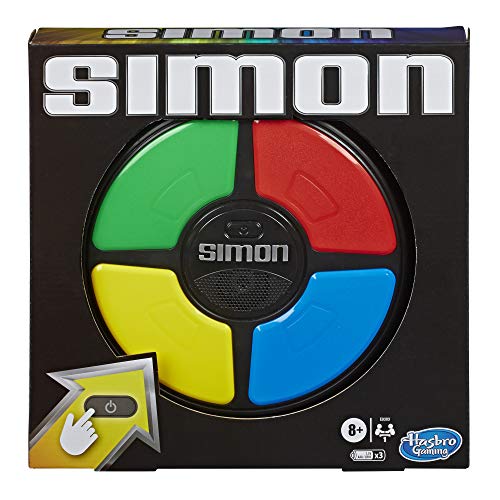
Simon Handheld Electronic Memory Game
The classic · Hasbro

Simon Handheld Electronic Memory Game

The original electronic memory game, basically unchanged since the '70s because it never needed changing. Simon plays a sequence of lights and tones, you echo it back, and each round adds one more — simple to grasp, brutal to master. The tones are the secret: kids remember the little melody as much as the colors, so it trains audio and visual memory at once. It's a forever toy that a grandparent and an eight-year-old can compete at on equal footing, and the satisfying click of the panels is pure nostalgia. A handheld classic worth owning.

Builds: sequence memory · focus · reaction

~$16· See it on Amazon

How much to spend

Memory games are mercifully cheap. Most of the best here are $12–17 — the Ravensburger card sets, the I SPY travel tin, the Flip to Win board, and the Shopping List game all land there and punch well above their price. The electronic picks — BrainBolt and Simon — sit in the same range and double as forever toys. The pricier ones (Bears in Pairs, Hoot or Toot) are full multiplayer board games rather than a deck of cards, so the extra few dollars buys a proper game-night experience. There's no need to spend big here — buy two different kinds of memory game rather than one expensive one.

Frequently asked questions

What are the best games for building a child’s memory?
The classic flip-the-cards match game is the foundation, and a well-made one like the Ravensburger Animal Babies or Dinosaur Memory Game is our top pick — the sturdy tiles and clear, distinct pictures make it work where flimsy sets fail. For toddlers, start with a chunky-piece game like Educational Insights Bears in Pairs. For older kids who have outgrown cards, an electronic sequence game like Simon or BrainBolt is the natural next step. Every pick here comes from an established maker like Ravensburger, Melissa & Doug, or Educational Insights.
At what age can a child start playing memory games?
Around two for the chunky-piece, first-matching kind (Bears in Pairs), and three to four for a standard card memory game — that is usually when a child can hold a few card positions in mind and follow turn-taking. Start shallow: lay out just six to twelve cards (six pairs) for a young child rather than the full deck, and add more as their recall sharpens. Electronic sequence games like Simon and BrainBolt suit older kids, roughly seven and up, who enjoy chasing a high score.
Do memory games actually improve a child’s memory?
They give kids genuine, enjoyable practice at the core skills — holding information in mind, paying close attention, and recalling where something was — and that practice is exactly what builds those habits at an age when play is how children learn best. We would not promise a memory game raises test scores or has some lasting brain-training effect; the honest case is simpler. They are a screen-free, social way to exercise focus and recall, kids love them, and a child who plays regularly clearly gets better at the game. That is reason enough.
What’s the difference between a matching game and a memory game?
They overlap, and the words get used loosely. A pure matching game just asks a child to find two that go together with everything face-up — great for toddlers learning the concept of "same." A memory (or concentration) game turns the cards face-down, so now you have to remember where each one was, which adds the recall challenge. Many sets, like the Briarpatch I SPY tin, do both: play face-up as a young child, then flip them over as they get older. A few here, like the Orchard Toys Shopping List game, train working memory — keeping a list in your head — rather than card positions.
Are screen-free memory games better than memory apps?
For young kids, we think so — and not because apps are useless. A physical game brings in turn-taking, reading faces, handling pieces, and sitting with another person, none of which a tablet offers, and there is no autoplay pulling for more screen time. The games here pack into a bag and work on a plane in airplane mode with no battery anxiety (the card sets, at least). Electronic toys like Simon and BrainBolt are the happy middle: lights and sounds, the satisfaction kids want from a gadget, but single-purpose, no internet, and no feed to fall into.

How we choose — and a word on the links

Educational Toys Planet has specialized in learning toys since 2004. We pick independently, only from established makers, then cross-check every candidate against current availability and the major independent award and expert lists. We don't accept payment for placement.

Affiliate disclosure: the product links here are Amazon Associate links. If you buy through them we may earn a small commission at no extra cost to you — that's what keeps these guides free and updated. Prices change; tap through for Amazon's current figure. Last updated June 2026.

Related guides