Best Math Toys & Games for Kids (2026)

The best math toys make numbers physical. Math goes wrong for kids at the exact moment it turns abstract — when a "five" is just a symbol instead of five things you can hold, build, and break apart. Every toy here closes that gap: counters, snap-together cubes, a bead frame, base-ten blocks, and a few games that sneak in real practice. It's the difference between memorizing and understanding.

We kept only tools we'd actually hand a child — every one from a maker with a real classroom track record (Learning Resources, hand2mind, ThinkFun), arranged from first counting all the way to fractions and times tables, with a genuine reason behind each pick.

🧸 Curating learning toys since 2004 Independent picks · no pay-for-placement

How kids actually learn math

There's a well-worn path that good teachers follow, and it's the opposite of how most of us were taught. It goes concrete → pictorial → abstract: first a child handles real objects (count the bears, snap the cubes), then they draw or picture them, and only then do the written numbers and symbols make sense. Skip straight to the worksheet and a lot of kids learn to do arithmetic without ever understanding it — which is why it falls apart the moment the problems get harder.

That's what these toys are for. A rekenrek and base-ten blocks make the invisible parts of math — number bonds, place value, regrouping — visible and hands-on. Cubes and counters turn addition and subtraction into joining and breaking. And the games supply the one thing manipulatives can't: enough joyful repetition that the facts become automatic. Use them in that order, lead with play, and let the "this is math" label stay quietly in the background.

Number sense first

Before arithmetic comes the groundwork: counting one-to-one, seeing quantities at a glance, and understanding what a number actually is. These build the foundation everything else stands on.

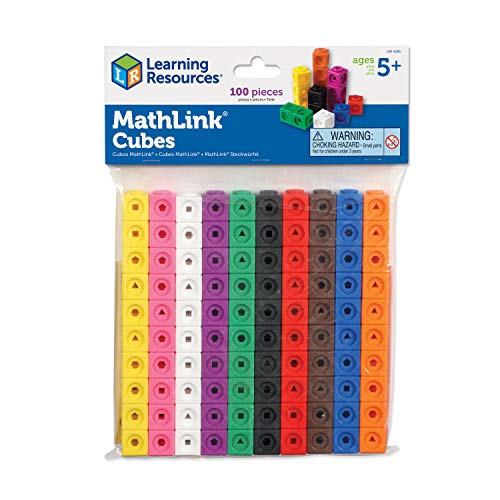
MathLink Cubes (Set of 100)
Editor’s pick · Learning Resources

MathLink Cubes (Set of 100)

If you buy one math toy, buy these. The cubes snap together on all sides — not just end-to-end — so a kid can build number stairs, ten-rods, arrays, and bar models that make abstract math something you can actually hold. Teachers reach for them from kindergarten through second grade because they bridge the gap between "counting bears" and real arithmetic: addition becomes joining two trains, subtraction becomes breaking one apart. At under $15 for a hundred, it's the highest-leverage math purchase here. The one caveat is that they're a tool, not a game — pair them with the activity cards (sold as a set) if your child wants a guided path rather than open building.

Builds: counting · number sense · fine motor

~$14· See it on Amazon
MathLink Cubes Numberblocks 1-10 Activity Set
Best for ages 3-5 · hand2mind

MathLink Cubes Numberblocks 1-10 Activity Set

For a preschooler who loves the Numberblocks show, this is the rare tie-in that's genuinely good math. The cubes build the characters exactly the way the episodes do, so "five" stops being a squiggle on a page and becomes a five-tall block you made, can hold, and can snap apart into a two and a three. That concrete-first approach is precisely how early number sense is supposed to develop, and the show gives it a story a three- or four-year-old already cares about. The activity cards mirror specific episodes, which makes "let's do a number" an easy yes after screen time.

Builds: number sense · counting · one-to-one matching

~$19· See it on Amazon
Baby Bear Counters (102 Pieces)
Best first counters · Learning Resources

Baby Bear Counters (102 Pieces)

The classic preschool starting line for math, and for good reason. Chunky, grippable bears in a few colors and three sizes invite the two skills that come before arithmetic: counting one-to-one (touch a bear, say a number) and sorting by an attribute. A three-year-old will line them up, make families, and "feed" them long before anyone calls it math. They double as game pieces, pretend-play props, and fine-motor practice, so they earn their bin space for years. Simple, near-indestructible, and exactly the right first step.

Builds: one-to-one counting · sorting · color recognition

~$18· See it on Amazon
100-Bead Wooden Rekenrek
Best for number sense · hand2mind

100-Bead Wooden Rekenrek

A rekenrek looks like an abacus but works smarter for young kids: the beads come in groups of five (red and white), so a child learns to *see* seven as "five and two" without counting one by one — the subitizing skill that quietly underpins fast mental math. Slide beads across, and addition and subtraction become physical and obvious. It's a staple of Singapore- and Math-U-See-style programs, and it's the toy on this list most likely to make a five- or six-year-old's arithmetic click. There's a small learning curve for the grown-up, so watch a two-minute demo first; after that it's intuitive.

Builds: subitizing · number bonds · place value

~$22· See it on Amazon

Place value & the hard parts

Two concepts quietly cause most early-math trouble — place value and regrouping. The right manipulative makes both visible and physical instead of memorized.

Base Ten Blocks Smart Pack
Best for place value · Learning Resources

Base Ten Blocks Smart Pack

Place value is where a lot of kids' math wobbles — and base-ten blocks are the fix that's been working for decades. Units, ten-rods, and hundred-flats make "carrying" and "borrowing" visible: ten little cubes literally trade for one rod, so regrouping stops being a memorized rule and becomes something a child can do with their hands. This smart-pack size is right for one kid at home rather than a classroom, and at well under $10 it's the cheapest thing here that prevents a real, common stumbling block. Pair it with the rekenrek above and you've covered most of early-elementary number work.

Builds: place value · regrouping · subtraction

~$9· See it on Amazon

Math that plays like a game

Fluency comes from repetition, and kids only repeat what's fun. These turn addition, mental math, and money into something a child asks to do again.

Sum Swamp Game
Best math game · Learning Resources

Sum Swamp Game

The math board game kids ask to replay — which is the whole trick. Roll the dice, add or subtract to move along the swamp, and the practice happens without anyone calling it practice. It's leveled gently: the operations stay in single digits, so a five- or six-year-old just learning their facts can keep up and genuinely win, and the odd/even shortcut spaces sneak in another concept. It's our pick for turning "do your math" into "can we play Sum Swamp again," and it holds up to the repeat plays that actually build fluency.

Builds: addition · subtraction · odd/even

~$22· See it on Amazon
Math Dice Junior
Best for mental math · ThinkFun

Math Dice Junior

Toy of the Year nominee

A pocket-sized mental-math workout that doesn't feel like one. Roll the target die, then race to combine the number dice — adding or subtracting — to hit it, and crucially there are many right answers, so kids learn there's more than one path to a number. That flexibility is exactly what separates kids who *understand* arithmetic from kids who only memorized it. It's cheap, travels anywhere, and scales: a six-year-old uses addition, an older sibling layers in subtraction and multiplication. A great gift to keep in a bag for restaurants and waiting rooms.

Builds: mental math · flexible thinking · addition

~$11· See it on Amazon
Pretend & Play Calculator Cash Register
Best for money math · Learning Resources

Pretend & Play Calculator Cash Register

The toy that makes money real. A working solar calculator sits in a sturdy register loaded with play coins, bills, and a pretend credit card — so a child runs a "store," rings up prices, makes change, and practices counting money inside a game they'd play anyway. Money is one of the most useful and least-taught early-math skills, and pretend shopping is how most kids first meet it. It's the priciest pick here, but it pulls in siblings and grown-ups and gets played with for years, not weeks. The calculator does need its play to be a little supervised at first so it stays in the register.

Builds: money skills · addition · pretend play

~$35· See it on Amazon

Fractions & times tables

The topics that make or break upper-elementary math. Handled concretely — as pizza slices and fact-family triangles — they stop being scary.

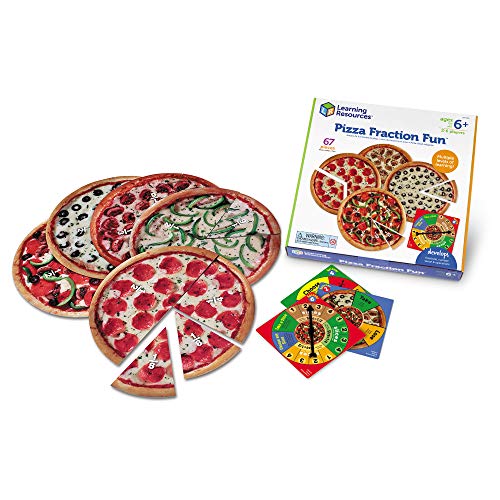
Pizza Fraction Fun Game
Best for fractions · Learning Resources

Pizza Fraction Fun Game

Fractions trip up more kids than almost any other early topic, and pizza is the oldest, best way in. Children build pies from realistic slices, then play seven different games that get them comparing halves to quarters, building wholes, and spotting equivalence — all by handling the pieces, not staring at numerators. Because the levels scale, the same box works for a six-year-old just meeting "half" and an eight- or nine-year-old wrestling with equivalent fractions. It's the rare fractions toy that's genuinely fun, and the concrete slices make an abstract idea click.

Builds: fractions · equivalence · comparing

~$22· See it on Amazon
tri-FACTa Multiplication & Division Game
Best for times tables · Learning Resources

tri-FACTa Multiplication & Division Game

The smarter way to drill times tables. Instead of flashcard rote, this triangular game teaches multiplication and division as *fact families* — that 6 and 7 and 42 belong together, and that division just runs the same fact backward. Players race to complete the triangle, which builds the both-directions fluency that makes long division and fractions far easier later. It's aimed at ages 8 and up, so it's the most advanced pick here — a strong gift for a third or fourth grader who's past counting and into real arithmetic. (There's an addition/subtraction version for younger kids if multiplication is still a year off.)

Builds: multiplication · division · fact families

~$28· See it on Amazon

How much to spend

Math toys are a bargain — most of the best ones here are under $25. The single highest-leverage buy is a set of MathLink Cubes (~$14), and a base ten smart pack that prevents real place-value trouble runs under $10. The $10-22 range (Baby Bear Counters, rekenrek, Sum Swamp, Math Dice Junior) covers most kids' core needs. The one bigger splurge is the Pretend & Play Cash Register (~$35) — worth it for how long it gets played. A great starter trio: cubes + a rekenrek + one game, for well under $50 total.

Frequently asked questions

What are the best toys for teaching kids math?
The best math toys make abstract ideas physical. Our top pick is Learning Resources MathLink Cubes — snap-together cubes that turn counting, addition, and arrays into something a child can hold and build. For a complete kit, mix the stages: a counting toy (Baby Bear Counters), a number-sense tool (a rekenrek), a place-value manipulative (base ten blocks), and one or two math games (Sum Swamp, Math Dice Junior). Every toy in this guide comes from an established educational maker like Learning Resources, hand2mind, or ThinkFun.
How do I make math fun for a child who hates it?
Stop making it look like math. A board game like Sum Swamp or a fast dice game like Math Dice Junior delivers the same addition and subtraction practice as a worksheet, but a child asks to play it again — and repetition is what builds fluency. For a resistant kid, lead with the game and the manipulatives (cubes, counters, a cash register for pretend shopping), and let the "this is math" part stay invisible. The goal is reps without dread; the worksheets can come later.
What math toys are best by age?
Ages 3-5: counting and number sense — Baby Bear Counters and the Numberblocks cube set. Ages 5-7: building arithmetic — MathLink Cubes, a rekenrek, base ten blocks, and starter games like Sum Swamp and Math Dice Junior. Ages 7-9: operations and fractions — the Pizza Fraction game and the tri-FACTa multiplication game. The cubes and counters span the widest range; the fraction and multiplication picks are aimed at older kids. Check each pick’s age note before buying.
Are math manipulatives actually worth it, or just classroom stuff?
They are worth it, and the research backs it: kids who learn arithmetic with concrete objects before symbols understand it more deeply and forget it less. Manipulatives like base ten blocks and a rekenrek make invisible ideas — place value, regrouping, number bonds — visible and physical, which is exactly where a lot of kids’ math wobbles. They are inexpensive (several here are under $20), they last for years, and they work just as well at the kitchen table as in a classroom.
My child knows their numbers but struggles with adding. What helps?
This is the most common early-math gap, and physical tools fix it fast. A rekenrek teaches a child to see numbers in groups of five so they stop counting on fingers one by one; MathLink Cubes make addition concrete (join two trains) and subtraction obvious (break one apart). Then reinforce with a game — Sum Swamp or Math Dice Junior — so the facts get practiced enough to become automatic. The combination of a manipulative plus a game is far more effective than either alone.

How we choose — and a word on the links

Educational Toys Planet has specialized in learning toys since 2004. We pick independently, only from established makers, then cross-check every candidate against current availability and the major independent award and expert lists. We don't accept payment for placement.

Affiliate disclosure: the product links here are Amazon Associate links. If you buy through them we may earn a small commission at no extra cost to you — that's what keeps these guides free and updated. Prices change; tap through for Amazon's current figure. Last updated June 2026.

Related guides