

Best Toys for Teaching Time Management Skills to Kids (2026)

Learning to tell time is just the beginning — real time management means understanding that minutes pass, that tasks have a sequence, and that some things simply must come before others. The toys on this list tackle all of those ideas in hands-on, age-appropriate ways.

A genuinely useful time-management toy does more than show clock hands: it gives kids practice reading time, estimating duration, ordering steps, and self-regulating. We filtered out anything that just happens to mention a clock in passing and focused on products where scheduling, sequencing, or time-telling is core to the play.

🧸 Curating learning toys since 2004 Independent picks · no pay-for-placement

Telling Time & Clock Skills

These tools help kids connect the abstract idea of 'time' to a physical clock face — the essential first step before any other time-management habit can stick.

Wooden Teaching Clock - Tell The Time
Best overall clock for beginners · Bigjigs Toys

Wooden Teaching Clock - Tell The Time

This is the most directly on-topic pick in the entire list — a wooden clock specifically designed to teach time-telling, with moveable hands kids can set themselves. The physical act of turning the hands to match a stated time builds far more retention than a worksheet. It's durable enough for daily classroom-style use at home, and at under $22 it's an easy buy. The one trade-off: there's no built-in quiz mechanism, so a parent or sibling needs to prompt the 'what time is it?' questions.

Builds: telling time · clock-hand coordination · number recognition

~$22· See it on Amazon

Sequencing & Ordering

Managing time means knowing what comes first, second, and last. These picks build the mental habit of ordering tasks before diving in.

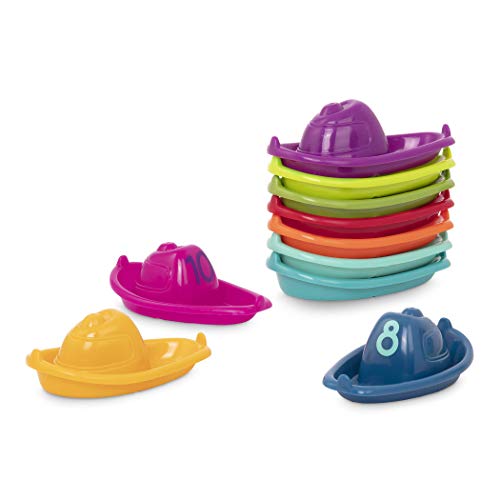
Stackin' Bath Boats – Numbered & Stackable
Best for introducing number order at bath time · Battat

Stackin' Bath Boats – Numbered & Stackable

Bath time is itself a daily routine with a built-in sequence (wash hair, then body, then out), and these 10 numbered stackable boats sneak in number-order practice during a part of the day kids already associate with routine. A parent can turn lining them up 1-to-10 into a quick timed challenge. The price is hard to argue with. These won't teach clock-reading, but for children under 3 who aren't ready for a clock face yet, sequencing numbers in order is the right developmental precursor.

Builds: number sequencing · order recognition · counting

~$9· See it on Amazon
House Lace-a-Shape Game – 30 Geometric Lacing Cards & 6 Laces
Best for building task-completion patience · Bigjigs Toys

House Lace-a-Shape Game – 30 Geometric Lacing Cards & 6 Laces

Lacing cards are deceptively powerful for time management because each card has a clear start, a middle process, and a visible finish — exactly the structure kids need to internalize. The 30-card variety keeps the activity fresh across many sessions. It won't teach clock-reading, but for a 2–4 year old learning that tasks have a beginning and an end (and that you stick with them), this is excellent. The laces are a reasonable length; younger kids may need a parent to help thread the first hole.

Builds: task persistence · fine motor sequencing · start-to-finish follow-through

~$24· See it on Amazon
Dressing Skills Bean Bags – Montessori Busy Board Activities
Best for morning-routine independence · Educational Insights

Dressing Skills Bean Bags – Montessori Busy Board Activities

Getting dressed in the correct order — underwear before pants, socks before shoes — is one of the earliest real-world time-management tasks children face every morning. These bean bags make that sequence a tactile, low-frustration game before the actual morning rush. For 4+ year olds, pairing this with a visual schedule chart can meaningfully speed up morning routines. The bean bag format is more durable than a traditional busy board, which is a genuine plus for rough handling.

Builds: self-care sequencing · fine motor skills · morning routine practice

~$21· See it on Amazon

Structured Play & Routine Building

Pretend-play sets that mirror real daily routines — cooking, serving, sorting — give younger children low-stakes practice following a process from start to finish.

Stir & Sort Food Court Play Food Set – 102 Pieces
Best for learning daily food-prep routines · Battat Education

Stir & Sort Food Court Play Food Set – 102 Pieces

A massive 102-piece kitchen set at $12 is an outstanding value, but what earns it a spot here is the sorting mechanic: kids have to decide what goes where and in what order to 'serve' customers. That's the root of time management — deciding what task comes first. The sheer volume of pieces can feel chaotic for some families, so storage is worth thinking about before buying. Best for ages 3–5.

Builds: routine sequencing · categorization · pretend scheduling

~$12· See it on Amazon
Wooden Barista Playset – Toy Coffee Maker with 22 Accessories
Best for step-by-step order-taking routines · Battat Education

Wooden Barista Playset – Toy Coffee Maker with 22 Accessories

Making a pretend coffee order — take the order, grind, brew, serve — is a natural multi-step sequence that mirrors how time management works in the real world: you can't pour before you brew. At $13 it's low risk, and the wooden construction holds up to enthusiastic toddlers. It's a stretch to call it a dedicated time-management toy, but as a sequencing scaffold for 2–4 year olds it earns its place. Older kids will outgrow it quickly.

Builds: routine sequencing · role-play planning · following multi-step processes

~$13· See it on Amazon

Focus, Turn-Taking & Timed Challenges

Games with a competitive or timed element teach kids that time is a real constraint, and that staying focused within a window is a learnable skill.

Campfire Chatmallows – Creative Story Cubes & Social Skills Activities
Best for teaching turn-taking and waiting · Educational Insights

Campfire Chatmallows – Creative Story Cubes & Social Skills Activities

Understanding that it's not your turn yet — and that your turn will come — is a core time-management concept that kids often struggle with. This story-cube game builds exactly that skill in a low-pressure, creative format. Each player's 'time' to speak is naturally bounded by the cube prompt, which is a gentle introduction to the idea that time is divided and shared. Best for ages 4–8; younger kids may need the rules loosened. The campfire theme is engaging without being overly gimmicky.

Builds: turn-taking · patience · listening while others speak

~$19· See it on Amazon
Kanoodle Ultimate Champion – 3D Brain Teaser Puzzle with Timer
Best timed challenge for older kids · Educational Insights

Kanoodle Ultimate Champion – 3D Brain Teaser Puzzle with Timer

The built-in timer is the key feature here: it teaches kids to allocate their thinking time, decide when to commit to a move, and accept that the clock doesn't wait. That's genuinely transferable to homework and study habits. It's a solo puzzle game, which means kids learn to manage their own time without a partner's pace affecting them. At 7+ it's appropriately challenging — younger kids will get frustrated quickly. A strong pick for any child who already does okay with puzzles but needs to learn to work with a time limit.

Builds: working under time pressure · strategic planning · self-monitoring pace

~$20· See it on Amazon
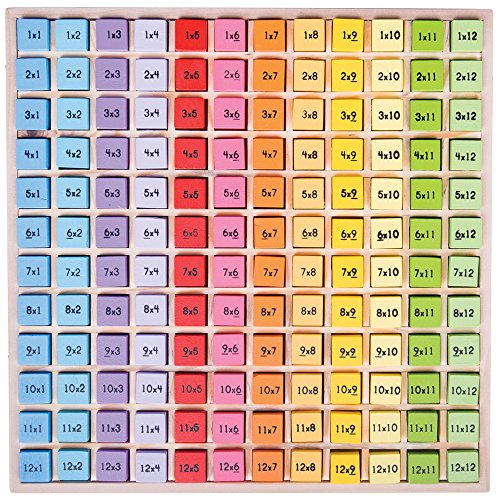
Multiplication Table Tray – Kids Wooden Board Game for Times Tables
Best for math-routine timing practice · Bigjigs Toys

Multiplication Table Tray – Kids Wooden Board Game for Times Tables

Timed math drills are a classic time-management tool in elementary school, and this wooden tray makes the practice tactile and self-correcting — a child can check their own answers and retake the exercise. Parents can introduce a kitchen timer alongside it to gamify the routine without screens. It's specifically a math-skills tool, so if a family's priority is pure clock-reading, look elsewhere. But for building the habit of a daily timed practice session, it's a solid, durable choice.

Builds: math fluency · timed recall · structured practice habits

~$21· See it on Amazon

How we choose — and a word on the links

Educational Toys Planet has specialized in learning toys since 2004. We pick independently, only from established makers, then cross-check every candidate against current availability and the major independent award and expert lists. We don't accept payment for placement.

Affiliate disclosure: the product links here are Amazon Associate links. If you buy through them we may earn a small commission at no extra cost to you — that's what keeps these guides free and updated. Prices change; tap through for Amazon's current figure. Last updated June 2026.

Related guides