

Best Learning Through Play Toys for Kids (2026)

The best learning is the kind kids don't notice. A child stacking blocks is practicing spatial reasoning; one running a pretend kitchen is rehearsing language; one freeing a toy car from a traffic jam is reasoning two moves ahead. None of it feels like school — which is exactly why it works. The trick is picking toys that hand the child something real to do, not blinking plastic that does the playing for them.

So we kept only toys we'd actually give a kid — every one from a maker with a real track record, spanning open-ended building, pretend play, logic games, and hands-on learning, with a genuine reason behind each choice.

🧸 Curating learning toys since 2004 Independent picks · no pay-for-placement

How to spot a real learning-through-play toy

The single most useful test is this: who is doing the work? With a tub of LEGO bricks or a set of Magna-Tiles, the child generates everything — the idea, the build, the redo when it collapses. With a button-and-lights toy, the toy usually performs and the child watches. The first kind compounds for years; the second tends to do one scripted thing until the novelty fades.

The other tell is range. A great learning toy can be a hundred different things across many ages — the same bin of counting bears covers sorting, patterning, and early grouping; the same blocks become a tower, a wall, a zoo. That open-endedness is where the durable skills live: planning, patience, spatial thinking, language, and the quiet confidence of having figured something out. The best gift here usually isn't the flashiest one — it's the one that gets out of the child's way.

Open-ended building

Nothing teaches through play like an open-ended building toy: no instructions, no wrong answer, and a build-knock-down-rebuild loop that quietly grows patience and spatial thinking. These three grow with a child for years.

Classic 32-Piece Magnetic Construction Set
Editor’s pick · Magna-Tiles

Classic 32-Piece Magnetic Construction Set

If "learning through play" had a poster child, it would be these. There's no instruction booklet, no right answer, and no off switch — a kid lays the squares flat into a mosaic, then discovers they snap up into walls, boxes, and rocket ships. The magnets are strong enough that the builds actually hold, which is the whole game: a tower that collapses every ten seconds teaches frustration, not engineering. The genuine tiles cost more than the look-alikes and earn it — the cheap magnets give up. One set spans roughly ages three to eight, so the learning quietly compounds for years.

Builds: spatial reasoning · early geometry · open-ended play

~$40· See it on Amazon
Large Creative Brick Box 10698
Best open-ended building · LEGO

Large Creative Brick Box 10698

A big tub of mixed bricks with no single model to "finish" is one of the best learning-through-play buys there is — it's all the building and none of the follow-the-steps. The 10698 box is the one we point people to: a generous, varied brick count, a few base plates, wheels and windows and eyes, plus the storage box that makes cleanup survivable. Kids plan, build, knock down, and rebuild, which is exactly the loop that grows patience and spatial thinking. It plays well with bricks you already own and lasts from preschool into the school years.

Builds: planning · fine motor · imagination

~$40· See it on Amazon
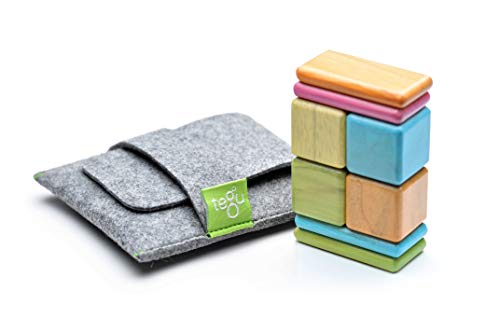
Magnetic Wooden Block Set, Tints (8-Piece)
Best wooden building · Tegu

Magnetic Wooden Block Set, Tints (8-Piece)

Hardwood blocks with magnets hidden inside — so they click together, stack at impossible angles, and gently teach how poles attract and repel without anyone saying the word "magnet." This pocket-pouch set is small and travel-friendly, which makes it a low-stakes way to try the Tegu idea before committing to a big set. They're heirloom-sturdy, finished in non-toxic colors, and the kind of toy a toddler and a grown-up will fiddle with side by side. Pricey per piece, but they survive being dropped, chewed, and handed down.

Builds: balance · cause & effect · open-ended play

~$29· See it on Amazon

Pretend & imaginative play

Make-believe is the original classroom — it's where language, sequencing, empathy, and taking turns all get rehearsed. Good props do the heavy lifting and let the story take over.

Cutting Food Play Set
Best pretend play · Melissa & Doug

Cutting Food Play Set

Pretend play is where a huge amount of early learning actually happens — language, sequencing, taking turns, running a whole imaginary restaurant — and this wooden classic has been pulling it off for decades. The foods split along a velcro seam with a satisfying crunch, and a preschooler will "cook" the same strawberry four hundred times while narrating the menu. It's sized for small hands, has no batteries, and pulls siblings and parents into the story. Durable enough to outlast the phase and get passed down.

Builds: imaginative play · language · sequencing

~$15· See it on Amazon

Think-it-through games

Logic puzzles and STEM-building games turn problem-solving into something a kid will choose for fun. No reading required, no luck — just the deeply satisfying click of figuring it out.

My First Rush Hour
Best first logic game · ThinkFun

My First Rush Hour

The gateway logic puzzle for kids too young for the original. You slide the chunky vehicles to free the ice-cream truck, and the challenge cards build from "obvious" to "wait, I have to move that one first" — genuine sequential reasoning a three- or four-year-old can feel themselves doing. It's single-player, so it's the rare quiet, screen-free toy that occupies a child while you make dinner. The pieces are sturdy and the difficulty ramp is gentle, which keeps early wins coming before the real head-scratchers arrive.

Builds: logical reasoning · planning · persistence

~$17· See it on Amazon
Rush Hour Traffic Jam Logic Game
Best brain game · ThinkFun

Rush Hour Traffic Jam Logic Game

The original sliding-car puzzle, and a genuine modern classic — it's the toy that proves "learning through play" doesn't stop at preschool. Forty challenge cards run from beginner to expert, and every one is a self-contained puzzle in planning two and three moves ahead. There's no luck and no reading required, so a kid succeeds purely on thinking, which is enormously satisfying. It travels well, plays solo, and the harder cards will stump the adults in the room. A great pick for the child who likes a puzzle they can actually beat.

Builds: sequential reasoning · spatial logic · planning

~$22· See it on Amazon
Roller Coaster Challenge STEM Building Game
Best STEM builder · ThinkFun

Roller Coaster Challenge STEM Building Game

Half logic puzzle, half engineering toy — you build an actual roller-coaster track to solve each of 40 challenges, then send the car down to test whether your design works. That build-test-fix loop is real STEM thinking made physical, and the payoff (a car that actually rolls) keeps kids iterating instead of giving up. The pieces are sturdy and the challenges scale from simple to genuinely tricky. It's the rare "educational" toy a child will choose on their own, because the reward is watching their own contraption run.

Builds: engineering · problem solving · spatial reasoning

~$38· See it on Amazon

Hands-on learning, no flashcards

Coding, counting, and letters land best when they're concrete — something to hold, press, stack, and invent games with. This is the antidote to the worksheet.

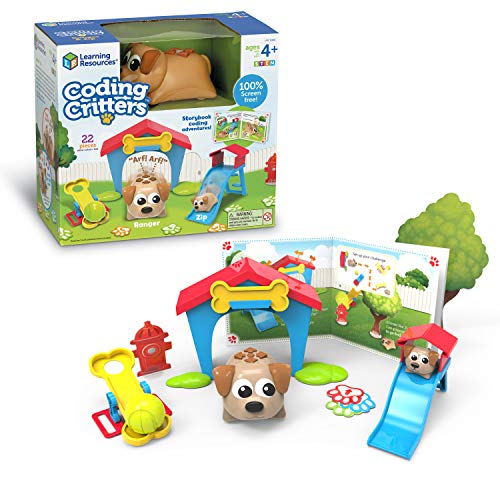
Ranger & Zip Coding Critters Set
Best screen-free coding · Learning Resources

Ranger & Zip Coding Critters Set

Coding without a screen, for kids who can't read a line of code yet. You press the directional buttons on the pup to program a path across the playset, hit go, and watch your sequence play out — pure cause-and-effect that lays the real groundwork for programming logic. It comes with a story and a habitat, so it reads as a cuddly pet toy, not a lesson, which is exactly why it works. A standout example of teaching a hard idea entirely through play, and a sweet step up from blocks into thinking in steps.

Builds: early coding · sequencing · cause & effect

~$31· See it on Amazon
Bear Counters Set
Best hands-on math · Learning Resources

Bear Counters Set

The preschool teacher's quiet workhorse, because early math sticks far better when a child can hold it. These chunky bears come in three sizes and six colors, so the same tub covers counting, sorting, patterning, color matching, and the first whisper of grouping and "bigger/smaller." There's no single way to play, which is the point — kids invent their own games and absorb the math sideways. Cheap, near-indestructible, and the kind of open-ended manipulative that earns its shelf space for years.

Builds: counting · sorting · color recognition

~$20· See it on Amazon
Deluxe Wooden ABC/123 Blocks
Best early literacy · Melissa & Doug

Deluxe Wooden ABC/123 Blocks

Old-fashioned wooden blocks with letters and numbers on the faces — and a perfect first lesson in learning while you build. A toddler stacks and topples and gets the fine-motor workout, while letters and numbers go from "decoration" to "the thing I see every day." The wood is sturdy and the storage box keeps the set together longer than most. It's about the least flashy toy in this guide, and that's the recommendation: the child does all the playing, so the learning is theirs.

Builds: letter recognition · stacking · fine motor

~$13· See it on Amazon

How much to spend

You really don't need to spend much. Several of the best toys here are under $20 — the Cutting Food set, Bear Counters, the ABC/123 blocks, and My First Rush Hour all punch above their price. The $20–38 sweet spot (the original Rush Hour, Roller Coaster Challenge, a Coding Critters set, or Tegu blocks) is where most generous birthday gifts land. And the two splurges worth it are a Magna-Tiles set or a LEGO Classic brick box — both last so many years the cost-per-play is tiny.

Frequently asked questions

What does “learning through play” actually mean?
It means a child learns real skills as a side effect of play they would do anyway — not from drills or screens. Stacking blocks builds spatial reasoning and patience; pretend cooking builds language and sequencing; a sliding-car puzzle builds logical reasoning. The tell of a good learning-through-play toy is simple: the child does the work, not the toy. As a rule, the more a toy lights up and performs on its own, the less your child is actually doing.
What are the best learning-through-play toys?
Our top pick is the Magna-Tiles Classic 32-piece set — open-ended magnetic building with no wrong answer that spans roughly ages three to eight. For range, mix play types: an open-ended builder (Magna-Tiles, a LEGO Classic brick box, or Tegu blocks), a pretend-play prop (the Melissa & Doug Cutting Food set), a think-it-through game (My First Rush Hour or Roller Coaster Challenge), and a hands-on learning toy (Coding Critters or Bear Counters). Every toy in this guide is from an established maker like Melissa & Doug, Learning Resources, ThinkFun, LEGO, or Tegu.
Are open-ended toys really better than “educational” electronic ones?
Usually, yes — for the simple reason that an open-ended toy makes the child generate the play, while a button-and-lights toy tends to perform it for them. A tub of LEGO bricks or a set of Magna-Tiles can be a hundred different things across years; a talking toy often does one scripted thing until the novelty wears off. Electronic toys aren’t worthless, but the open-ended ones earn far more hours and build skills the child has to actively reach for.
What age is learning through play for?
All of childhood, but the toys change. For toddlers (around 2–3) it’s wooden blocks, pound-a-peg, and chunky counters. For preschoolers (3–5) it’s Magna-Tiles, pretend-play food, and a first logic puzzle like My First Rush Hour. For school-age kids (5–8) it shifts toward Roller Coaster Challenge, the original Rush Hour, and screen-free coding like Coding Critters. This guide spans roughly ages 2 to 8 — check each pick’s suggested age before buying.
Do learning toys have to be expensive?
Not at all. Some of the best here are under $20 — the Melissa & Doug Cutting Food set, Bear Counters, ABC/123 blocks, and My First Rush Hour all punch far above their price. A $20–38 toy like Roller Coaster Challenge or a Coding Critters set makes a generous birthday gift. Save the $40 splurges (a Magna-Tiles or LEGO Classic box) for a milestone — they last so many years the cost-per-play is tiny.

How we choose — and a word on the links

Educational Toys Planet has specialized in learning toys since 2004. We pick independently, only from established makers, then cross-check every candidate against current availability and the major independent award and expert lists. We don't accept payment for placement.

Affiliate disclosure: the product links here are Amazon Associate links. If you buy through them we may earn a small commission at no extra cost to you — that's what keeps these guides free and updated. Prices change; tap through for Amazon's current figure. Last updated June 2026.

Related guides