What is the best science toy for kids?
It depends on age and interest, but for a broad winner we point parents to a microscope — the GeoSafari Jr. My First Microscope for preschoolers, or the National Geographic Junior Microscope for ages six and up. Microscopes turn ordinary things (pond water, a leaf, a hair) into something genuinely astonishing, and they reward repeat use for years. For a child who loves reactions, the GeoSafari Rockin’ Reactions chemistry set is the standout. Every toy in this guide comes from an established science-toy maker like Educational Insights, Learning Resources, National Geographic, or 4M.
What age are science kits good for?
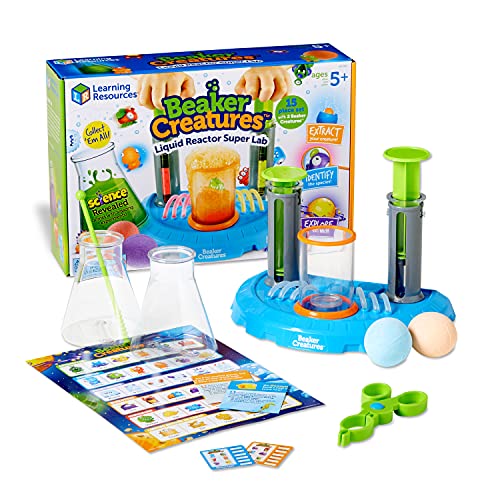
There is a great science toy for nearly every age. For ages 3–5, look for observation toys with chunky parts — a preschool microscope, an ant farm, or a life-cycle set. Around 5–7, kids are ready for guided reactions and first circuits (Beaker Creatures, Circuit Explorer). From 8 up, real chemistry sets, glass-optics microscopes, and a rock tumbler become genuinely engaging. The biggest mistake is buying a kit aimed years above a child — a too-complex set ends up frustrating and abandoned.
Are kids’ chemistry sets safe?
The ones in this guide are designed to be. Modern starter chemistry sets like GeoSafari Rockin’ Reactions and the Beaker Creatures lab use safe, household-grade reactions — fizzing, dissolving, color changes — rather than hazardous chemicals, and they include goggles and step-by-step guides. We still recommend an adult nearby, mostly to keep experiments on track and reinforce good lab habits like not tasting things. Always follow the included instructions and the manufacturer’s age rating.
What is a good first science gift if I don’t know if they’re “into science”?
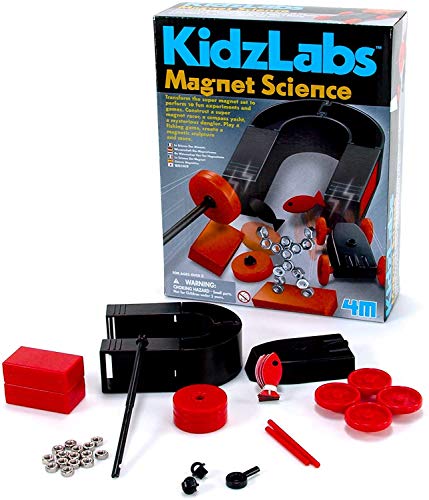
Start small and cheap so there’s no pressure. The 4M Volcano Making Kit (~$14) and 4M Magnet Science Kit (~$14) are low-stakes ways to test the waters — both are reliably fun and inexpensive enough to risk on a maybe. If they light up, you’ll know to invest in a microscope or chemistry set next. A pet ant colony or a life-cycle set is another gentle entry that hooks kids who like animals more than test tubes.
Do these science toys need a lot of adult help?
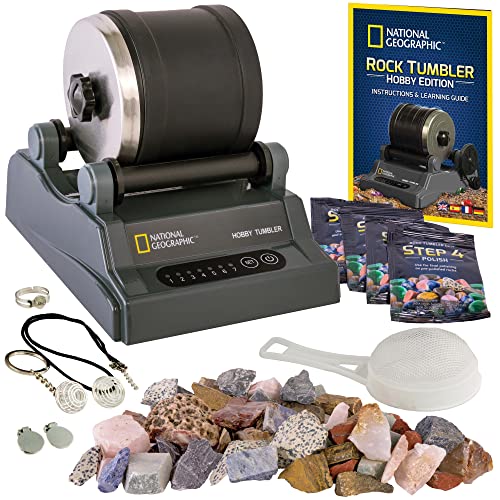
It varies by toy, and we flag it in each pick. Younger observation toys (preschool microscope, life-cycle set) are mostly independent play. Chemistry sets and the Beaker Creatures lab benefit from an adult nearby to guide procedure. A couple of toys have a setup catch worth knowing: the ant factory needs live ants ordered separately, and the rock tumbler is a noisy, multi-week project. None require expertise — just a little patience and the included instructions.
Are science kits worth it?
The good ones, yes — with a caveat. A well-matched kit buys something a screen can't: a child doing real observation, measurement, and cause-and-effect with their own hands, often for years. The waste comes from mismatches — a set bought years above a child's stage, or a novelty that delivers one eruption and nothing after. Match the kit to age and interest, favor real tools and repeat-play value over a big front-of-box "experiment count," and a $20–35 science kit is one of the better-value gifts going. Start cheap if you're unsure the interest is really there.
What age is right for a chemistry set?
A true starter chemistry set — beakers, test tubes, goggles, and guided procedures, like the GeoSafari Rockin' Reactions set — lands best from about age 8, when a child can follow a multi-step procedure, measure, and record. Younger scientists aren't left out: a "first chemistry" kit like the Beaker Creatures Liquid Reactor works from around age 5, because it's guided cause-and-effect with a reward rather than open procedure. Below 5, steer toward observation toys instead. Whatever the box says, plan to do the first run together, then hand over independence once the routine is familiar — and always follow the set's own age rating.
What are good science toys for a 10-year-old?
Ten is prime age for the "open investigation" tier — real tools and the patience for a project. From this guide the standouts are the National Geographic Junior Microscope (glass optics to 200x, make-your-own slides), the GeoSafari Rockin' Reactions chemistry set (real procedures, goggles included), and the National Geographic Rock Tumbler for a rock-obsessed kid who'll enjoy a multi-week payoff. All three reward repeat use and independent tinkering over one-and-done novelty. Our dedicated guide to science toys for 10-year-olds goes further.