Best Toys for Teaching Kids Responsibility (2026)

Responsibility isn't a lecture—it's what happens when a child has something alive, growing, or running that genuinely needs them. The toys on this page put kids in charge of a process that won't finish itself: a crystal that either grows or doesn't depending on how carefully the solution was mixed, a robot that stays dark until its builder wires it right, a clock that stops if the potato dries out.

Good responsibility-teaching toys share a few traits: they unfold over days or weeks (not minutes), they have a visible consequence when the child checks in or neglects them, and the payoff belongs entirely to the kid. We left out pure craft kits where you make a pretty thing once and walk away, and we skipped anything so simple the parent ends up doing it. What's left is a set of genuinely demanding projects sized for ages 5 through 10.

🧸 Curating learning toys since 2004 Independent picks · no pay-for-placement

Grow & Tend Projects

These kits stretch over days or weeks—crystals that need monitoring, living-science experiments that reflect exactly how much attention the child paid.

Crystal Growing Science Kit – 3 Colored Crystals
Best starter grow project · 4M

Crystal Growing Science Kit – 3 Colored Crystals

Three separate crystal batches mean kids can try different conditions—warmer room, cooler shelf, more stirring—and actually see what their choices did. Results take several days, so there's a real routine of checking and noting changes rather than instant payoff. The included display cases give kids a concrete reward for finishing, which matters for younger growers. Trade-off: the crystals are small, so kids hoping for dramatic showpieces may feel underwhelmed.

Builds: patience · observation · follow-through

~$13· See it on Amazon
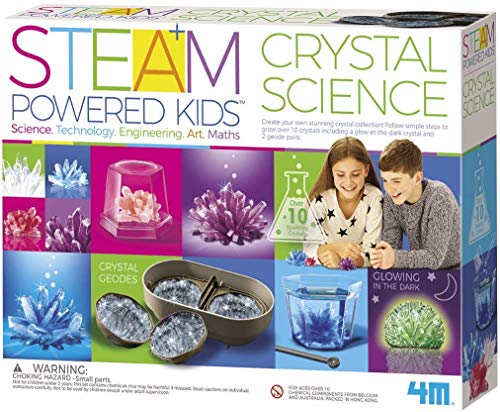
7 Crystal Growing Science Kit with Display Cases
Best for sustained multi-week responsibility · 4M

7 Crystal Growing Science Kit with Display Cases

Seven separate experiments mean this kit can last a month of regular tending—kids who master one batch earn the right to start the next, creating a natural escalating commitment. Display cases require the child to judge when a crystal is finished, which is a real decision. It's more expensive than the three-crystal kit and better suited to kids 10+ who won't lose interest mid-experiment. Not a weekend project; plan accordingly.

Builds: patience · scientific record-keeping · sustained attention

~$19· See it on Amazon
Deluxe Crystal Growing Combo Steam Science Kit
Best family-project crystal kit · 4M

Deluxe Crystal Growing Combo Steam Science Kit

The combo format gives siblings or parent-child pairs something to split responsibility over—one person tends batch A while another monitors batch B. Having multiple concurrent projects makes the responsibility lesson more realistic: real caretaking rarely comes one task at a time. On the downside, the instructions can feel cluttered when you first open the box; set aside 20 minutes to read them together before handing the reins to the child.

Builds: planning · observation · care over time

~$19· See it on Amazon
Glow Crystal Growing Kit
Best for reluctant growers (adds glow payoff) · 4M

Glow Crystal Growing Kit

For kids who find plain white crystals underwhelming, the glow-under-blacklight payoff is genuinely motivating—they actually want to keep checking in to see if the crystal is big enough yet. At $11 it's a low-risk introduction to multi-day projects; if the child abandons it, you haven't spent much. One honest limitation: the glow effect requires a UV light to show well, and one isn't included, so factor that in.

Builds: patience · following directions · pride of ownership

~$11· See it on Amazon

Build & Maintain Machines

Kids assemble a working device, then own the responsibility of troubleshooting it when it misbehaves—patience and follow-through required.

Tin Can Robot
Best first build-and-own machine · 4M

Tin Can Robot

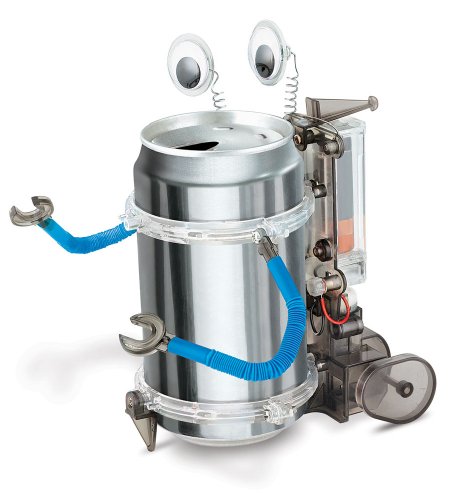
The robot requires a real tin can the child prepares themselves, which immediately creates ownership—this isn't a pre-molded kit, it's something built from a household object they fetched and contributed. When it doesn't move right, the child has to retrace their own wiring steps rather than blaming a factory part. It's not flashy, but kids who finish it tend to keep it. Best for ages 8–10 who can handle small screws independently.

Builds: mechanical follow-through · troubleshooting · pride of ownership

~$11· See it on Amazon
Tin Can Cable Car
Best for learning that ongoing setup matters · 4M

Tin Can Cable Car

Stringing the cable correctly and tensioning it properly is something kids have to revisit every time they set it up in a new location—it doesn't just work automatically, and that's the point. Children learn that a machine needs ongoing adjustment, not just a one-time build. The mechanical engineering involved is genuinely satisfying for curious 8–12 year olds. It does require enough space to run a cable between two fixed points, which rules it out for smaller rooms.

Builds: spatial reasoning · mechanical troubleshooting · persistence

~$19· See it on Amazon
Robotic Hand
Best for understanding how systems depend on careful assembly · 4M

Robotic Hand

Each finger of the hand is controlled by a string the child routes themselves; if one is threaded wrong, that finger won't grip. That direct feedback loop—your mistake, your broken finger—is a powerful responsibility lesson without any adult nagging. Recommended for kids 8+ who have the fine motor control to thread the strings without frustration. Parents should plan to be nearby for the first assembly without taking over.

Builds: precision · cause-and-effect thinking · mechanical responsibility

~$15· See it on Amazon
Hover Racer Science Kit
Best for kids who want a working toy as reward for careful building · 4M

Hover Racer Science Kit

An airboat that actually moves gives kids a clear goal—it either skims across the floor or it doesn't, and the difference is entirely in how carefully they assembled the fan mechanism. That binary result is honest feedback on their work. It's a one-time build rather than a maintenance project, so it teaches 'see something through' responsibility more than 'keep tending it' responsibility. Good bridge toy for kids ready to graduate from simple crafts.

Builds: mechanical assembly · troubleshooting · patience

~$17· See it on Amazon

Renewable Energy Science

Potato clocks, solar rovers, and salt-water robots teach kids that a system only keeps working if they understand and manage the energy source.

Potato Clock
Best everyday responsibility lesson (needs fresh potatoes) · 4M

Potato Clock

When the potato dries out or rots, the clock stops—end of story. That natural consequence, repeatable every week or two with a fresh vegetable from the kitchen, makes this one of the most honest responsibility teachers on this list. Kids who want their clock to keep working have to remember to swap the potato on their own. Works well for ages 5–8 as a first 'I'm in charge of this' experience. The display isn't fancy, but it's a real clock they can use.

Builds: daily routine · cause-and-effect · household contribution

~$20· See it on Amazon
Lemon Powered Clock
Best for teaching that your choices power the outcome · 4M

Lemon Powered Clock

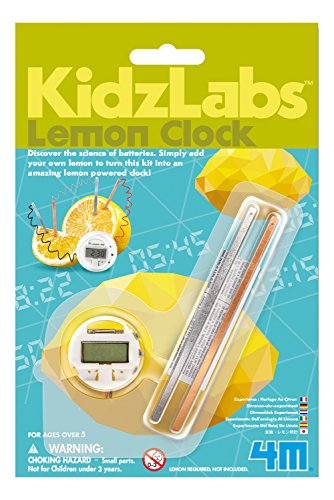
At $8 this is the lowest-stakes entry point on the list, and it's still a fully working clock that will stop ticking when the lemon juice is exhausted—a clear, non-punitive consequence kids understand immediately. Swapping lemons is a small but real chore the child owns. Pair it with the Potato Clock if you want to run a side-by-side comparison; that conversation alone is worth the combined cost. Trade-off: the electrode setup can frustrate small hands, so expect to guide the first assembly.

Builds: chemical-electrical thinking · daily upkeep · problem-solving

~$8· See it on Amazon
Green Science Solar Rover
Best for understanding that your machine needs the right conditions · 4M

Green Science Solar Rover

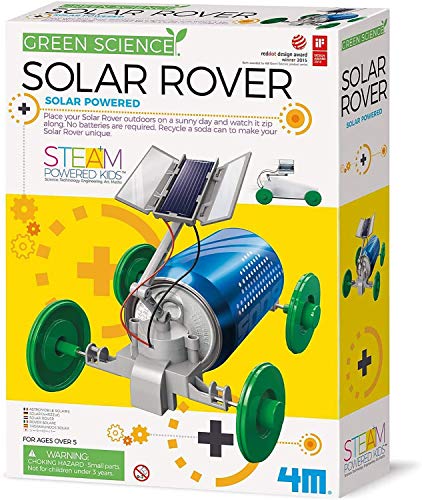
The rover only runs in direct sunlight, which teaches kids that they can't just flip a switch—they have to find the conditions their machine needs. That's a real lesson in systems thinking and in the limits of technology. On cloudy days the rover sits still, which is honest and a good discussion starter. Best used outdoors with supervision; the solar panel is small and kids should handle it carefully.

Builds: environmental awareness · mechanical assembly · patience with variables

~$20· See it on Amazon

Long-Haul Making & Craft

Multi-step projects—sewing, soap-making, felt work—where the finished object proves the child saw something through to completion.

Kids Hand Sewing Kit – 6 Learn to Sew Accessory Bags
Best for proving you can finish something functional · Arteza

Kids Hand Sewing Kit – 6 Learn to Sew Accessory Bags

Sewing a usable bag—something the child will actually carry or store things in—gives the responsibility lesson a lasting physical reminder. Six projects mean kids can improve from bag to bag rather than having just one attempt. The pre-cut felt keeps frustration manageable for ages 6–8, while the stitching itself is genuinely their work. Fair warning: the needle is small and some kids will need an adult to thread it each session.

Builds: fine motor persistence · following multi-step directions · pride of completion

~$18· See it on Amazon

How we choose — and a word on the links

Educational Toys Planet has specialized in learning toys since 2004. We pick independently, only from established makers, then cross-check every candidate against current availability and the major independent award and expert lists. We don't accept payment for placement.

Affiliate disclosure: the product links here are Amazon Associate links. If you buy through them we may earn a small commission at no extra cost to you — that's what keeps these guides free and updated. Prices change; tap through for Amazon's current figure. Last updated June 2026.

Related guides