Best Science Kits & Engineering Toys for Kids (2026)

Science kits and engineering toys are one of the few gift categories where kids genuinely forget they're learning. The best ones put a real challenge in front of a child — something to build, test, or explain — and don't let them off the hook with pre-assembled shortcuts.

We selected these picks based on how well they teach a real concept, whether the build process itself is instructive, and whether the finished product actually does something interesting. We skipped anything that's mostly decorative or too passive, and we flagged age ratings honestly — some kits listed for 8+ really do need a patient adult alongside a younger child.

🧸 Curating learning toys since 2004 Independent picks · no pay-for-placement

Solar & Renewable Energy Builds

These kits put clean-energy concepts in kids' hands — they wire, assemble, and then watch their build actually move or light up using solar or chemical power.

Green Science Solar Rover
Best first engineering kit for younger kids · 4M

Green Science Solar Rover

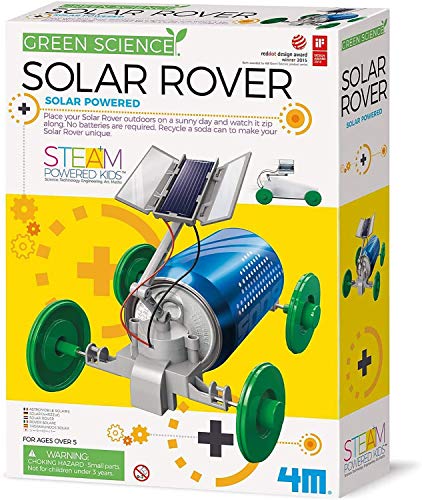
Kids wire up a small solar panel and watch the rover move only when light hits it — that cause-and-effect moment is genuinely exciting. The build is simple enough for a confident 5-year-old with light adult guidance, but the science payoff feels real. One trade-off: it won't move well in dim indoor light, so you'll need a sunny window or outdoor space. No batteries required, which is a selling point in itself.

Builds: Solar energy concepts · Basic circuit assembly · Fine motor skills

~$20· See it on Amazon
Toysmith Green Science Salt Water Powered Robot Kit
Best for teaching electrochemical energy · 4M

Toysmith Green Science Salt Water Powered Robot Kit

Salt water — not batteries — powers this robot, which makes for a memorable 'wait, really?' moment for kids. The assembly is straightforward, and the concept of ionic conductivity is explained at a kid-friendly level in the instructions. It's a one-time-use magnesium cell, so parents should know the power element doesn't recharge; you'll need a replacement cell for repeat runs. Still, the first demo is memorable enough to justify the price.

Builds: Electrochemical reactions · Circuit basics · Scientific observation

~$16· See it on Amazon
Toysmith Green Science Windmill Generator Kit
Best for understanding electricity generation · 4M

Toysmith Green Science Windmill Generator Kit

Kids build a working windmill that actually generates enough electricity to light an LED — a tangible payoff that makes the physics lesson stick. The kit includes a small multimeter so kids can measure the voltage they're generating, which adds a real lab-science dimension. Assembly takes about 45 minutes and the instructions are clear, though a few small plastic parts require careful handling. Best for ages 8 and up doing it semi-independently.

Builds: Wind energy principles · Electrical circuits · Engineering design

~$17· See it on Amazon

Mechanical Engineering & Robotics

Gears, levers, pulleys, and motors: these kits teach how machines work by having kids build them from scratch, with real moving results at the end.

Toysmith KidzRobotix Tin Can Robot
Best budget robotics starter kit · 4M

Toysmith KidzRobotix Tin Can Robot

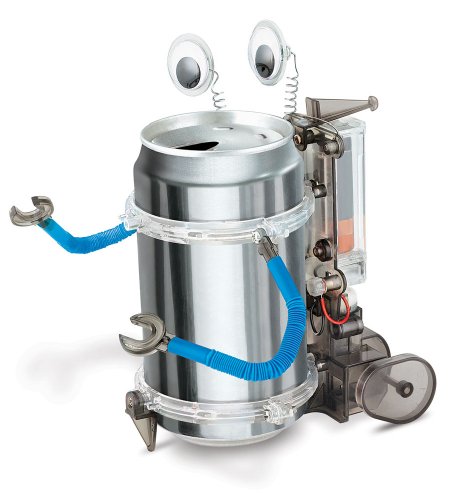
The gimmick here — building a robot out of a recycled tin can — is actually a useful lesson about repurposing materials, not just a marketing hook. The motor and gear mechanism that makes it walk is genuinely interesting to assemble. At under $11 it's one of the most affordable true-build kits on this list. Fair warning: the tin-can portion requires an adult to prepare safely, and the robot's motion is a simple wobble rather than anything programmable.

Builds: Motor mechanics · Simple circuits · Creative repurposing

~$11· See it on Amazon
Kidzlabs Robotic Hand Kit
Best for exploring biomechanics and engineering · 4M

Kidzlabs Robotic Hand Kit

This is one of the more clever kits in the 4M lineup — kids build a hand with working fingers controlled by pull-strings that mimic tendons, which naturally leads to conversations about how their own hands work. The finished model actually grips objects, which is satisfying. It takes patience to thread the 'tendons' correctly, so plan for 60+ minutes and expect some frustration around step 4-5. Recommended for ages 8 and up; younger kids will need substantial help.

Builds: Biomechanical concepts · Tendon-and-pulley systems · Problem solving

~$13· See it on Amazon
Hover Racer Science Kit, DIY Mechanical Engineering Airboat
Best for teaching thrust and aerodynamics · 4M

Hover Racer Science Kit, DIY Mechanical Engineering Airboat

The hover racer uses a small fan motor to glide across smooth surfaces, and figuring out why it works — air pressure, thrust direction — is half the fun. Kids build the chassis and mount the motor themselves, making it a genuine assembly project rather than just a kit you snap together. It needs a very smooth floor to work well; carpet will stop it dead. A fun indoor engineering challenge that rewards careful building.

Builds: Thrust and lift principles · Motor assembly · Cause-and-effect reasoning

~$17· See it on Amazon
Doodling Robot
Best for combining art with engineering · 4M

Doodling Robot

Kids wire up a small vibration motor, attach markers, and watch the robot draw chaotic, organic patterns — then experiment with changing marker positions or surface angles to influence the output. It's a rare kit that genuinely rewards further tinkering after the first build. The drawings it produces are honestly fascinating. One honest note: it chews through batteries and the marker tips wear quickly, so stock up before gifting.

Builds: Motor and vibration mechanics · Creative experimentation · Basic circuitry

~$17· See it on Amazon

Chemistry & Crystal Science

Grow crystals, filter water, and power clocks with produce — these experiments introduce chemistry and earth science through visible, satisfying results.

7 Crystal Growing Science Kit with Display Cases
Best for a multi-week chemistry project · 4M

7 Crystal Growing Science Kit with Display Cases

Seven different crystals, each with its own display case, turns this into a slow-burn science project rather than a one-afternoon experiment — and the display cases encourage kids to actually care about the outcome. The chemistry is real: kids are working with supersaturated solutions and nucleation, even if the instructions don't use those words. Some crystals take several days to fully form, which tests patience but also teaches something valuable about scientific timelines. Age 10+ is realistic.

Builds: Crystal chemistry · Scientific patience and observation · Recording results

~$19· See it on Amazon
Kidzlabs Lemon Powered Clock
Best for a quick, memorable chemistry demo · 4M

Kidzlabs Lemon Powered Clock

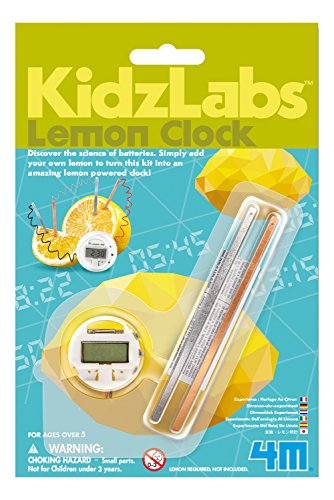
At under $8, this is one of the best value-per-lesson kits available. The moment a digital clock runs off a lemon — with no batteries in sight — is genuinely memorable and sparks real questions about how batteries work. Setup is fast (under 20 minutes), which suits younger or less patient kids. The downside: once you've done it, you've done it; there's not much replay value unless you try different fruits, which is actually a great extension activity.

Builds: Electrochemical cells · Circuits and conductivity · Scientific skepticism

~$8· See it on Amazon
Green Science: Potato Clock
Best for exploring renewable energy at home · 4M

Green Science: Potato Clock

Similar concept to the lemon clock but with a dual-clock display and more detailed instructions that push kids to think about why different vegetables work differently. The potato clock runs reliably for hours, which makes the science feel more legitimate than a 30-second demo. Instructions include extension experiments that parents will appreciate having. A slightly longer and more involved build than the lemon version, which makes it better suited for 8+ kids working more independently.

Builds: Galvanic cell chemistry · Renewable energy concepts · Observation and recording

~$20· See it on Amazon

Physics & Space Exploration

From magnetic levitation to model rocketry, these kits make abstract physics concepts tangible with hands-on experiments and sky-gazing projects.

Kidzlabs Anti Gravity Magnetic Levitation Science Kit
Best for making physics feel like magic · 4M

Kidzlabs Anti Gravity Magnetic Levitation Science Kit

Getting an object to float using only magnets is the kind of thing kids will drag every adult in the house over to see. The kit teaches real concepts — magnetic poles, equilibrium, field strength — through a build that genuinely takes trial and error to stabilize. It's one of the more challenging kits here, and some kids will get frustrated before getting the levitation right, but that persistence pays off. Recommended for patient 8+ kids; younger children will need significant adult involvement.

Builds: Magnetic force and polarity · Balanced systems · Scientific experimentation

~$22· See it on Amazon
Water Rocket Kit, DIY Science Space
Best for outdoor hands-on physics · 4M

Water Rocket Kit, DIY Science Space

This is an outdoor kit — it needs space, and it will get wet — but the payoff of launching a water-powered rocket you built yourself is hard to beat. The physics of air pressure and thrust are genuinely demonstrated, not just described. Kids can adjust water levels and pump pressure to see how it affects the launch, which encourages real scientific thinking. One practical note: the pumping requires adult-level arm strength, so a grown-up needs to be part of the launch process.

Builds: Aerodynamics and thrust · Air pressure principles · Engineering iteration

~$20· See it on Amazon

How we choose — and a word on the links

Educational Toys Planet has specialized in learning toys since 2004. We pick independently, only from established makers, then cross-check every candidate against current availability and the major independent award and expert lists. We don't accept payment for placement.

Affiliate disclosure: the product links here are Amazon Associate links. If you buy through them we may earn a small commission at no extra cost to you — that's what keeps these guides free and updated. Prices change; tap through for Amazon's current figure. Last updated June 2026.

Related guides