Our Top Picks

Perfect for hands-on learners who want to build AND understand. Your child constructs a working rotating solar system, making planetary orbits come alive in a way that sticks with them long after play

A magical choice for curious kids who love discovering how things work. The glow-in-the-dark feature transforms bedtime into an astronomy lesson, and building it themselves deepens their connection to

Wonderful for younger explorers and families new to astronomy. The projector element brings wonder and imagination while teaching real celestial concepts—perfect for sparking that initial 'I love spac

Ideal for older kids who enjoy engineering challenges. Building a mechanical Earth-Moon system teaches gravity and orbital mechanics through play, making complex physics feel achievable and genuinely
Does your child ever pause mid-play and ask where the moon goes during the day? Or wonder why Saturn looks different through a telescope? Those curious moments are golden—they're the spark that ignites a lifelong love of learning. Solar system models and planetariums do something remarkable: they transform abstract concepts floating in textbooks into tangible, discoverable worlds that kids can hold in their hands, build with their own two hands, or project onto their bedroom ceiling.
Whether your grandchild is a quiet observer who loves puzzles, a hands-on builder who thrives with construction projects, or a visual learner who needs to see how things work, there's a space exploration toy here that will click with them. The best part? These aren't toys that sit on a shelf. They're conversation starters, creativity catalysts, and the kind of gifts that lead to genuine "aha!" moments—the ones that stick with children long after playtime ends.
Age Recommendations
Ages 5-7: Wonder and Imagination
Your youngest space explorers thrive with visual, interactive toys like planetarium projectors and colorful pre-assembled models. They're building foundational knowledge and falling in love with the idea of space. Look for sturdy pieces, bright colors, and that magical 'wow factor' that makes them want to learn more.
Ages 8-10: Building and Creating
This is the sweet spot for craft kits, glow-in-the-dark models, and 3D puzzles. Your child now has the fine motor skills and patience to build something themselves, which makes the learning stick deeper. They love seeing how things work and creating something tangible they can display proudly.
Ages 11+: Engineering and Discovery
Older kids are ready for more sophisticated STEM kits with moving parts, mechanical challenges, and deeper scientific concepts. They enjoy the problem-solving journey as much as the finished product. These toys support growing interests in physics, engineering, and real astronomy.
Our Recommended Products

Glow-in-the-Dark Solar System Model Kit
The National Geographic Glow-in-The-Dark Solar System Model Kit for Kids is an exciting way for young explorers ages 8-12 to dive into the mysteries of our universe! This all-inclusive kit not only allows kids to build and paint a stunning 3D planetary model with movable arms but also encourages creativity, critical thinking, and hands-on learning. As they assemble their customized solar system, kids will engage with fun facts about space, sparking curiosity and a lifelong love for STEM! Plus, once it glows in the dark, it transforms their bedroom into a celestial wonderland.
Glow-in-the-Dark Solar System Model Kit includes movable arms for an interactive building experience, turning your child's room into a galaxy of imagination and wonder.

Illuminating Adventure with Solar System Model
Eisco Labs Solar System Model with Light Socket is an extraordinary way to ignite your child’s imagination while expanding their knowledge of the universe. With its vibrant 5.9" sun that beautifully illuminates, this model not only attracts attention but also teaches important concepts about space and planetary positions throughout the year. The illustrated study guide makes learning engaging and interactive, encouraging curiosity and critical thinking. As parents and educators, we appreciate how this toy fosters STEM skills and makes astronomy accessible and fun for our little explorers!
Illuminating Adventure with Solar System Model features a vibrant 5.9" sun that lights up, making space exploration both captivating and educational—perfect for our little astronomers!

Explore the Universe: Solar System Kit
The Crayola Solar System Science Kit invites children to embark on an exciting journey through space while crafting their own model of the solar system. This engaging educational tool fosters creativity and curiosity as kids learn about planets, stars, and celestial phenomena, enhancing their understanding of science. Perfect for sparking discussions about the universe, this kit not only facilitates hands-on learning but also encourages teamwork and fine motor skills as they paint and assemble their cosmic creations.
Explore the Universe: Solar System Kit features hands-on crafting of a model solar system, making science feel like an adventurous art project that sparks curiosity and teamwork.

Ravensburger Solar System 3D Puzzle Adventure
The Ravensburger Solar System 540 Piece Jigsaw Puzzle Set is a fantastic way to explore our universe right from your living room! Designed for ages 7 and up, this educational game promotes critical thinking and spatial awareness as kids and adults alike piece together a vibrant model of the solar system. With its Easy Click Technology, assembling the planets is a breeze, encouraging collaboration and communication skills while bonding as a family. Plus, the included colorful poster brings the planets to life with fun facts, ensuring everyone learns something new along the way!
Ravensburger Solar System 3D Puzzle Adventure includes 540 colorful pieces that transform puzzling into a cosmic journey, making learning about our universe a family bonding experience filled with fun.

Explore Space with GeoSafari® Solar System!
Educational Insights GeoSafari® Orbiting Solar System & Projector invites young explorers on a cosmic journey through our solar system! This hands-on learning tool not only sparks curiosity about outer space but also promotes observational skills as children watch the eight planet models orbit around the Sun. With high-quality images and real NASA media, our kids can project stunning visuals of constellations and celestial bodies onto their ceilings, turning their bedroom into an interactive planetarium. It's an engaging way for children to develop a love for STEM while learning about astronomy and the wonders of the universe!
Explore Space with GeoSafari® Solar System! creates a mini planetarium in your kid's room, igniting their passion for astronomy with high-quality NASA media right above their beds.

Solar System STEM Adventure Kit
The Thames & Kosmos Orbiting Solar System STEM Kit invites young learners to delve into the wonders of our universe by building a dynamic, rotating model of the solar system! This engaging kit harnesses the power of a windup motor to set the planets into motion—no batteries required—making it an eco-friendly choice for inquisitive minds. Not only does it spark curiosity about our celestial neighbors, but it also fosters an understanding of fundamental gear mechanics, including the fascinating concept of planetary gears. Perfect for science fairs or as a captivating educational project, this kit empowers children with critical thinking skills and a deeper appreciation for astronomy.
Solar System STEM Adventure Kit invites kids to build a dynamic, rotating model of the solar system, igniting curiosity about our universe while learning about gears—epic for budding astronomers!
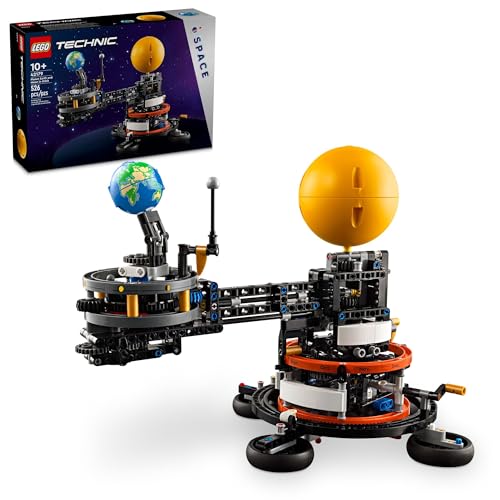
Explore Space with LEGO Technic Set
The LEGO Technic Planet Earth and Moon in Orbit Building Set is an incredible way for kids aged 10 and up to dive into the wonders of our solar system! With this interactive model, children get to build their very own representation of Earth, the Sun, and the Moon while exploring how they orbit each other. Our little learners can turn the crank to visualize the motion of the celestial bodies and see firsthand how Earth's orbit influences seasons, making it both a fun and educational experience. Perfect for sparking curiosity in space science and nurturing creative independence, this set is a fantastic addition to any space-themed room decor!
Explore Space with LEGO Technic Set lets kids build their own Earth, Moon, and Sun while learning how celestial bodies orbit, making space science a hands-on adventure.
Educational Value
When children build their own solar system model or work through a 3D puzzle, they're doing far more than assembling pieces. They're developing spatial reasoning (understanding how objects relate to one another in space), strengthening problem-solving skills as they troubleshoot placement and balance, and absorbing real scientific knowledge about celestial bodies and planetary orbits. These activities engage multiple learning styles at once: visual learners see planetary positions and sizes; hands-on learners feel the satisfaction of construction; curious minds discover why planets move the way they do.
Interactive models with lights and moving parts add another layer—they make cause-and-effect visible and immediate, helping children understand mechanical concepts intuitively. Whether it's a glow-in-the-dark kit, an orbiting system with rotating planets, or a projector that turns the bedroom into a planetarium, your child is building scientific thinking while having genuine fun.