Best Science Toys for Kids (2026)

Good science toys put the doing in a child's hands. The best of them don't perform a trick for a kid — they hand over a microscope, a beaker, or a magnet and let the child be the one who looks, mixes, and discovers. That's the difference between a toy that builds a real curiosity habit and a blinking gadget that's forgotten by the weekend.

So we kept only kits we'd actually give — every one from a maker with a real track record in science toys, spanning ages 3 to 12, with an honest note on each (including the ones that need adult help or a bit of patience).

🧸 Curating learning toys since 2004 Independent picks · no pay-for-placement

How to pick a science toy that actually gets used

The single biggest factor is matching the kit to the child's age. A preschooler wants to observe — a chunky two-eyed microscope, an ant colony, a life cycle they can line up and retell. A five-to-seven-year-old is ready to make something happen: guided fizzing reactions, a circuit that lights up, simple cause-and-effect they control. From eight up, the patience arrives for a real chemistry set, a glass-optics microscope, or a multi-week rock tumbler — toys that reward genuine method.

The second factor is honesty about effort. Some of the best science toys aren't instant — an ant farm needs live ants you order separately, a rock tumbler runs for weeks, a chemistry set works best with a grown-up nearby. That's not a flaw; it's often where the real learning lives. We've flagged the catch on every pick so there are no surprises on the big day. And if you're testing whether a child is even "into science," start with a cheap, reliably fun kit before investing in the splurges.

See the invisible

The heart of science is looking closer than the naked eye allows. These tools take a child from "I wonder" to "let me look" — from a first two-eyed peek to a real glass-optics microscope.

GeoSafari Jr. My First Microscope
Best for preschoolers · Educational Insights

GeoSafari Jr. My First Microscope

The microscope built for a three-year-old who can't yet close one eye. It has two chunky eyepieces so a preschooler looks with both eyes at once, big easy-grip focusing knobs, and a stage roomy enough to drop a leaf, a feather, or a bug on without precision aiming. The magnification is modest, but that's the point — at this age the win is "I looked closely and saw something I couldn't see before," not lab-grade optics. It's the toy that turns a backyard walk into a collecting expedition.

Builds: observation · curiosity · fine motor

~$20· See it on Amazon
Junior Microscope for Kids
Best real microscope · National Geographic

Junior Microscope for Kids

The step up to a real glass-optics microscope, sized for a six- to twelve-year-old ready to focus and aim for themselves. It magnifies up to 200x, comes with prepared and blank slides plus the tools to make your own, and has an LED light underneath so specimens actually show up. This is where microscopy stops being a toy and becomes a hobby — pond water, onion skin, a strand of hair all suddenly become worlds. Expect a learning curve on focusing; that effort is exactly the skill it's teaching.

Builds: observation · fine motor · scientific method

~$33· See it on Amazon
GeoSafari Jr. Talking Telescope
Best for space · Educational Insights

GeoSafari Jr. Talking Telescope

Not a real optical telescope — it's a viewer loaded with 24 photo slides of planets, galaxies, and the moon, with Bindi Irwin narrating 100+ facts as a child clicks through. For a four- to seven-year-old who is space-obsessed but years away from focusing a real scope on a dark night, this scratches the itch perfectly: they aim it, look, and a friendly voice tells them what they're seeing. It's the gift that builds the vocabulary — "crater," "Saturn's rings," "galaxy" — before the patience for a real telescope arrives.

Builds: astronomy basics · listening · vocabulary

~$41· See it on Amazon

Make a reaction happen

Real science is something you do, not watch. These kits put beakers, fizzes, and color changes in a child's hands — with the safety rails on and the method built in.

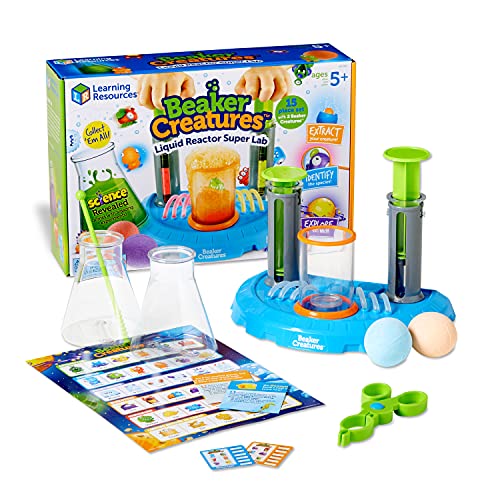
Beaker Creatures Liquid Reactor Super Lab
Best first chemistry · Learning Resources

Beaker Creatures Liquid Reactor Super Lab

The gateway to "science is reactions you make happen." Kids drop a fizzing Reactor Pod into the water-filled chamber, watch it dissolve, and reveal a little collectible creature inside — pure cause-and-effect with a reward at the end. It comes with real lab tools (a pipette, tweezers, a magnifier, a test tube) so a five-year-old is genuinely measuring, dropping, and observing, not just watching. It's a safe, mess-contained way to rehearse the rhythm of an experiment, and the surprise creatures buy a lot of repeat play.

Builds: cause & effect · following steps · observation

~$27· See it on Amazon
GeoSafari Rockin’ Reactions Chemistry Set
Best chemistry set · Educational Insights

GeoSafari Rockin’ Reactions Chemistry Set

An actual starter chemistry set — 20+ guided experiments using safe, household-grade reactions like fizzing, color changes, and a homemade volcano. It includes the beakers, test tubes, goggles, and a step-by-step guide, so an eight-year-old runs real procedures and learns to measure, mix, and record what happens. It's the bridge between "fun fizzing kit" and genuine bench science: structured enough to teach method, safe enough for the kitchen table. Adult supervision is sensible, mostly to keep the experiments on track.

Builds: chemistry · following procedure · measurement

~$24· See it on Amazon
KidzLabs Volcano Making Kit
Best under $15 · 4M

KidzLabs Volcano Making Kit

The classic baking-soda volcano, done as a proper build-and-erupt project for not much money. Kids mold and paint their own plaster volcano, then set off the fizzing eruption — a two-part toy that's equal parts craft and chemistry. It's a perfect low-stakes entry to science gifting: cheap enough to risk on a kid you're not sure is "into science," and reliably thrilling the moment it foams over. The catch is it's largely a one-and-done build, though the eruption itself can be re-run with pantry refills.

Builds: chemistry basics · craft · following steps

~$14· See it on Amazon

Living things & life cycles

Biology lands best when it's alive and in front of you. A tunneling ant colony and a hold-it-in-your-hand life cycle teach how living things grow and work together.

GeoSafari Ant Factory
Best living science · Educational Insights

GeoSafari Ant Factory

Few science toys hold a kid's attention like a real ant colony tunneling in front of them. You add the included sand, order live harvester ants (sold separately by the supplier), and over days the kids watch them dig a visible 3D network of tunnels and chambers. It teaches patience and real observation — colonies aren't built in an afternoon — and quietly delivers a first lesson in how a community of animals works together. Worth knowing up front: it needs live ants you request separately, so it's a gift with a short wait built in.

Builds: biology · patience · observation

~$35· See it on Amazon
Chick Life Cycle Exploration Set
Best life science · Learning Resources

Chick Life Cycle Exploration Set

A hands-on way to teach where a chicken actually comes from. The set is four sturdy chunky models — egg, cracking egg, hatching chick, hen — that a child lines up to tell the story of a life cycle, plus a spinner and activity cards. It lands beautifully for the preschool-to-early-elementary crowd who learn a sequence by holding and ordering it, not by reading a diagram. Pairs naturally with a spring farm visit, and it's the kind of concrete model teachers reach for again and again.

Builds: sequencing · life cycles · language

~$32· See it on Amazon

Forces, circuits & rocks

Physics and earth science you can feel: invisible magnetic forces, a circuit that lights up on command, and rough stones polished into gems over patient weeks.

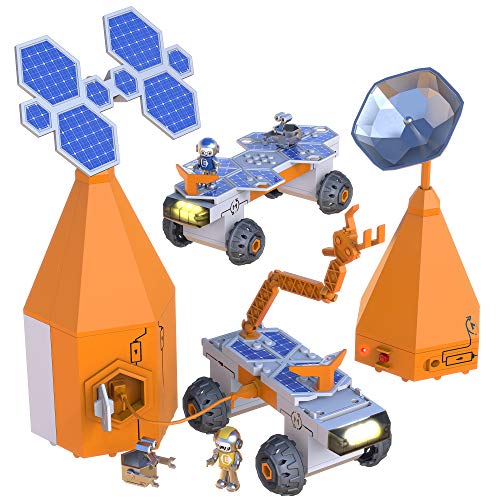
Circuit Explorer Rover
Best electronics · Educational Insights

Circuit Explorer Rover

A first taste of real electronics dressed up as a space mission. Kids snap circuit pieces into a Mars-style rover to light it up, working through 20+ illustrated challenge cards that build genuine understanding of how a circuit closes and current flows. The components are kid-sized and forgiving, so there's no soldering and no tiny parts to lose, and the rover frame gives the circuits a purpose a child cares about. It's our pick for the six-year-old who keeps asking how things turn on.

Builds: circuits · problem solving · building

~$26· See it on Amazon
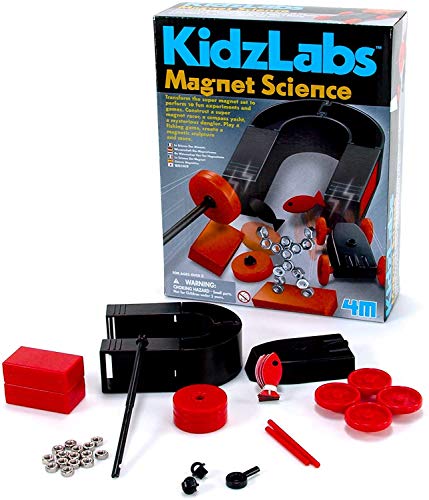
Magnet Science Kit
Best physics value · 4M

Magnet Science Kit

Ten hands-on magnet experiments for the price of a fast-food lunch. Kids build a compass, race magnetic cars, make things appear to levitate, and feel invisible forces push and pull — the kind of physics that's genuinely startling the first time you experience it. It's open enough to invite "what else sticks?" experimenting around the house, and the components are simple and hard to break. A standout value pick, and a great companion gift alongside a flashier kit.

Builds: physics · experimentation · problem solving

~$14· See it on Amazon
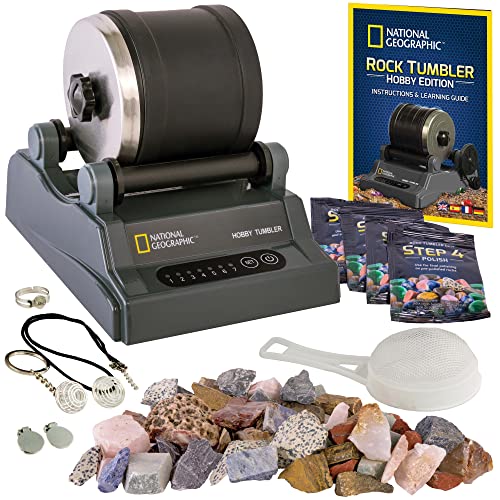
Hobby Rock Tumbler Kit
Best splurge · National Geographic

Hobby Rock Tumbler Kit

The science gift that turns rough stones into gleaming polished gems — and teaches real patience doing it. You load the barrel with the included rough rocks and grit, run the motor, and over several weeks of staged grinding and polishing the kids reveal genuinely beautiful results they made themselves. It's noisy and it's a multi-week commitment, so it's not an instant-gratification toy — but for a rock-obsessed eight-to-twelve-year-old it's a genuine hobby starter, and the payoff feels like magic. The best splurge on this list for the right kid.

Builds: geology · patience · process

~$60· See it on Amazon

How much to spend

You can start a kid on science for the price of a lunch. The two under-$15 picks — the 4M Volcano kit and the 4M Magnet kit — are the smart way to test interest before you commit. The $20–35 sweet spot is where most great gifts land: a first microscope, the Beaker Creatures lab, a real chemistry set, a circuit rover, or a life-cycle set. Save the talking telescope, the glass-optics microscope, or the rock tumbler ($40–60) for a milestone or a kid who's already hooked — these are hobby-starters, not impulse buys.

Frequently asked questions

What is the best science toy for kids?
It depends on age and interest, but for a broad winner we point parents to a microscope — the GeoSafari Jr. My First Microscope for preschoolers, or the National Geographic Junior Microscope for ages six and up. Microscopes turn ordinary things (pond water, a leaf, a hair) into something genuinely astonishing, and they reward repeat use for years. For a child who loves reactions, the GeoSafari Rockin’ Reactions chemistry set is the standout. Every toy in this guide comes from an established science-toy maker like Educational Insights, Learning Resources, National Geographic, or 4M.
What age are science kits good for?
There is a great science toy for nearly every age. For ages 3–5, look for observation toys with chunky parts — a preschool microscope, an ant farm, or a life-cycle set. Around 5–7, kids are ready for guided reactions and first circuits (Beaker Creatures, Circuit Explorer). From 8 up, real chemistry sets, glass-optics microscopes, and a rock tumbler become genuinely engaging. The biggest mistake is buying a kit aimed years above a child — a too-complex set ends up frustrating and abandoned.
Are kids’ chemistry sets safe?
The ones in this guide are designed to be. Modern starter chemistry sets like GeoSafari Rockin’ Reactions and the Beaker Creatures lab use safe, household-grade reactions — fizzing, dissolving, color changes — rather than hazardous chemicals, and they include goggles and step-by-step guides. We still recommend an adult nearby, mostly to keep experiments on track and reinforce good lab habits like not tasting things. Always follow the included instructions and the manufacturer’s age rating.
What is a good first science gift if I don’t know if they’re “into science”?
Start small and cheap so there’s no pressure. The 4M Volcano Making Kit (~$14) and 4M Magnet Science Kit (~$14) are low-stakes ways to test the waters — both are reliably fun and inexpensive enough to risk on a maybe. If they light up, you’ll know to invest in a microscope or chemistry set next. A pet ant colony or a life-cycle set is another gentle entry that hooks kids who like animals more than test tubes.
Do these science toys need a lot of adult help?
It varies by toy, and we flag it in each pick. Younger observation toys (preschool microscope, life-cycle set) are mostly independent play. Chemistry sets and the Beaker Creatures lab benefit from an adult nearby to guide procedure. A couple of toys have a setup catch worth knowing: the ant factory needs live ants ordered separately, and the rock tumbler is a noisy, multi-week project. None require expertise — just a little patience and the included instructions.

How we choose — and a word on the links

Educational Toys Planet has specialized in learning toys since 2004. We pick independently, only from established makers, then cross-check every candidate against current availability and the major independent award and expert lists. We don't accept payment for placement.

Affiliate disclosure: the product links here are Amazon Associate links. If you buy through them we may earn a small commission at no extra cost to you — that's what keeps these guides free and updated. Prices change; tap through for Amazon's current figure. Last updated June 2026.

Related guides