Best Squishy & Sensory Toys for Kids (2026)

Squishy is its own kind of useful. Squeeze a doh-filled ball, mold a handful of never-dry foam, stretch putty until it snaps — and a restless kid suddenly has somewhere to put that energy. The best squishy and sensory toys aren't just fidgets; they build hand strength, soothe big feelings, and reward open-ended play, all for a few dollars.

So we kept only squishies we'd actually hand a child — every one from a maker with a real track record, sorted by the kind of play it offers, with a genuine reason behind each choice.

🧸 Curating learning toys since 2004 Independent picks · no pay-for-placement

How to pick a squishy that fits your kid

"Squishy" covers more ground than it looks. The cleanest split is by what the toy asks the hands to do. Squeeze toys — the NeeDoh family, sticky Globbles — compress and slowly rebound; they're the simplest, cheapest, and best for a pocket fidget or a calm-down moment. Moldables — Playfoam, Crazy Aaron's putty — get shaped and reshaped, which adds a creative, open-ended layer older kids love. And scoopables like Pluffle behave more like a sensory-bin filler you run your hands through. Match the toy to whether your child wants to squeeze, build, or dig.

Two practical filters save a lot of grief. First, mess: foam-based squishies (Playfoam, Pluffle) and solid squeeze balls leave no residue, while classic Silly Putty and sticky Globbles can grab lint, hair, and fabric — fine for a desk, rough on a car seat. Second, age and small parts: almost everything here is rated 3+, so keep squishies away from any child who still mouths toys. Get those two right and a squishy is one of the highest-joy, lowest-cost gifts you can give.

The five kinds of squishy, by what's inside

The squeeze-mold-scoop split above is about what your hands do. It's just as useful to sort squishies by what they're actually made of, because the filling decides how a toy feels, how long it lasts, and how much mess it makes. Five materials cover almost everything on a toy-shop shelf — and the last one, water-bead squishies, is the one that trips parents up most often.

Type What it feels like Best for Mess & durability
Foam-bead (Playfoam, Pluffle) Light, moldable, faintly crunchy; never dries out Toddlers and preschoolers; low-mess sensory play Cleanest of the bunch — brushes off dry; very durable
Putty & dough (NeeDoh, Crazy Aaron's) Dense, slow-rebound; stretches, snaps, or oozes Focus fidgeting and hand strength, ages 3 and up Premium putty lasts years; classic Silly Putty grabs lint
Gel-filled (Goo Jit Zu, squish balls) Soft, heavy, slow-oozing; stretches then reforms Kids who want a character or a weighty squeeze Tough skin on good ones; cheap ones split and leak
Plush & slow-rise foam (classic scented "squishies") Airy character shapes that slowly puff back into form Collectors and gentle fidgeting; older kids No mess, but tears and yellows; cheap ones smell strongly
Water-bead / Orbeez mesh Stretchy net full of tiny beads; knobbly and oddly satisfying Texture-seekers, supervised, ages 3 and up Can burst — loose beads are a real hazard (see below)

Classic squish & squeeze

Start here. These are the squeeze-and-rebound toys — doh-filled balls and stretchy creatures — that give busy hands something to do and quietly help kids settle.

NeeDoh Original Squishy Stress Ball
Editor’s pick · Schylling

NeeDoh Original Squishy Stress Ball

The one squishy toy we'd buy first, and it's barely the price of a coffee. The NeeDoh is a doh-filled ball that squashes flat in your fist and slowly pushes back into shape — endlessly. That slow rebound is the whole appeal: it gives little hands something to do during read-aloud, car rides, or the wobbly minutes before bed. It's small enough to pocket, tough enough to survive a backpack, and quiet enough for a classroom. Colors are random, which only adds to the fun.

Builds: hand strength · self-regulation · focus

~$5· See it on Amazon
Super NeeDoh Jumbo Squish Ball
Best big squish · Schylling

Super NeeDoh Jumbo Squish Ball

Everything kids love about the original NeeDoh, scaled up to a chunky 4.5-inch ball you squeeze with both hands. The bigger size means more resistance, which is exactly what some kids crave — it's a satisfying two-handed squash that asks a little more of the muscles. It's become a go-to in a lot of sensory toolkits and calm-down corners. Same doh-filled, slow-rebound feel, just more of it.

Builds: hand & arm strength · self-regulation · sensory input

~$11· See it on Amazon
NeeDoh Mac ’N’ Squeeze Noodles
Most fun to fidget · Schylling

NeeDoh Mac ’N’ Squeeze Noodles

Four squishy "noodles" tucked in a little cup that you can pull out, stretch, knot, and stuff back in — a goofy take on the NeeDoh formula that adds a stretchy, pull-apart dimension the plain ball doesn't have. The tug-and-tuck motion keeps restless fingers busy longer than a simple squeeze, and kids find the macaroni gag genuinely funny. Squishy, stretchy, and a little silly — a great pocket fidget.

Builds: fine motor · self-regulation · sensory input

~$12· See it on Amazon

Mold, mush & make

Squishies you shape rather than just squeeze: never-dry foam and premium putty that reward open-ended play and a little imagination.

Playfoam 8-Pack
Best for ages 3–5 · Educational Insights

Playfoam 8-Pack

Playfoam is the parent-friendly answer to squishy: it's a bead-and-foam compound that squishes, molds, and sticks to itself — but never to the carpet, the table, or your child's hair. It doesn't dry out, so the same pods come back to life weeks later, and it pulls apart and re-mushes without a speck of residue. Toddlers smush it for the pure sensory hit; older kids build little creatures. It's the squishy I hand over without bracing for cleanup.

Builds: fine motor · creativity · sensory exploration

~$8· See it on Amazon
Thinking Putty — Liquid Glass
Best premium putty · Crazy Aaron’s

Thinking Putty — Liquid Glass

If you've only ever met dollar-store putty, Crazy Aaron's is a revelation — and the crystal-clear Liquid Glass is the showpiece. It stretches like taffy, snaps when you yank it fast, shatters like glass when you smack it, and slowly pools back into a blob if you leave it. It's made in the USA, comes in a sturdy tin, and genuinely never dries out. Worth the splurge for an older kid (or honestly, a stressed-out grown-up) who'll appreciate how it behaves.

Builds: hand strength · stress relief · focus

~$15· See it on Amazon
Globbles Fidget Toy (6-Pack)
Best sticky-squish · Crayola

Globbles Fidget Toy (6-Pack)

Globbles are squishy little spheres with a tacky surface, so they stick to each other, to a wall, to a desk — then peel off clean and squish in your hand. Kids love lobbing them at a smooth surface and watching them cling, and the squeeze-and-stick loop is weirdly calming. They're a back-to-school classroom staple for a reason. A quick note: they do collect lint and dust, so a rinse under water brings the stick back.

Builds: fine motor · self-regulation · cause & effect

~$11· See it on Amazon

Sensory bins & calm-down corners

For sensory seekers and big-feelings moments — scoopable foam and purpose-built fidget sets that do more than fidget.

Pluffle No-Mess Sensory Foam (2-Pack)
Best sensory-bin filler · Educational Insights

Pluffle No-Mess Sensory Foam (2-Pack)

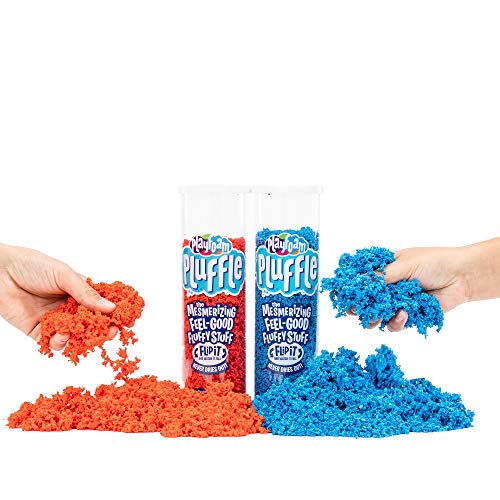
Pluffle is the squishy you scoop and pour rather than mold — a fluffy, marshmallowy foam that clumps when you squeeze and falls apart when you let go, like edible-looking snow. It's our pick for a sensory-bin filler because it's far less messy than slime or kinetic sand: it brushes off dry and doesn't leave a sticky film. Bury little toys in it, scoop it with cups, or just run your hands through it. Two colors mix into one big bin.

Builds: sensory exploration · fine motor · imaginative play

~$16· See it on Amazon
Cool Down Cubes Sensory Fidget Set
Best for big feelings · Learning Resources

Cool Down Cubes Sensory Fidget Set

Five soft, squeezable cubes designed for the calm-down corner, each pairing a different texture and squish with a simple feelings cue. It's squishy with a job: giving a worked-up preschooler something to hold and press while they settle. We like that it's built around naming and managing big feelings rather than just fidgeting, which makes it a genuinely useful pick for an anxious or overstimulated kid — at home or in a classroom.

Builds: self-regulation · emotional awareness · fine motor

~$10· See it on Amazon

Party packs & character squish

A bulk classic for birthday bags and classrooms, plus a stretchy figure for the kid who wants their squishy to have a personality.

Silly Putty Variety Pack (24-Count)
Best value pack · Crayola

Silly Putty Variety Pack (24-Count)

The original squishy classic, and 24 little eggs is a lot of party favors, stocking stuffers, or calm-down-corner refills for the money. Silly Putty stretches, bounces, snaps, and still lifts a comic-strip image off newsprint the way it did decades ago. Each egg is one child's portion, so it's our pick for a birthday-bag haul or a classroom set rather than a single gift. Keep it off fabric and hair — it's the old-school putty, not the no-residue kind.

Builds: fine motor · imaginative play · hand strength

~$24· See it on Amazon
Goo Jit Zu Stay Puft Squishy Figure
Best stretchy character · Heroes of Goo Jit Zu

Goo Jit Zu Stay Puft Squishy Figure

For the kid who wants their squishy to be a character, this goo-filled Stay Puft figure stretches to about three times its size and slowly oozes back into shape. Squeeze it, twist it, stretch an arm across the room — it pops back every time, and the gooey filling gives a satisfying squish you can feel through the skin. It bridges squishy-sensory play and pretend play, so it tends to get loved long after a plain stress ball gets forgotten.

Builds: hand strength · imaginative play · sensory input

~$14· See it on Amazon

A quick word on mess

If "squishy" makes you picture goo ground into the rug, you can mostly avoid it. The genuinely no-residue picks here are Playfoam and Pluffle — both brush off dry — plus any of the solid NeeDoh squeeze toys, which make no mess at all, and Crazy Aaron's putty, which never dries out. The two to keep on hard surfaces are Silly Putty and the tacky Globbles — brilliant fun, but they collect lint and don't belong near hair or upholstery.

What the squishing actually builds

A squishy looks like pure goofing off, and mostly it is — but the same repetitive squeeze does real developmental work. Pressing and pulling against resistance is proprioceptive input: the deep feedback from muscles and joints that helps a keyed-up child feel settled and organized. That's why occupational therapists reach for putty and squeeze balls, and why a fidget in the hand often takes the edge off restlessness better than being told to sit still.

There's a motor payoff too. Squeezing a dense NeeDoh or stretching putty strengthens the small muscles of the hand and the arches of the palm — the foundation a child needs to hold a pencil without tiring, so squishy play quietly feeds handwriting later on. Molding foam and rolling putty snakes add in-hand manipulation and two-handed coordination. The tactile side matters too: a texture-seeker gets what they crave from a knobbly bead ball or a scoop of Pluffle, while a child who's easily overwhelmed settles better with a smooth, predictable squeeze. Match the toy to the input your kid goes looking for, and it becomes a tool, not just a distraction.

Squishy toys with Orbeez and water beads

A lot of parents arrive here searching specifically for "squishy toys with Orbeez" — the stretchy mesh balls packed with hundreds of tiny water beads that bulge between your fingers when you squeeze. They're genuinely satisfying: the beads shift and roll under a thin net, so the ball never squishes the same way twice, and the knobbly, gritty texture is exactly the input a lot of sensory seekers chase. Squeeze one and it oozes into a new shape; let go and the beads settle back. It's mesmerizing, it's cheap, and for the right kid it's hard to put down.

Two honest cautions come with the category, which is why we don't lead this guide with one. First, durability: the whole toy hangs on a stretchy net, and a thin, loosely-knit mesh will eventually give — a fingernail, a pulled seam, or one enthusiastic over-stretch, and it splits, scattering beads everywhere. If you're buying one anyway, choose the sturdiest build you can find: a tight, densely-knit mesh rather than wide netting, a doubled or fabric-reinforced skin rather than bare balloon rubber, and a firm, well-filled ball, since an over-stuffed thin one bursts first. Treat it as a supervised toy with a limited lifespan, not a keepsake.

Safety first: loose water beads are not a toy

The beads inside are superabsorbent polymer — the same stuff as gardening water crystals — and they swell to many times their size in water. A dry bead that's swallowed can keep expanding inside the body, where it often doesn't show up on a standard X-ray and can cause a dangerous blockage; loose water beads are a serious choking and ingestion hazard and have been the subject of real safety recalls and warnings. Keep water-bead squishies well away from any child who still mouths toys, and away from babies and toddlers under three entirely. Use them only with an older child, under supervision, and bin the whole thing the moment the mesh shows a tear.

If your child loves the ooze-and-reform feel but is too young for loose beads, the closest safe swaps are already in this guide: the Goo Jit Zu figure gives the same slow, gooey squish inside a sealed skin, and Crazy Aaron's Thinking Putty or a solid NeeDoh deliver the stretch-and-rebound with nothing to spill. You lose the individual beads; you keep the sensory payoff and the peace of mind.

How to spot a squishy that lasts — and one that'll split

Squishies live hard lives: squeezed, stretched, dropped, and stuffed into pockets. The difference between one that survives a year and one that splits in a week is usually visible before you buy. A few things to look for:

  • Seamless beats seamed. A molded one-piece squeeze toy or a solid putty has nothing to fail. Anything with a glued seam, a mesh knot, or a filled skin has a weak point — check that seams look thick and even, not thin and stretched.
  • Feel the wall. On a gel- or bead-filled ball, a thicker, stretchier outer layer (good TPR or reinforced fabric) shrugs off a fingernail; a thin, shiny, balloon-like film is the first thing to pop. Firm and well-filled outlasts big and over-stretched.
  • Never-dry chemistry wins. Foam-bead compounds and quality putty (Playfoam, Crazy Aaron's) don't dry out, so they don't crumble or harden — the usual failure mode of cheap dollar-store dough.
  • Established makers, boring reason. Schylling, Educational Insights, Crayola, and Crazy Aaron's use tougher materials and meet US toy-safety testing — which matters as much for what's in the toy as for how long it survives.

Ages, mouthing, and small parts

Almost every squishy in this guide is rated for ages 3 and up, and that rating is about the mouth, not the brain. A 3+ label means the toy — or a piece that could come off it — is a choking risk for a child who still explores by tasting. So the honest rule is simple: if your child still mouths toys, this whole category waits. That goes double for anything filled — putty, gel, and above all loose water beads, the single most dangerous thing here if swallowed.

For a toddler you're confident won't taste it, the safest starting points are the sealed, one-piece options: a solid NeeDoh squeeze ball or a tub of no-residue Playfoam — nothing to bite off, nothing to leak. Save thin stretchy putties, small fidget sets, and any mesh bead toy for older kids, and keep the first few sessions with a new squishy supervised until you've seen how your child treats it.

How much to spend

Squishies are the rare category where the cheapest options are also some of the best. Several picks here are under $12 — the NeeDoh Original, Playfoam, Globbles, and the Cool Down Cubes all punch above their price. The $12–16 range (Pluffle, Mac 'N' Squeeze, Goo Jit Zu) buys more play or a character kids bond with. The one splurge worth it is Crazy Aaron's Thinking Putty — it never dries out, so it lasts for years. And the Silly Putty 24-pack is the value play for parties and classrooms.

Frequently asked questions

What are squishy and sensory toys good for?
They give hands a repetitive, low-stakes activity — squeeze, stretch, mold, scoop — that a lot of kids find genuinely calming and focusing. For sensory seekers, the resistance and texture provide input they crave; for an anxious or overstimulated child, a squishy in the hand is something to do while they settle. They also build hand and finger strength, which is exactly what handwriting needs later. Pick by the kind of input your child likes: squeezing (NeeDoh), molding (Playfoam, putty), or scooping (Pluffle).
What is the best squishy toy for a young child (ages 3–5)?
For this age we’d start with the Schylling NeeDoh Original — it’s cheap, near-indestructible, and the slow squeeze-and-rebound is endlessly satisfying — or Educational Insights Playfoam, which molds and squishes but never sticks to carpet or hair and doesn’t dry out. Both are rated 3+. Save thinner stretchy putties and small-part fidgets for older kids, and keep any squishy away from a child who still mouths toys.
Are squishy toys messy? Which ones are not?
It varies a lot. The cleanest options are Playfoam and Pluffle (Educational Insights) — they brush off dry and leave no residue — and solid squeeze toys like the NeeDoh, which make no mess at all. Crazy Aaron’s Thinking Putty is also tidy and famously never dries out. The ones to watch are classic Crayola Silly Putty and sticky Globbles, which can grab lint, hair, or fabric; keep those to hard surfaces and rinse them when they lose their grip.
Do squishy toys really help with focus and anxiety?
For many kids, yes — a quiet fidget in the hand can take the edge off restlessness and give nervous energy somewhere to go, which is why occupational therapists and teachers keep them in calm-down corners. They’re a tool, not a cure: a squishy helps a child self-regulate in the moment, and sets built around naming feelings (like the Learning Resources Cool Down Cubes) lean into that on purpose. Choose quiet, no-mess options for classrooms so the toy helps rather than distracts.
Which squishy toys are best for a classroom or party favors?
For a classroom, pick quiet and no-mess: NeeDoh squeeze balls, Playfoam pods, and Crazy Aaron’s putty all fidget without disrupting a room. For party favors or a calm-down-corner refill on a budget, the Crayola Silly Putty 24-count variety pack splits into two dozen individual eggs, and small NeeDoh squeezes are inexpensive enough to buy in multiples. Every toy in this guide comes from an established maker like Schylling, Educational Insights, or Crayola.
Are squishy toys with Orbeez or water beads safe for kids?
The squishy mesh ball is fine to squeeze; the danger is the tiny beads inside if the mesh tears. Those beads are superabsorbent polymer that swells in water, so a swallowed bead can keep expanding inside the body and cause a dangerous blockage — and it often won’t show up on an X-ray. Water beads have been the subject of real safety recalls and warnings, so keep them away from any child who still mouths toys and from under-threes entirely, supervise older kids, and bin the toy the moment the mesh splits. For a younger child, a sealed squeeze like the NeeDoh or the Goo Jit Zu figure gives a similar feel without the loose beads.
How do you clean squishy and sensory toys?
It depends on the type. Solid squeeze toys and gel-filled balls wipe clean with a damp cloth, and a sticky toy like Globbles gets its grip back with a quick rinse under water and an air-dry — the tack fails because it’s coated in lint and dust, not because it’s worn out. Foam-bead compounds like Playfoam and Pluffle aren’t meant to be washed; just pick out crumbs and keep them sealed so they don’t dry. Putty stays clean on its own but lifts lint and hair from fabric, so keep it to hard surfaces. Never soak a mesh water-bead ball — if it’s torn, replace it rather than clean it.
Why do squishy toys crack, split, or leak — and can you fix them?
Usually it’s the material giving out: a thin gel- or bead-filled skin punctures, a glued seam pulls apart, or cheap dough dries and crumbles. Once a filled squishy has split there’s no reliable, safe fix — glue doesn’t bond well to stretchy TPR, and you don’t want a child handling a reopened leak — so the honest move is to retire it. Prevention is where you win: buy seamless or reinforced builds, choose never-dry compounds over dollar-store dough, keep sharp nails and scissors away, and steer tear-prone mesh toys to older kids who squish rather than pull. Solid NeeDoh-style balls and quality putty are the ones that simply keep going.

How we choose — and a word on the links

Educational Toys Planet has specialized in learning toys since 2004. We pick independently, only from established makers, then cross-check every candidate against current availability and the major independent award and expert lists. We don't accept payment for placement.

Affiliate disclosure: the product links here are Amazon Associate links. If you buy through them we may earn a small commission at no extra cost to you — that's what keeps these guides free and updated. Prices change; tap through for Amazon's current figure. Last updated June 2026.

Related guides