Our Top Picks

Perfect for your youngest learners! The Hape Chunky Clock Puzzle makes time concepts tangible for babies and toddlers through colorful blocks and satisfying puzzle play—ideal for building spatial awar

A delightful all-in-one tool that grows with your child. Tock The Learning Clock introduces both analog and digital time in an interactive, playful way that keeps kids engaged and curious about tellin

If your child loves games and friendly competition, the Hape Chunky Clock Puzzle transforms learning into joyful adventure. It's wonderful for building confidence and making time-telling feel like pla
Picture this: your child glances at the kitchen clock and announces, without any prompting, that it's almost time for lunch. Or your grandchild proudly sets an alarm for their favorite show and understands exactly how many minutes away it is. These small moments? They're proof that telling time has finally clicked.
Learning to read a clock is one of those foundational skills that seems simple until you realize how much thinking it actually requires. Your child has to understand the relationship between numbers, recognize two different hands moving at different speeds, and translate all of that into actual time. That's real thinking happening.
Time telling puzzles make this abstract concept concrete and playful. By matching analog clocks to digital displays, counting by fives, and working with physical clock manipulatives, children build the mental connections they need—without feeling like they're doing traditional math practice. The best part? They're doing it willingly, because it feels like a puzzle game, not a lesson.
Age Recommendations
Ages 12 months - 2 years: Start with chunky, colorful clock puzzles like the Hape Chunky Clock. At this stage, your little one is learning through touch and sight, not yet reading time. Look for toys with bright numbers, easy-to-grasp pieces, and satisfying sensory feedback. These toys introduce the concept of a clock without pressure.
Ages 3-4 years: Interactive teaching clocks with moveable hands are perfect now. Your child can begin recognizing numbers and understanding that clocks have moving parts. Look for clocks with clear, bold numbers and engaging features—sounds, lights, or friendly characters make learning irresistible. This is when curiosity really blossoms!
Ages 5-6 years: Your child is ready for clocks that show both analog and digital time. Games and matching puzzles help them understand that different clock faces show the same time. They're developing the patience for longer learning activities and can grasp more complex time concepts like 'half past' and 'quarter to.'
Our Recommended Products

Telly Jr. Teaching Time Clock Fun!
Telly Jr. Teaching Time Clock is the ultimate companion for our little learners as they embark on the exciting journey of telling time! This delightful clock combines the magic of play with essential skills development, teaching kids to read both analog and digital formats through engaging modes. Whether in Learning Mode, where five-minute increments come alive as hands move, or Quiz Mode, challenging kids to match displayed times, this toy fuels curiosity and confidence. Perfect for nurturing listening, visual, and motor skills, we love how it makes learning feel like an adventure!
Telly Jr. Teaching Time Clock features both analog and digital modes that transform learning to tell time into an exciting adventure, making milestones feel like playtime.

Hands-On Learning with Smart Pack Clock
Learning Resources Smart Pack 4" Clock is a fantastic way to help our children master early time skills! With its engaging design, children can spin the hands and watch hidden gears keep accurate time, which sparks both curiosity and fun. The color-coded hour and minute hands cleverly match the clock markings, making learning intuitive and enjoyable. As parents and educators, we know the value of hands-on learning in developing essential skills, and this clock is a wonderful tool to foster a love for time-telling that will last a lifetime!
Hands-On Learning with Smart Pack Clock features engaging color-coded hands that make mastering time-telling both intuitive and fun, turning learning into an exciting hands-on experience.

Hape Chunky Clock Puzzle Adventure
Hape Chunky Clock Puzzle transforms learning to tell time into an engaging adventure for little ones! With vibrant numbered blocks that fit snugly in their designated spots, this puzzle encourages cognitive development and enhances problem-solving skills. Babies and toddlers will not only enjoy matching while they explore the fun of moving the big and little hands but also gain a foundational understanding of time—a crucial skill for daily life. Designed with safety in mind, this durable puzzle uses child-safe paints and finishes, making it a perfect addition to your educational toy collection.
Hape Chunky Clock Puzzle Adventure features vibrant numbered blocks that make mastering time-telling a playful journey, turning learning into an engaging adventure for curious minds.

Time to Fly: Learn Telling Time Fun!
Educational Insights Time to Fly is a captivating board game that transforms learning how to tell time into an exciting adventure! As parents and educators, we know that engaging hands-on experiences make all the difference in early learning. With this game, kids will delight in picking time cards, setting the plane clock, and eagerly seeking to match the time—all while developing vital number recognition skills. It’s the perfect way to enhance family game nights, fostering not just knowledge of analog and digital clocks, but also essential social skills like taking turns and communicating with peers.
Time to Fly features an engaging board game format that transforms telling time into a fun family adventure, making learning a delightful journey instead of a chore.
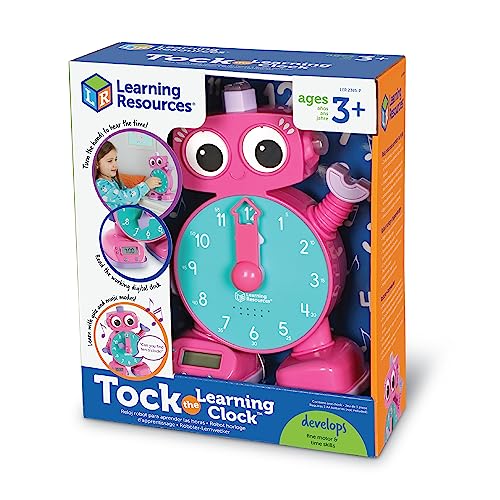
Tock The Learning Clock: Tickle Time Skills!
Tock The Learning Clock is a delightful tool that makes learning to tell time both fun and interactive! This friendly robot introduces kids to both analog and digital clock skills through exciting gameplay. With two engaging learning modes, children can either dance along to musical rewards or challenge themselves to match the clock hands to the digital display. It also features an 'OK to Wake' light, helping little ones understand when it’s time to rise and shine, making it an ideal educational gift for any occasion!
Tock The Learning Clock features two engaging learning modes, making telling time a fun game that turns every glance at the clock into a mini celebration.

Hello Kitty Interactive Learning Watch
Hello Kitty Kids Educational Watch is a delightful blend of fun and learning designed for our little ones! With interactive games like Tic Tac Toe, a math challenge, and memory matching, kids are not just telling time but also sharpening their problem-solving and cognitive skills. The watch offers 10 adorable Hello Kitty clock faces and essential features like an alarm and timer, making it an invaluable tool for daily routines. Plus, its customizable sounds and enchanting light-up cover keep our young learners engaged and excited about learning time management in style!
Hello Kitty Interactive Learning Watch features delightful interactive games that make learning to tell time a fun adventure, ensuring kids stay engaged while building essential skills.
Educational Value
When children work with time telling puzzles, they're building multiple skills at once. They're practicing number recognition and sequencing, developing their ability to read visual information, and strengthening the fine motor control needed to move clock hands. But beyond that, they're learning to think about duration—understanding that time is a continuous thing that matters in their daily lives.
Many children who struggle with telling time benefit enormously from hands-on learning tools. Interactive clock manipulatives let them experiment without pressure, spin hands around repeatedly until the pattern makes sense, and see the connection between moving hands and changing numbers. This kinesthetic, visual approach often succeeds where worksheets alone fall short. Your child learns why the clock works the way it does, not just how to read it.