Best Toddler Trikes & First Ride-Ons (2026)

Looking for a folding Scuttlebug-style ride-on? The original — a lightweight, four-wheeled toddler ride-on you pushed along with your feet — is hard to find new these days. So we rounded up the toys that actually fill its shoes today: stable first ride-ons, real first tricycles, and the balance bikes a toddler graduates to — every one from a maker with a genuine track record.

No blinking plastic that does the playing for them. Just honest picks for getting a one-, two-, or three-year-old moving on wheels — matched to where your child actually is, from first foot-push to first real pedal.

🧸 Curating learning toys since 2004 Independent picks · no pay-for-placement

First, match the toy to the stage

The biggest mistake in buying a toddler's first set of wheels is buying for the age on the box instead of the child in front of you. A brand-new walker — around a year — wants a low, tip-proof ride-on they push with their feet; pedals are still a year off and only cause frustration. That's the stage the folding Scuttlebug owned, and the Hape Scoot Around and Little Tikes Push and Ride Racer fill it now.

Somewhere around two, legs get long enough to reach pedals and a real tricycle finally makes sense — and if your child isn't quite there, a push-handle trike lets you do the steering while they ride along today. From there the path forks toward a pedal bike, and the toy that gets them there fastest isn't a bigger trike — it's a balance bike, which teaches the one skill training wheels never do. Below, the picks are grouped by exactly these stages.

First foot-to-floor ride-ons

For the youngest riders — roughly one to two — before pedals make sense. Low, stable, four wheels (or a wide three), pushed along with the feet. This is the slot the old Scuttlebug filled, and these are the sturdier successors.

Scoot Around Wooden Ride-On
Closest to a Scuttlebug · Hape

Scoot Around Wooden Ride-On

The natural heir to the old Scuttlebug — a low, four-wheeled foot-to-floor ride-on a young toddler pushes along with their feet, with no pedals to master yet. The four wheels make it tip-proof, so it's genuinely the first ride-on for a child who's just found their feet (around a year). Hape's wood is solid and the rubberized wheels won't gouge your floors or scream across tile, which matters because this is an indoor toy as much as an outdoor one. It's heavier and steadier than the folding plastic version it replaces.

Builds: gross motor · balance · spatial awareness

~$70· See it on Amazon
Push and Ride Racer
Best under $40 · Little Tikes

Push and Ride Racer

The classic foot-to-floor scoot car, and the budget pick that does the most for the money. A new walker (around one) pushes it along with their feet — no pedals, no steering to learn, just go — which is the exact same low-stakes first-ride-on the Scuttlebug nailed. It's light enough for a toddler to carry, tough enough to survive siblings, and small enough to live in the living room. The simplest entry point on this list.

Builds: gross motor · balance · leg strength

~$35· See it on Amazon
Scoot 2 Pedal Ride-On
Best for ages 1–3 · Radio Flyer

Scoot 2 Pedal Ride-On

Built for the in-between stage: a young toddler starts by scooting it foot-to-floor, then snap-on pedals turn it into a first trike once their legs reach. The wide three-wheel base is stable enough for a brand-new walker, which is exactly when the Scuttlebug crowd is shopping. It's a smart single purchase for the 1-to-3 window — you get the foot-pushing ride-on now and the pedaling trike later without buying twice.

Builds: balance · pedaling · gross motor

~$55· See it on Amazon

Real tricycles for pedaling

Once a toddler's legs reach the pedals — usually around two — a proper trike with a steel frame and an adjustable seat lasts for years. The push handle versions let you start even earlier.

Classic 10-Inch Toddler Tricycle
Editor’s pick · Radio Flyer

Classic 10-Inch Toddler Tricycle

If you want the trike a two-year-old learns to pedal on and keeps until they're five, this is it. The steel frame and real rubber tires are the difference between a toy that survives the driveway and one that cracks by spring — and the adjustable seat buys you years of growing room. It's a real tricycle, not a wobbly plastic one, so the pedals turn smoothly enough that a toddler actually gets the "push and go" feeling instead of stalling. Heavier than the folding ride-ons, which is the point: it doesn't tip.

Builds: pedaling · balance · leg strength

~$70· See it on Amazon
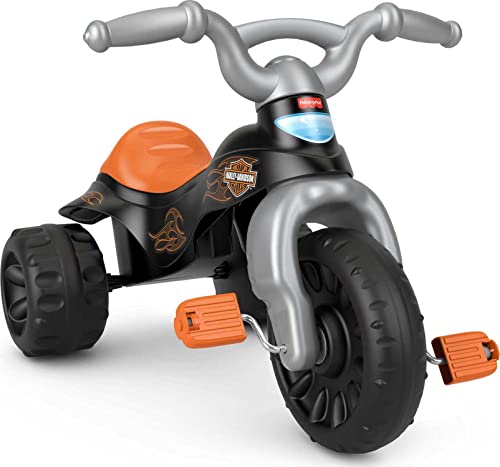
Tough Trike (Harley-Davidson)
Most durable · Fisher-Price

Tough Trike (Harley-Davidson)

The trike you buy when "indestructible" is the brief. The wide, low frame is hard to tip, the chunky wheels handle grass and gravel, and the whole thing shrugs off being left out in the rain better than it should. There's a little storage bin under the seat that toddlers love for hauling rocks and snacks. The motorcycle styling is pure fun, not function — but at this price it's the workhorse trike that lives in the backyard and just keeps going.

Builds: pedaling · gross motor · imaginative play

~$46· See it on Amazon
Easy Steer Tricycle
Best parent-steer · Schwinn

Easy Steer Tricycle

The trike with the long push handle, for when your toddler wants to ride but can't yet steer or pedal on their own. You stay in control from behind — handle steers the front wheel — and as they get the hang of it you hand over more. The steel frame is sturdy and the seat adjusts as they grow, so it's a real tricycle they'll pedal solo by three. It's the priciest pick here, and the value is entirely in that handle: it turns a "too young for a trike" toddler into one who can come on the walk today.

Builds: pedaling · balance · outdoor play

~$120· See it on Amazon

Balance bikes & scooters

The move up from a ride-on. Balance bikes teach the one skill a two-wheeler actually needs, and a stable first scooter builds the same thing — both leading to a pedal bike with no training wheels.

Air Ride Balance Bike
Best balance bike · Radio Flyer

Air Ride Balance Bike

The fastest path to a pedal bike with no training wheels — and the toy a Scuttlebug graduate moves up to. Instead of pedaling, a toddler walks the bike along and learns to glide with their feet up, which is the actual skill a two-wheeler needs (balance, not pedaling). The air-filled tires give a smoother, more bike-like roll than the foam ones, and the low standover height means even a smaller two-year-old can flat-foot it. Pair it with a helmet from day one — kids get fast on these.

Builds: balance · coordination · confidence

~$80· See it on Amazon
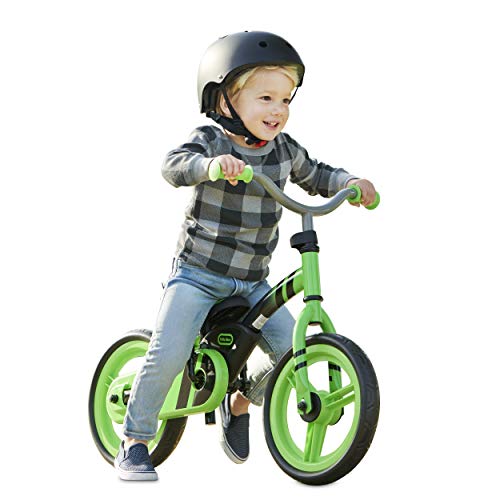
My First Balance-to-Pedal Bike
Grows with them · Little Tikes

My First Balance-to-Pedal Bike

Two bikes in one, which is the honest answer to "balance bike or trike?" It starts as a balance bike with the pedals removed so your toddler learns to glide, then the pedals bolt back on when they're ready — no buying a second bike a year later. The 12-inch wheels and adjustable seat cover roughly ages two to five. It's a clever bridge if you're not sure your child is ready for pedals: let them scoot first, and add the pedals the week they start asking.

Builds: balance · pedaling · coordination

~$77· See it on Amazon
My 1st Scooter
Best first scooter · Radio Flyer

My 1st Scooter

A three-wheeled scooter sized for the smallest riders — two wheels up front for a stable base a toddler won't immediately topple off. They steer by leaning, which quietly builds the same balance skill a two-wheeler needs later, and the deck sits low so stepping on and off isn't scary. It's the lightest, cheapest way to get a two-year-old moving on wheels, and it folds down small enough to throw in the trunk for the park.

Builds: balance · coordination · gross motor

~$40· See it on Amazon

Don’t forget

One thing every kid on wheels needs from the first ride.

Noodle Multi-Sport Helmet (XS–S)
The safety essential · Joovy

Noodle Multi-Sport Helmet (XS–S)

Buy this with whatever wheels you choose — non-negotiable from the very first ride. The extra-small size actually fits toddler heads (most "kids" helmets start too big), the dial adjusts as they grow, and the 14 vents mean they'll keep it on instead of yanking it off because it's hot. Getting a helmet on from ride one makes it a habit, not a battle — by the time they're fast on a balance bike, wearing it is just what you do.

Builds: safety habits · independence

~$35· See it on Amazon

A note on price — and what actually lasts

You don't have to spend much to start: the Little Tikes Push and Ride Racer (~$35) and the Radio Flyer My 1st Scooter (~$40) get a toddler moving for the price of a couple of board books. Where it's worth spending up is the toy that has to take a beating outdoors for years — a steel-framed Radio Flyer trike or the Schwinn Easy Steer earns its higher price by simply not breaking. The one thing we'd never skip regardless of budget is a properly fitted toddler helmet — it's the cheapest item here and the only essential one.

Frequently asked questions

Is the Scuttlebug still made, and what’s the closest thing now?
The original folding Scuttlebug was a lightweight, four-wheeled foot-to-floor ride-on for toddlers, and it’s hard to find new and consistently in stock. The closest current toy in spirit is the Hape Scoot Around — a four-wheeled wooden push ride-on with no pedals, sized for a one-to-three-year-old. For a plastic version at a lower price, the Little Tikes Push and Ride Racer does the same job: scoot along with the feet, nothing to master. Both are sturdier and steadier than the original folding frame.
Balance bike or tricycle for a 2-year-old?
A balance bike teaches the skill that actually transfers to a pedal bike — balancing and gliding — so kids who start on one usually skip training wheels entirely. A tricycle is more stable and lets a toddler pedal sooner, which feels like a win at two, but pedaling is the easy part to learn later. If you only buy one and your goal is a confident bike rider, lean balance bike (or a balance-to-pedal convertible like the Little Tikes that does both). If your toddler just wants to ride alongside you now and isn’t ready to balance, a trike — ideally one with a parent push handle — is the friendlier start.
What age can a toddler start on a ride-on toy?
A foot-to-floor ride-on (like the Hape Scoot Around or Little Tikes Push and Ride Racer) suits a child who can walk steadily — usually around 12 months. Balance bikes and first scooters work best from about 18 months to 2 years, once they can stand and stride confidently. A real pedal tricycle generally clicks around 2 to 2.5, when their legs are long enough to reach and push the pedals. Always match the toy to your child’s size and confidence rather than the number on the box.
Do toddlers really need a helmet on a tricycle or balance bike?
Yes — get a helmet on from the very first ride, even on a slow trike in the driveway. Toddlers pick up surprising speed on balance bikes and tip over learning to steer, and the habit is far easier to build at one than to enforce at four. Look for a helmet sized for toddlers specifically (the Joovy Noodle XS–S actually fits small heads), with a dial fit and good vents so it stays comfortable enough that they keep it on.
How do I choose between all these first-ride-on options?
Work backward from your child’s stage. Brand-new walker who can’t pedal yet: a foot-to-floor ride-on (Hape Scoot Around, Little Tikes Push and Ride Racer). Toddler who wants to ride with you but can’t steer: a trike with a push handle (Schwinn Easy Steer). Two-year-old ready to pedal: a real tricycle (Radio Flyer Classic). Aiming for a no-training-wheels bike: a balance bike (Radio Flyer Air Ride) or a balance-to-pedal convertible (Little Tikes). When in doubt, a scoot-to-pedal model like the Radio Flyer Scoot 2 covers two stages in one purchase.

How we choose — and a word on the links

Educational Toys Planet has specialized in learning toys since 2004. We pick independently, only from established makers, then cross-check every candidate against current availability and the major independent award and expert lists. We don't accept payment for placement.

Affiliate disclosure: the product links here are Amazon Associate links. If you buy through them we may earn a small commission at no extra cost to you — that's what keeps these guides free and updated. Prices change; tap through for Amazon's current figure. Last updated June 2026.

Related guides