Best Silly & Matching Games for Kids Like Ned's Head (2026)

Half "reach in and grab the gross thing," half "find the matching pair." That's the sweet spot people are after when they go hunting for Ned's Head — the goofy game where you fish a rubber frog out of a squishy head by feel alone — or a "matching game like it." Ned's Head drifts in and out of stock, so we gathered the games that deliver the same two things kids love: a jolt of silly suspense, and the satisfying click of a match.

Every pick below is a real game from an established maker — Spin Master, Educational Insights, Ravensburger, Briarpatch — chosen because it actually earns repeat plays, with an honest reason behind each one. No reading required, and all of them keep a mixed-age family game night fair.

🧸 Curating learning toys since 2004 Independent picks · no pay-for-placement

What people actually mean by "Ned's Head matching game"

Two different shoppers type that phrase. One remembers Ned's Head itself — the silly, slightly gross feel-and-find game where you plunge a hand into a soft head and pull out the object on your card by touch. The other is after a gentler matching or memory game for a preschooler, and "Ned's Head" is just the closest name they could recall. This guide covers both, because the underlying appeal is the same: a hands-on hunt with a payoff.

So we split the list. First come the silly, suspenseful grab games — the ones with a splash, a scramble, or a squeeze that get kids shrieking. Then the classic matching and memory games, the quiet, portable picks that build focus. And a short section for the youngest players, where the pieces are chunky and nobody really loses. Pick by your kid's mood: chaos, or concentration.

Silly, suspenseful & laugh-out-loud

The Ned's Head category proper: games built on a jolt of suspense, a gross-out grab, or a frantic scramble. These are the ones that make a room of kids shriek — and the rare games where a preschooler can genuinely out-luck a grown-up.

Soggy Doggy
Best silly game · Spin Master

Soggy Doggy

Children's Choice & ASTRA Best Toys winner

If your kid loves the "will-it-or-won't-it" thrill of a game like Ned's Head, start here. Players take turns soaping up and rinsing a plastic dog in the middle of the board — and at some random moment he shakes, spraying a real puff of water at whoever's closest. The shrieking is the point. It's the rare game where a four-year-old and a grandparent are on exactly even footing, because nobody can predict the splash. Yes, you fill the dog with water, so it's a kitchen-or-towel game, not a quiet-car game — but that little jolt of suspense is what makes kids beg to play "one more time."

Builds: suspense & risk · turn-taking · counting

~$21· See it on Amazon
The Sneaky, Snacky Squirrel Game
Best for preschoolers · Educational Insights

The Sneaky, Snacky Squirrel Game

A first "silly" game that's also quietly teaching. Kids squeeze a chunky squirrel-shaped squeezer to pick up colored acorns and stuff them in their log — the squeeze is a genuine fine-motor and pincer-grasp workout disguised as goofy fun, and the "Steal!" and "Lose an acorn" spins add just enough chaos to get giggles. It's the gateway game for the 3-to-5 crowd: short, colorful, no reading required, and a preschooler can absolutely beat a parent. A perennial award-shelf staple for good reason.

Builds: color matching · fine motor · turn-taking

~$22· See it on Amazon
Reel Big Catch Game
Best feel-and-grab · Educational Insights

Reel Big Catch Game

Ned's Head is really a "reach in and grab the right thing" game, and magnetic fishing scratches that same itch for younger kids. Players cast a little rod into a wiggly pile of sea creatures and try to hook the catch their card calls for — there's just enough wobble and competition to make a three-year-old squeal when the fish slips off the magnet. It builds real hand-eye control and counting without feeling like a lesson, and the pieces are chunky and toddler-safe.

Builds: hand-eye coordination · early counting · fine motor

~$15· See it on Amazon
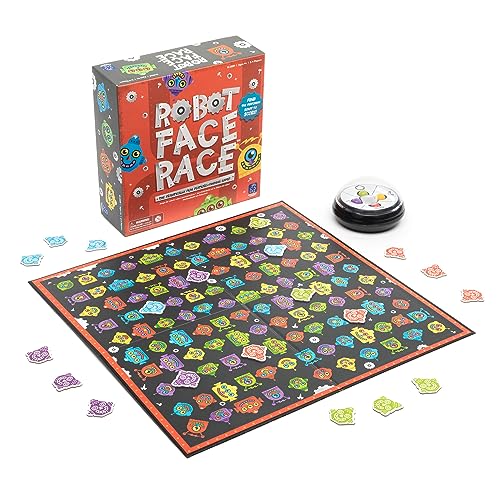
Robot Face Race
Best fast-paced · Educational Insights

Robot Face Race

Award-winning family game

A frantic, laugh-out-loud spotting game. Everyone races at once to find the one robot face on the board that matches the two colors the dice show — first hand to slam it wins the token. There's no waiting for your turn, which is exactly why it holds a wiggly group: nobody's bored. It sneaks in color recognition and visual scanning under all the grabbing and giggling, and at four-and-up it's a great bridge from cooperative preschool games to genuinely competitive ones.

Builds: visual scanning · color recognition · quick thinking

~$25· See it on Amazon

Matching & memory games

The other half of "Ned's Head matching game": classic flip-and-find concentration. Quiet, portable, and quietly powerful for focus — and little kids beat adults at memory far more often than you'd expect.

I SPY Memory Game Travel Tin
Best travel matching · Briarpatch

I SPY Memory Game Travel Tin

The classic concentration game, shrunk into a tin that lives in a glovebox or a bag. Kids flip two cards hunting for a pair, and the busy I SPY photo style means there's something to talk about on every card even when the match is a miss. It's our pick for the matching-game half of this list: cheap, genuinely portable, and short enough to fit a restaurant wait. A nice ego-leveler, too — little kids beat grown-ups at memory startlingly often.

Builds: visual memory · concentration · matching

~$12· See it on Amazon
Hammy's Hamster Party
Best memory game · Educational Insights

Hammy's Hamster Party

A sweet, sturdy take on memory-and-match built for little hands. Kids flip cards to find matching picture pairs and "invite" the hamsters to the party, practicing concentration and shape-and-color recognition along the way. The cards are thick and the rounds are quick, so it suits the three-and-up attention span without dragging. A gentle, no-conflict pick for the child who isn't ready for the splash-and-grab chaos of the sillier games here.

Builds: concentration · shape & color recognition · matching

~$16· See it on Amazon
Animal Babies Memory Game
Best photo memory · Ravensburger

Animal Babies Memory Game

Ravensburger has been making the gold-standard memory game for generations, and the thick, glossy tiles are the reason — they shuffle and flip a thousand times without curling or chipping. The baby-animal photos give little kids a built-in reason to care ("aww, the puppy!"), which keeps them leaning in. You can deal a smaller grid for a three-year-old and the full set for an older sibling, so one box covers a wide age spread.

Builds: visual memory · concentration · matching

~$15· See it on Amazon
Dinosaur Memory Game
Best for dino kids · Ravensburger

Dinosaur Memory Game

The same well-made Ravensburger memory tiles, themed for the dinosaur-obsessed. For the kid who already knows their T. rex from their triceratops, hunting matching dino pairs is pure motivation, and naming the creatures as they flip quietly builds vocabulary. It's a small, cheap, screen-free win that travels well and earns repeat plays from a four-or-five-year-old who'd otherwise wander off mid-game.

Builds: visual memory · concentration · vocabulary

~$13· See it on Amazon

Built for the youngest players

Game night for two-and-three-year-olds, where the pieces are chunky, the rules forgiving, and nobody really loses.

My First Game: Bears in Pairs
Best for toddlers · Educational Insights

My First Game: Bears in Pairs

Matching games usually start around three, but this one is genuinely playable at two. Toddlers match chunky bear pieces by their outfits and tuck them into a little bus — the pieces are big, grippable, and impossible to lose under the couch. It's a real first introduction to "find the one that's the same" and to taking turns, with no reading and no way to truly lose. The ideal gift for the youngest sibling who wants in on game night.

Builds: first matching · turn-taking · fine motor

~$25· See it on Amazon
Pop Pop Bunny Hop
Best two-in-one · Educational Insights

Pop Pop Bunny Hop

Two games in one box, which makes it punch above its price. Played one way it's a straightforward color-matching race; flip the rules and it becomes a memory game where kids pop bunnies up out of the board to find a match. That range stretches its life span — a three-year-old plays the easy version, then grows into the memory mode a year later. Bright, tactile, and quick, with that satisfying "pop" kids can't resist.

Builds: memory · color matching · turn-taking

~$19· See it on Amazon

How much to spend

Good news: this whole category is cheap. Most of these land between $12 and $25, and the best memory games are the least expensive of all — the Ravensburger Dinosaur Memory and the I SPY tin both come in around $12–15 and travel anywhere. The $20–25 picks (Soggy Doggy, Robot Face Race, Bears in Pairs) are the ones with more moving parts or a bigger box — a generous birthday gift on their own, or a fun pairing with a small memory game. Prices drift, so tap through for Amazon's current figure.

Frequently asked questions

What kind of game is Ned’s Head?
Ned’s Head is a silly "feel-and-find" game: you reach a hand inside a soft rubber head and, by touch alone, fish out the gross or goofy object on your card — a frog, a worm, a sock. The fun is the squeamish guessing and the laughter. Because it isn’t always in stock, this guide gathers games in the same spirit: silly, suspenseful, hands-on grab games like Soggy Doggy and Reel Big Catch, plus the matching-and-memory games people often mean when they search "Ned’s Head matching game."
What age is Ned’s Head and these games for?
Most land squarely in the 3-to-8 range. The sillier action games (Soggy Doggy, Robot Face Race) shine at 4 and up, when kids can handle a fast competitive pace. The preschool picks (Sneaky Snacky Squirrel, Reel Big Catch, the memory games) work from 3, and Bears in Pairs is genuinely playable at 2. None require reading, which is what keeps them fair for mixed-age family game night.
Which of these is the best alternative to Ned’s Head?
For the same shrieking, what-happens-next energy, Soggy Doggy is the closest match — the surprise water-shake delivers the same suspense as reaching into the head. If you want the "grab the right hidden thing" mechanic, Reel Big Catch (magnetic fishing) and Robot Face Race (frantic spotting) are the nearest cousins. For the gentler, classic matching game some shoppers actually mean, start with the I SPY Memory tin or a Ravensburger memory set.
Are silly games like these actually good for kids, or just chaos?
They earn their shelf space. Under the giggles, these games teach the real foundations of play: taking turns, handling the disappointment of a bad spin, hand-eye coordination, and visual scanning. Matching and memory games specifically build concentration and visual recall — and because a young child can win on luck or sharp memory, they build the confidence to keep playing. The chaos is a feature: it’s what gets a wiggly four-year-old to sit through a whole game.
What makes a good first board game for a young child?
Short rounds, no reading, chunky pieces, and a real chance for the child to win. Avoid anything with long turns or fiddly setup — attention spans are short. Cooperative or luck-based games (most on this list) are kinder for the youngest players than purely strategic ones, because nobody gets crushed. A bit of physical action or suspense, like a squeeze, a pop, or a splash, goes a long way toward holding interest.

How we choose — and a word on the links

Educational Toys Planet has specialized in learning toys since 2004. We pick independently, only from established makers, then cross-check every candidate against current availability and the major independent award and expert lists. We don't accept payment for placement.

Affiliate disclosure: the product links here are Amazon Associate links. If you buy through them we may earn a small commission at no extra cost to you — that's what keeps these guides free and updated. Prices change; tap through for Amazon's current figure. Last updated June 2026.

Related guides