Best Color Mixing Science Kits for Preschoolers (2026)

Color mixing is one of the first science concepts young children can grasp with their own hands — pour red into yellow, watch it turn orange, and suddenly cause and effect clicks. The right kit gives kids a safe, structured way to experiment without ruining every towel in the house.

For preschoolers specifically, you want minimal choking hazards, washable or food-safe materials, and activities that work within a 10-minute attention span. The picks below lean into hands-on mixing, light, and simple reactions rather than anything requiring sharp tools or long waits — because a four-year-old will not wait three days for crystals to grow.

🧸 Curating learning toys since 2004 Independent picks · no pay-for-placement

Light & Color Exploration

These kits use light, lenses, or transparent materials to let kids see how colors blend and split — great for visual learners who want immediate, wow-factor results.

Kidzlabs Kaleidoscope Making Kit
Best for understanding how light makes color · 4M

Kidzlabs Kaleidoscope Making Kit

Kids build their own kaleidoscope, which directly shows how light reflects and mixes color — it's genuinely a color-science lesson, not just a craft. The assembly suits ages 7+ independently, but a 5-year-old can do it with a caregiver doing the tube-rolling step. End result is a working toy they'll actually use repeatedly. No batteries, no waiting.

Builds: color recognition · optical reasoning · fine motor assembly

~$15· See it on Amazon

Early Chemistry & Reactions

Simple, safe chemical reactions that produce visible color changes or bubbles, giving preschoolers their first taste of cause-and-effect science.

Bubble Science Kit
Best first 'mixing experiment' for ages 5+ · 4M Toysmith

Bubble Science Kit

The kit includes recipes for making bubble solution from scratch, which means kids measure, mix, and see immediate color results in iridescent bubble film — a real color-mixing payoff. It's genuinely suited to the younger end of the age range with adult supervision. Mess factor is real: plan for outdoor use or a towel-covered table.

Builds: measurement · scientific observation · cause and effect

~$16· See it on Amazon
KidzLabs Volcano Making Kit
Best for dramatic color-reaction payoff · 4M

KidzLabs Volcano Making Kit

Food coloring added to the baking soda and vinegar reaction gives kids direct control over what color their 'lava' is — mix red and yellow dye before the eruption and watch orange foam appear. The kit is rated 8+ but the eruption step itself is very doable for a 5–6-year-old with a grown-up handling the vinegar. Repeated runs are cheap since refills are pantry staples.

Builds: chemical reactions · color mixing · following multi-step instructions

~$14· See it on Amazon
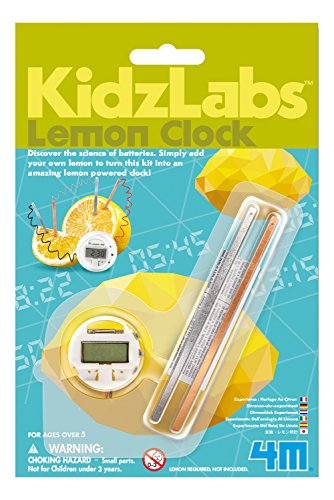
Lemon Powered Clock
Best for showing color change through chemistry · 4M Kidzlabs

Lemon Powered Clock

While primarily about electrical energy, the juice-squeezing and electrode-insertion steps let kids observe how different fruit liquids (and food coloring added to water) behave differently — a gentle entry into solution science. At under $8 it's low-stakes if interest fizzles quickly. Best for ages 5+ with adult help reading the digital display.

Builds: electrochemical concepts · observation · number recognition

~$8· See it on Amazon
Clean Water Science Kit
Best for color-and-water filtration exploration · 4M

Clean Water Science Kit

Kids add colored dye to water, then filter it — watching color disappear is genuinely surprising and sparks real questions about where the color went. The activity connects color science to a meaningful real-world concept. Rated 5+, and the steps are manageable at that age with supervision. Expect a slightly damp workspace.

Builds: observation · environmental awareness · solution mixing

~$18· See it on Amazon
Potato Clock Kit
Best for edible-ingredient color science · 4M Green Science

Potato Clock Kit

Using real potatoes (which kids can poke and examine) to power a clock demystifies where energy hides — and comparing potato juice color to lemon juice color is a natural preschool-friendly extension activity. Wiring steps need adult hands, but the potato prep is genuinely child-doable. Solid value since the 'materials' are free refills from the grocery store.

Builds: chemical energy concepts · observation · fine motor wiring

~$20· See it on Amazon

Creative Color Craft Science

Kits that sit at the intersection of art and science, letting kids mix colors while making something they can keep and display.

Pressed Flower Art Kit
Best for natural color mixing through plant pigments · 4M Green Creativity

Pressed Flower Art Kit

Pressing flowers and arranging them by color is a quiet, low-mess entry into pigment science — kids observe that petals bleed color onto paper, mixing organically. Rated 5+, and the pressing wait time (a few days) is actually a feature for teaching delayed observation. The finished artwork is genuinely display-worthy, which matters to preschoolers.

Builds: color observation · nature literacy · patience and planning

~$17· See it on Amazon
Cross-Shaped Plastic Suncatchers with Stand
Best for hands-on light-and-color art science · Generic

Cross-Shaped Plastic Suncatchers with Stand

Transparent plastic suncatchers let kids paint with translucent colors and then hold them up to window light to see how overlapping layers mix — a direct, visual color-mixing lesson. The 12-piece set makes this good for small groups or repeat experiments with different color combinations. At 4+, most preschoolers can handle the painting step independently. The cross shape is specifically crafted for church or school settings, which is worth noting if that context doesn't fit your use case.

Builds: color blending · light transmission · fine motor painting

~$29· See it on Amazon

How we choose — and a word on the links

Educational Toys Planet has specialized in learning toys since 2004. We pick independently, only from established makers, then cross-check every candidate against current availability and the major independent award and expert lists. We don't accept payment for placement.

Affiliate disclosure: the product links here are Amazon Associate links. If you buy through them we may earn a small commission at no extra cost to you — that's what keeps these guides free and updated. Prices change; tap through for Amazon's current figure. Last updated June 2026.

Related guides