Best Toys & Gifts for 10-Year-Olds (2026)

Ten is the thinking age. A ten-year-old can plan four moves ahead, follow a real set of instructions, run an experiment, and stick with a hard problem long enough to crack it — but isn't yet fully pulled into screens and social media. It's a wonderful age to shop for, and an easy one to get wrong: the shelves are full of "tween" gear that's all branding and no substance.

So we kept only toys we'd actually give a ten-year-old — every one from a maker with a real track record, with a genuine reason behind each choice. No fluff, no toys that play themselves.

🧸 Curating learning toys since 2004 Independent picks · no pay-for-placement

What ten-year-olds are working on

Shopping well for this age gets easier once you picture what a ten-year-old's mind is actually doing. Abstract thinking is coming online — they can hold several steps in their head, reason about cause and effect, and genuinely enjoy a puzzle that doesn't have an obvious answer. That's why real logic games and strategy puzzles land so well now: a five-year-old guesses, but a ten-year-old plans.

Curiosity is getting specific, too. Many ten-year-olds are starting to love a subject — rocks, space, chemistry, how circuits work — and a well-made science kit or building set meets that head-on. Persistence has grown up alongside it: they can stay with a long LEGO build or a months-long crystal experiment in a way a younger child can't. The best gift at ten usually isn't the loudest one on the shelf; it's the one that hands them a real problem and trusts them to solve it.

Logic games & brain-teasers

Ten is a sweet spot for real logic puzzles: old enough for multi-step planning, and old enough to lose gracefully when the marble doesn't drop home. These four are single-player, screen-free, and genuinely hard at the top end.

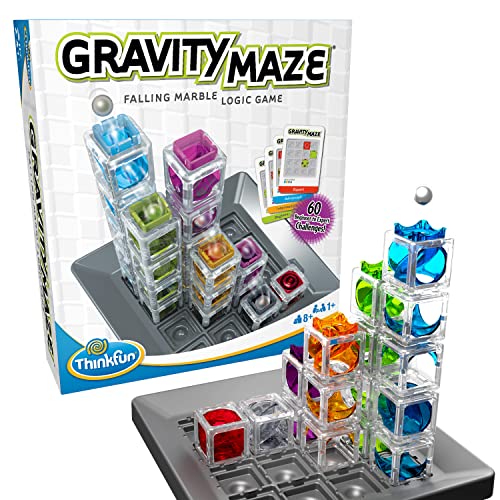
Gravity Maze Marble Logic Game
Editor’s pick · ThinkFun

Gravity Maze Marble Logic Game

If we could put one toy in a ten-year-old's hands, it's this. You're handed a challenge card showing where the marble starts and where it has to end up, then you place clear towers on the grid so a dropped marble actually rolls through them to the target. The genius is that the early cards are forgiving and the late ones are genuinely hard — hard enough that a sharp ten-year-old can stay stuck, and satisfied, for a long time. It's single-player, so it works for the kid who wants to disappear into a puzzle, and there's a real "aha" when the marble finally drops home. Of all the logic games, this is the one that most reliably outlasts the novelty.

Builds: spatial reasoning · planning ahead · logical deduction

~$20· See it on Amazon
Rush Hour Traffic Jam Logic Game
Best logic classic · ThinkFun

Rush Hour Traffic Jam Logic Game

The sliding-block puzzle that's been quietly making kids smarter for decades. You slide cars and trucks around a gridlocked parking lot to free the red car — simple to grasp, and the difficulty ramps from "warm-up" to "expert" across 40 cards. What makes it perfect for ten is that the hardest challenges require thinking three and four moves ahead, the exact skill that pays off in math and chess. It's compact, fully single-player, and there's no luck involved: when you solve one, you earned it. A genuinely great gift for the kid who likes a challenge they can carry around.

Builds: sequential planning · problem solving · spatial reasoning

~$22· See it on Amazon
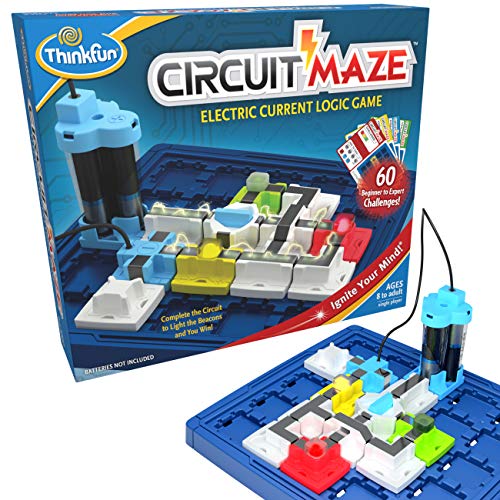
Circuit Maze Electric Current Game
Best for STEM · ThinkFun

Circuit Maze Electric Current Game

Toy of the Year finalist

A logic game that secretly teaches real circuitry. You arrange beacon tokens, wires, and a power source on the grid so the right lights actually turn on — and because the LEDs only light when the circuit is genuinely complete, the feedback is honest and immediate. Ten is a great age for this: old enough to reason through why a circuit is open or closed, and delighted when the board lights up. It's a single-player puzzle that builds toward the kind of thinking behind electronics and coding, without a screen in sight.

Builds: circuit logic · deductive reasoning · cause & effect

~$30· See it on Amazon
Kanoodle 3D Brain Teaser Puzzle
Best under $15 · Educational Insights

Kanoodle 3D Brain Teaser Puzzle

The little puzzle that punches absurdly above its price — and travels anywhere. You pick a challenge from the 200-puzzle booklet, place the pieces it gives you, and then have to fit the rest of the colored bumps into the tray with only one solution. It's pocket-sized, fully self-contained, and genuinely tricky at the higher levels, which makes it the ideal restaurant, car, and waiting-room toy for a ten-year-old. Cheap enough for a stocking stuffer, but the kind of brain-teaser they actually keep coming back to. The whole thing folds shut so nothing gets lost.

Builds: spatial reasoning · persistence · pattern recognition

~$11· See it on Amazon

Real science to do at the table

At this age science stops being magic tricks and starts being method — observe, predict, test. These kits hand a ten-year-old something real to investigate, from crystals to pond water.

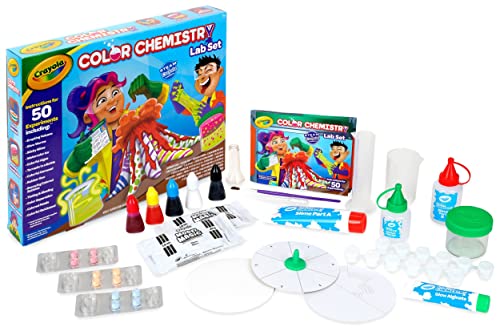
Color Chemistry Set (50 Experiments)
Best first chemistry · Crayola

Color Chemistry Set (50 Experiments)

A first real chemistry set from a brand parents already trust to be reasonable about mess and safety. The 50 experiments lean into color changes, fizzing reactions, and crystal growing — the visual, satisfying end of chemistry that hooks a ten-year-old before the textbook ever does. The instructions are clear enough that a careful kid can run many of them solo, though a few are better with a grown-up nearby. It's the kind of gift that turns "science" from a school subject into something they do at the kitchen table on a Saturday.

Builds: scientific method · following procedures · observation

~$30· See it on Amazon
Amazing Chemistry Set (100+ Experiments)
Best deep dive · National Geographic

Amazing Chemistry Set (100+ Experiments)

For the kid who's already decided they love science, this goes deeper than a starter kit — over a hundred experiments, including real reactions and crystal growing that take time to develop. That patience is part of the lesson: not every result is instant, and watching a crystal form over days teaches a different kind of focus. National Geographic's kits are well-organized, with a guide that explains the why behind each experiment, not just the steps. Pair it with a grown-up for the early sessions and a curious ten-year-old can run a months-long science program out of one box.

Builds: scientific method · patience · cause & effect

~$40· See it on Amazon
Break Open 10 Premium Geodes Kit
Best hands-on science · National Geographic

Break Open 10 Premium Geodes Kit

There's a particular thrill to cracking open a plain gray rock and finding crystals nobody has ever seen before — because, genuinely, no one has. You get ten real geodes, safety goggles, and display stands, and the reveal is the whole point: each one is a small, real geological surprise. It's messier and more physical than a board game, which is exactly why it lands with ten-year-olds who'd rather do than read. The included guide turns the cracking into an actual earth-science lesson about how the crystals formed. Do it outside, with the goggles on.

Builds: geology basics · careful observation · patience

~$32· See it on Amazon
Dual LED Kids Microscope Science Kit
Best splurge · National Geographic

Dual LED Kids Microscope Science Kit

A real microscope — not a toy that pretends — and the gift that can genuinely tip a ten-year-old toward science. It comes with prepared slides to get started fast plus blank slides for making their own, which is where the magic is: a drop of pond water or a strand of hair becomes a whole hidden world. The dual LED lighting lets them view both prepared specimens and solid objects, and the magnification is enough to see real cell structure. It's the priciest pick here and the most likely to still be in use in three years. Worth it for the kid who keeps asking how things work.

Builds: scientific observation · biology basics · careful technique

~$80· See it on Amazon

Build, wire & code it

The making-and-engineering picks. Each one has a real payoff — a circuit that works, a robot that draws, a car with a moving engine — which is exactly what keeps a ten-year-old focused.

203 Electronics Exploration Kit
Best electronics · Snap Circuits

203 Electronics Exploration Kit

The electronics kit teachers actually use, and one of the best things you can give a ten-year-old who likes to build. The parts snap together like puzzle pieces onto a grid — no soldering, no frustration — and the full-color manual walks through 200+ working projects: a radio, an alarm, a fan that flies off its base. Because the circuits really work, kids learn by doing rather than by reading, and the "make this actually function" goal keeps them at it. It's open-ended in the best way: once they finish the manual, they start inventing. A standout STEM gift that grows with the kid.

Builds: electronics basics · following schematics · problem solving

~$38· See it on Amazon
Artie 3000 The Coding Robot
Best coding gift · Educational Insights

Artie 3000 The Coding Robot

A coding robot that draws what you program, which is a clever way to make abstract code suddenly visible. Kids write commands on a connected device and Artie rolls across the paper drawing the result — get the angles right and you get a clean shape; get them wrong and the wonky drawing tells you exactly where the logic broke. It scales from drag-and-drop blocks for beginners up to real typed code, so a ten-year-old new to coding and one who's dabbled both find a level. It needs a phone, tablet, or computer to drive it, but there's no app-store rabbit hole — just code, robot, paper.

Builds: coding logic · sequencing · geometry

~$39· See it on Amazon
Technic Lamborghini Huracán Tecnica
Best builder · LEGO

Technic Lamborghini Huracán Tecnica

This is the step up from regular LEGO that a ten-year-old who loves building is ready for. Technic uses pins, axles, and gears instead of stacking bricks, so the finished Huracán has working steering and a tiny moving V10 engine you can see through the body — the payoff for an afternoon of genuinely focused building. It's a real project, not a fifteen-minute set, and following the thick instruction booklet is its own quiet lesson in patience and reading a diagram. When it's done it's a display piece they're proud of, not something dumped in the bin. Great for the car-obsessed or the future engineer.

Builds: mechanical reasoning · following instructions · persistence

~$40· See it on Amazon

A couple more worth a look

Two that didn't fit a category but earn a mention. For the kid who loves a tabletop showdown, a ThinkFun Escape the Room game turns a rainy afternoon into a cooperative puzzle-solving session the whole family can join. And for the budding builder who's finished the manual, a bigger Snap Circuits SC-300 set adds hundreds more projects. Both are great next steps once a favorite clicks.

How much to spend

You really don't need to spend much. The best value here is under $25 — the Kanoodle brain-teaser is about $11, and the Gravity Maze and Rush Hour logic games run around $20 each and last for years. The $30–40 sweet spot (Circuit Maze, Snap Circuits, the chemistry sets, the Artie robot, and the LEGO Technic car) is where most generous birthday gifts land. The one splurge worth it is the National Geographic microscope — for a science-obsessed kid, it's the pick most likely to still be earning its shelf space in a few years.

Frequently asked questions

What are the best educational toys for a 10-year-old?
Our top pick is ThinkFun’s Gravity Maze — a single-player marble logic game that stays genuinely challenging at the higher levels. For range, mix categories: a logic game (Gravity Maze or Rush Hour), a real science kit (the Crayola or National Geographic chemistry set, or a microscope), and something to build or code (Snap Circuits, the Artie coding robot, or a LEGO Technic set). Every toy in this guide comes from an established maker like ThinkFun, National Geographic, LEGO, Educational Insights, or Snap Circuits.
How much should I spend on a gift for a 10-year-old?
You don’t need to spend much for a great gift. The Kanoodle brain-teaser is around $11 and the Gravity Maze and Rush Hour logic games are about $20 each — all three punch well above their price. The $30–40 range (Circuit Maze, Snap Circuits, both chemistry sets, the Artie coding robot, the LEGO Technic Lamborghini) is where most generous birthday gifts land. The one real splurge is the National Geographic microscope at around $80 — worth it for a science-obsessed kid, since it’s the pick most likely to still be in use in a few years.
What kinds of toys are best for a 10-year-old’s development?
Toys that ask the child to think, build, or experiment — not toys that perform for them. Logic games (Gravity Maze, Rush Hour, Circuit Maze) build the multi-step planning that pays off in math; real science kits build the scientific method and patience; and construction or coding toys (Snap Circuits, Artie, LEGO Technic) reward focus with something that genuinely works. At ten, the best gifts have a real payoff at the end of the effort: a solved puzzle, a lit circuit, a working model.
Are these toys too young or too old for a 10-year-old?
They’re aimed squarely at this age. The logic games and science kits are typically rated 8+ and the harder challenges genuinely stretch a ten-year-old rather than boring them. The LEGO Technic set is 9+ and the National Geographic chemistry and microscope kits run 8–12, so they have plenty of runway left. We deliberately left out toys that skew too young (preschool puzzles) or are really aimed at teens and adults (advanced display-model kits).
What’s a good gift for a 10-year-old who says they’re “bored” of everything?
Reach for an open-ended pick with a hook, not another thing that plays itself. Snap Circuits and the Artie coding robot both keep going long after the instructions run out, because the kid starts inventing. A microscope turns the backyard into something to investigate. And a hard logic game like Gravity Maze gives the bored-of-screens kid a real challenge they can pick up and put down. The common thread: the toy hands them something to do, rather than something to watch.

How we choose — and a word on the links

Educational Toys Planet has specialized in learning toys since 2004. We pick independently, only from established makers, then cross-check every candidate against current availability and the major independent award and expert lists. We don't accept payment for placement.

Affiliate disclosure: the product links here are Amazon Associate links. If you buy through them we may earn a small commission at no extra cost to you — that's what keeps these guides free and updated. Prices change; tap through for Amazon's current figure. Last updated June 2026.

Related guides